




At least 68 people have been killed after two high-speed trains collided near Toledo, Spain, according to multiple news reports. The crash, which occurred on the busy line connecting Madrid to Andalusia, has been described by witnesses as devastating and marks one of the deadliest rail disasters in recent Spanish history.
The trains involved in the collision belonged to Renfe, Spain’s national rail operator, and Iryo, a private high-speed rail company. The accident happened earlier today, with emergency services rushing to the scene to assist survivors and recover victims. The exact number of injured passengers remains unclear as authorities continue rescue and recovery operations.
According to reports from CNN and other outlets, the death toll stands at a minimum of 68, though some sources initially cited lower figures. The cause of the collision has not yet been officially confirmed, and investigators are working to determine how two high-speed trains came to be on the same track at the same time.
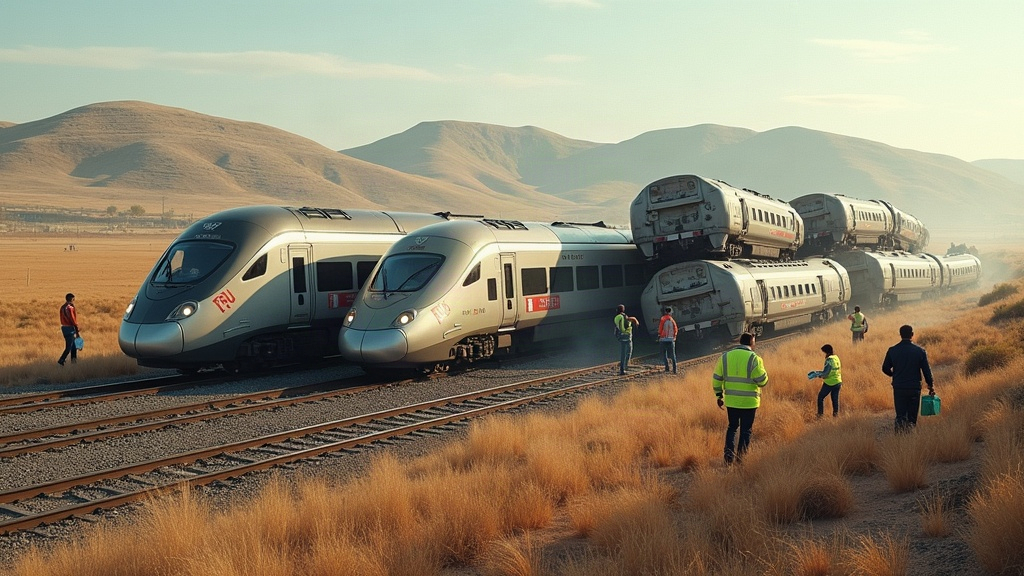
Witnesses described chaotic and harrowing scenes in the aftermath of the crash, with overturned carriages and debris scattered along the railway. Emergency responders have been working through the wreckage, searching for survivors and providing medical care to the injured.
This tragedy comes just months after another major rail disaster on the same line, in which 46 people lost their lives in January. The repeated incidents have raised urgent questions about rail safety and oversight on one of Spain’s busiest and most important transport corridors.
The Madrid-Andalusia line is a vital artery for both passenger and freight transport, linking the Spanish capital with major southern cities. Renfe and Iryo are two of the main operators on the route, and both have expressed condolences to the victims and pledged full cooperation with the investigation.
Authorities have called for a thorough and transparent inquiry into the circumstances leading to the crash. Transport officials are expected to review safety protocols and signaling systems as part of the ongoing investigation. The Spanish government has not yet released an official statement on the disaster.
Families of the victims and survivors have begun gathering near the crash site and at local hospitals, awaiting news. The scale of the tragedy has prompted an outpouring of grief and shock across Spain, with many calling for urgent action to prevent further incidents.
Why it matters
The collision near Toledo is the second fatal high-speed rail crash on the Madrid-Andalusia line this year, following an earlier incident in January that killed 46 people. The recurrence of such disasters on the same route has intensified scrutiny of Spain’s rail safety standards and the effectiveness of its oversight agencies, including Renfe and Iryo.
This latest tragedy directly affects hundreds of families and disrupts a critical transport corridor that millions rely on each year. The Madrid-Andalusia line is central to Spain’s economy and mobility, and repeated safety failures could undermine public confidence in high-speed rail travel.
As investigators work to determine the cause of the crash, the findings are likely to have significant implications for rail operations and regulatory policy in Spain. The outcome of the investigation and the response from authorities and rail operators will be closely watched by passengers, industry stakeholders, and policymakers seeking to ensure the safety of Spain’s rail network.
The image accompanying this article is an AI-generated illustrative depiction inspired by the actual scene of the event.