




Atmospheric concentrations of the three main greenhouse gases reached record highs in 2025, the United Nations announced today, warning that the resulting climate impacts will persist for centuries. The World Meteorological Organization (WMO), the UN’s weather and climate agency, said the latest figures underscore the urgent need for stronger action to curb emissions worldwide.
According to the WMO’s annual bulletin, the global average surface concentration of carbon dioxide (CO2) climbed to 426.8 parts per million (ppm) in 2025, the highest level ever recorded. Methane reached 1,948 parts per billion (ppb), while nitrous oxide hit 339.1 ppb. These levels represent increases of 53%, 167%, and 26% respectively compared to pre-industrial times, the agency reported.
The WMO emphasized that CO2 remains the most significant contributor to global warming, accounting for about 66% of the climate-warming effect from long-lived greenhouse gases. Methane, while present in smaller concentrations, is responsible for approximately 16% of the warming effect due to its potency as a heat-trapping gas, though it has a shorter atmospheric lifetime than CO2.
“Greenhouse gas concentrations in the atmosphere rose to record highs in 2025, locking in climate impacts that will persist for centuries,” the WMO said in a statement. The agency warned that the continued rise in these gases makes it increasingly difficult to limit global temperature increases in line with international targets.
The bulletin focuses on concentrations of greenhouse gases already present in the atmosphere, rather than annual emissions. This distinction is important because concentrations reflect the cumulative effect of decades of fossil fuel burning and other human activities, not just recent output.
WMO scientists cautioned that concentrations are likely to rise further in 2026, driven by ongoing fossil fuel use and the development of a powerful El Niño event, which can weaken the ability of land carbon sinks to absorb CO2. “We can expect to see a further increase in concentrations in 2026 because of fossil fuel burning and the development of a powerful El Niño which will impact land carbon sinks, as it did in 2023/2024,” said WMO scientist Oksana Tarasova, according to CBS News.
The announcement comes just weeks before the United Nations COP31 climate conference, scheduled to take place in Turkey in November. The WMO’s findings are expected to add urgency to negotiations, as the world remains off track to meet the Paris Agreement goal of limiting warming to 1.5°C above pre-industrial levels.
Recent UN reports have confirmed that the global target to limit warming to 1.5°C is likely to be exceeded within the next few years. Current emissions trajectories are projected to cause approximately 2.8°C of warming by the end of the century, unless major reductions are achieved.
Why it matters
The new data from the WMO demonstrates that efforts to curb greenhouse gas emissions have not yet translated into a slowdown in atmospheric concentrations. The record levels of CO2, methane, and nitrous oxide reported today mean that the world is already committed to significant long-term climate impacts, including more frequent and severe heatwaves, droughts, and extreme weather events.
With carbon dioxide accounting for about two-thirds of the warming effect, as highlighted by the WMO, the persistent rise in concentrations reflects the ongoing challenge of transitioning away from fossil fuels. The agency’s warning that concentrations are likely to increase further in 2026—due to both human activity and natural climate patterns like El Niño—underscores the complexity of the problem facing policymakers at the upcoming COP31 summit.
The WMO’s findings add to mounting evidence that the world is on course to surpass the 1.5°C warming threshold, a key limit identified by scientists to avoid the worst impacts of climate change. As the international community prepares for critical climate negotiations, today’s announcement is likely to intensify calls for more ambitious emissions cuts and accelerated action to protect the planet’s future.
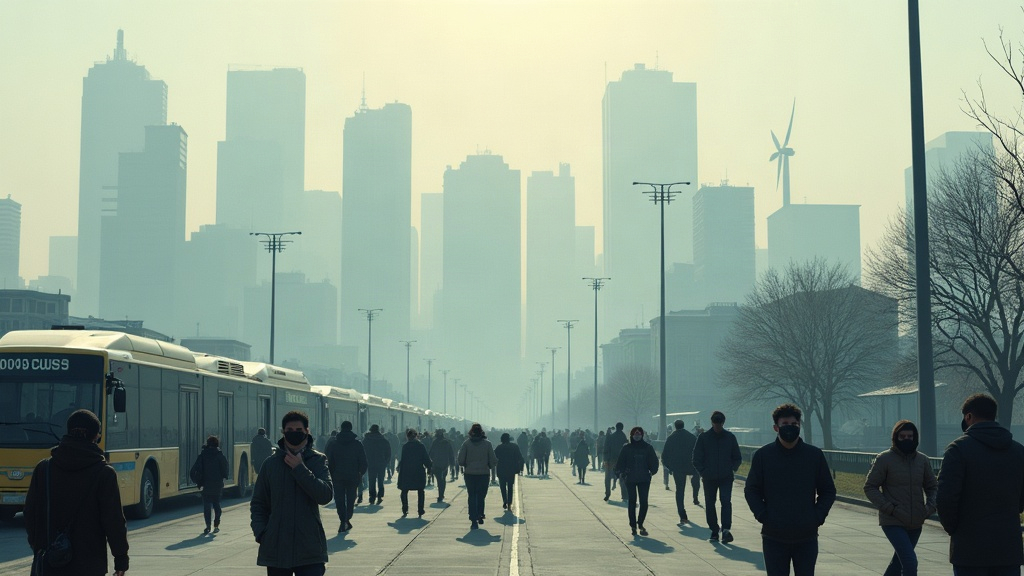
The image accompanying this article is an AI-generated illustrative depiction inspired by the actual scene of the event.