




Astronomers have identified evidence suggesting the existence of a second Earth-like planet lurking in the far reaches of the Solar System, beyond Neptune. The proposed world, informally dubbed “Planet X2” or “PX2”, could be up to twice the mass of Earth and is believed to follow a highly elongated orbit, according to new research published today.
The hypothesis is based on computer simulations and the observed gravitational effects on distant icy bodies in the outer Solar System. Researchers say that the unusual tilts and elongated orbits of these trans-Neptunian objects cannot be fully explained by the known giant planets alone. The addition of a distant, super-Earth-sized planet in their models produced orbital patterns that closely resemble those seen in reality, according to coverage by ScienceAlert and Newsweek.
Planet X2 is estimated to orbit the Sun at distances of hundreds of astronomical units (AU)—with one AU representing the distance from Earth to the Sun. Even at its closest approach, the planet would remain at least 200 AU from the Sun, placing it far beyond the Kuiper Belt, the region populated by icy bodies and dwarf planets.
“As the Rubin Observatory surveys the sky, we will find new clues that help us understand the distant reaches of the Solar System—and whether another planet is still waiting to be discovered,” researchers told Newsweek. The Vera C. Rubin Observatory in Chile, which recently discovered the dwarf planet candidate 2026 ED138, is expected to play a key role in the ongoing search for Planet X2.
The idea of an undiscovered planet in the outer Solar System is not new. For years, astronomers have debated the existence of a so-called “Planet Nine,” a hypothetical giant planet thought to influence the orbits of distant objects. However, the latest findings suggest that a smaller, Earth-sized world could also account for the gravitational anomalies observed beyond Neptune.
According to Forbes, the new research offers a fresh perspective on one of astronomy’s enduring mysteries: the source of the peculiar orbital behavior among certain trans-Neptunian objects. The study highlights that while Neptune and the other known giants exert significant influence, some patterns remain unexplained without invoking an additional planetary mass.
Despite the compelling evidence from simulations, Planet X2 has not yet been directly observed. Scientists caution that the hypothesis remains unconfirmed until a telescope can detect the planet itself. The ongoing sky surveys by the Rubin Observatory are expected to provide further data in the coming years.
The search for hidden planets in the Solar System is part of a broader effort to understand its structure and evolution. Discoveries in the outer regions could shed light on the processes that shaped the early Solar System and the distribution of planetary bodies.
Why it matters
The potential discovery of Planet X2 would represent a major shift in our understanding of the Solar System’s architecture. According to ScienceAlert and Forbes, the presence of a super-Earth beyond Neptune could explain longstanding mysteries about the orbits of distant icy objects—anomalies that have puzzled astronomers for decades.
If confirmed, Planet X2 would become the most distant known planet in the Solar System, challenging current models of planetary formation and migration. The involvement of the Rubin Observatory, which has already contributed to the discovery of new trans-Neptunian objects, underscores the importance of advanced sky surveys in revealing hidden components of our cosmic neighborhood.
For astronomers and planetary scientists, the search for PX2 is not only about finding a new world but also about refining models of solar system dynamics. As more data become available, the debate over the existence of distant planets like Planet X2 is likely to intensify, with implications for both theoretical and observational astronomy.
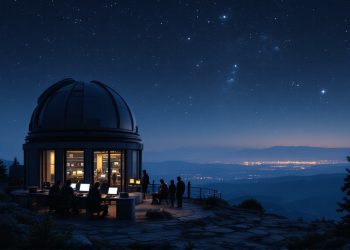
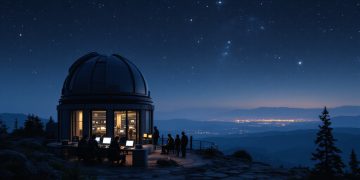
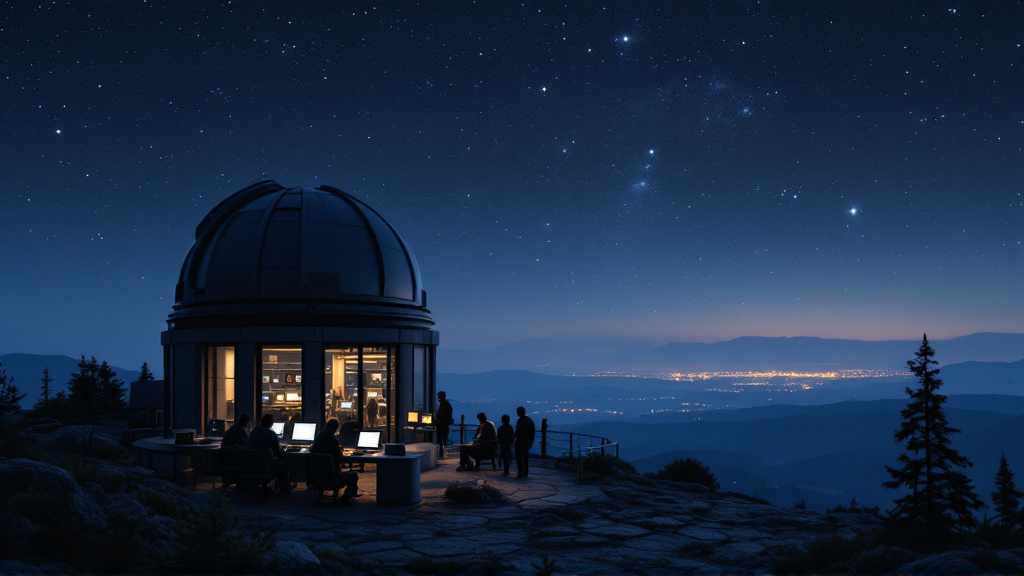
The image accompanying this article is an AI-generated illustrative depiction inspired by the actual scene of the event.