




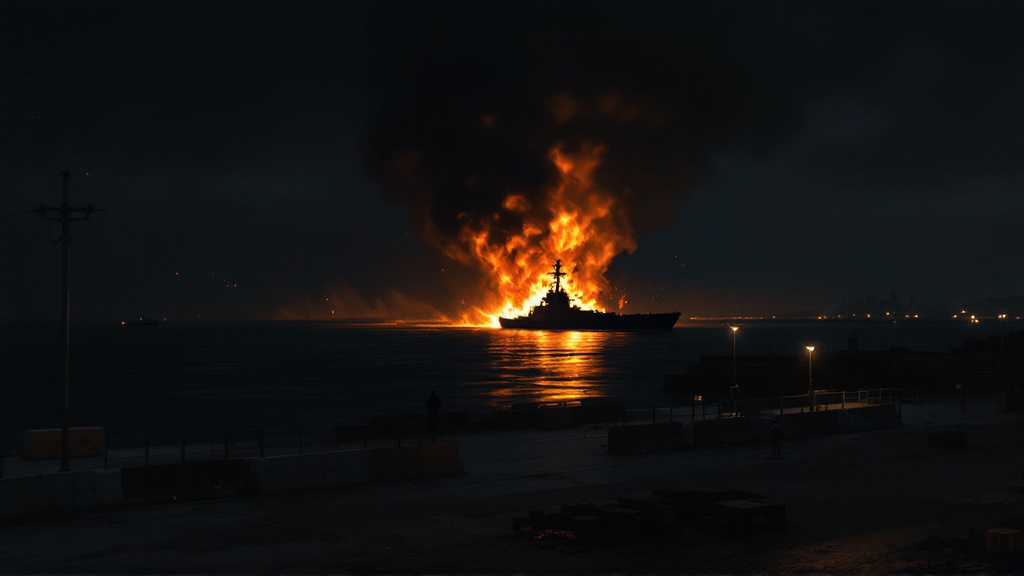
A Russian Navy missile corvette was engulfed in flames and is believed to be destroyed following a large explosion at the port of Benghazi in Libya, according to naval analysts and multiple reports. The vessel, provisionally identified as the Project 20380 Steregushchiy-class corvette Merkury, had been docked in Benghazi for several days prior to the incident.
The explosion and subsequent fire were reported overnight, with images and videos circulating on social media showing the warship’s superstructure heavily damaged and flames consuming much of the vessel. Naval analyst H I Sutton, cited by several sources, stated that the Merkury is “almost certainly destroyed” as a result of the blast.
The cause of the explosion has not been officially confirmed. While some reports suggest the possibility of a drone strike, there has been no claim of responsibility and no comment from either Russian or Ukrainian authorities. The incident comes amid a series of attacks on Russian naval assets in the region, but no direct link has been established in this case.
The Merkury is a modern missile corvette that was accepted into service by the Russian Navy in 2023. Although it is nominally assigned to the Black Sea Fleet, the vessel had reportedly been operating from Northern Fleet bases in the Arctic due to ongoing conflict in the Black Sea, which has limited Russia’s naval movements in the region.
According to naval sources, the Merkury was in Benghazi as part of an escort for a convoy of Russian government-linked ships involved in arms exports. The explosion occurred while the corvette was docked, resulting in a powerful blast and a fire that quickly spread across the ship.
There have been no confirmed reports of casualties or injuries among the crew or port personnel. Local authorities in Benghazi have not issued public statements regarding the incident, and Russian officials have so far remained silent.
The destruction of the Merkury marks a significant loss for the Russian Navy, particularly as the vessel was one of its newest and most advanced corvettes. The Project 20380 Steregushchiy-class is equipped with advanced missile and air defense systems, designed for multi-role operations in contested waters.
Libya has seen a growing Russian military presence in recent years, with Moscow expanding its footprint across several airbases and ports in the country. The incident in Benghazi highlights the risks associated with Russia’s increased naval and logistical operations in North Africa.
Why it matters
The destruction of the Merkury is a notable setback for Russia’s naval capabilities in the Mediterranean and North Africa, at a time when its Black Sea Fleet faces significant operational constraints due to the ongoing conflict with Ukraine. The loss of a modern Steregushchiy-class corvette, accepted into service only last year, underscores the vulnerability of Russian military assets operating outside their traditional areas of control.
This incident also draws attention to the broader context of Russia’s military expansion in Libya, where Moscow has established a presence at multiple airbases and ports. According to reports, Russian forces have deployed fighter jets, drones, and advanced air defense systems across the country, aiming to secure strategic access to the Mediterranean and support allied factions in Libya’s ongoing civil strife.
The explosion in Benghazi comes amid a pattern of attacks on Russian naval vessels in the region, with Ukraine previously reported to have targeted Russian ships in the Mediterranean. While no direct link has been established in this case, the event will likely heighten security concerns for Russian operations in North Africa and may prompt a reassessment of naval deployments in contested areas.
The image accompanying this article is an AI-generated illustrative depiction inspired by the actual scene of the event.