




Poland has accused Russia of a deliberate provocation after three Russian weapons, including at least two missiles and a suspected drone, crashed into southeastern Polish territory during a mass overnight strike on Ukraine. The incident, which occurred on November 20, did not result in any casualties or infrastructure damage, but has heightened tensions between NATO and Moscow at a time of ongoing military exercises in the region.
Polish Prime Minister Donald Tusk condemned the incident as an intentional violation of Polish airspace, linking the missile impacts to major allied exercises involving European troops near the Ukrainian border. “We are dealing with another provocation by Russia. In my opinion, the timing is not accidental,” Tusk said, according to multiple news sources. Defence Minister Wladyslaw Kosiniak-Kamysz supported this assessment, emphasizing that the incident was clearly dangerous and a direct consequence of Russia’s ongoing war against Ukraine.
Polish authorities reported that one of the weapons was identified as a Russian Kh-101 cruise missile, which carries a warhead weighing between 880 and 990 pounds. The missile reportedly landed about 47 miles from where 300 British soldiers were participating in joint exercises as part of the so-called ‘Coalition of the Willing.’ Investigations are ongoing at two additional impact sites, where a second missile and a jet-powered drone are suspected to have landed.
The impacts came during what Ukrainian President Volodymyr Zelenskyy described as “one of the largest attacks” on Ukraine since Russia’s full-scale invasion in 2022, with at least eight people killed and nearly 30 injured in Ukraine, according to Ukrainian officials. The Russian assault involved a large number of missiles and drones targeting Ukrainian infrastructure and cities overnight.
Despite the gravity of the incident, Poland has not invoked NATO Article 4, which allows member states to call consultations if they feel threatened. The Polish government stated that while the missile and drone impacts were intentional, the threshold for triggering NATO’s collective defence clause remains high. NATO Secretary-General Mark Rutte condemned the violation of Polish airspace as a “grave” breach, reaffirming the alliance’s support for Poland and Ukraine.
US President Donald Trump responded to the incident by downplaying its significance, describing the Russian missile and drone strikes as “mistakes.” In comments to Fox News, Trump said, “Putin has been landing drones in Poland and a couple of little missiles, by mistake.” His remarks have drawn criticism from Polish officials, with Prime Minister Tusk pointedly remarking, “God, protect us from such friends,” in response to Trump’s characterization of Russian President Vladimir Putin as his “friend.”
Tusk acknowledged the hesitation among some Western allies to escalate the situation, saying, “The United States doesn’t want to trigger another spiral of escalation, and I understand that. But I do not always, to put it mildly, agree with the American side’s assessment and interpretation of these incidents.”
The Russian government has not issued an official statement addressing the missile impacts in Poland. The incident follows previous instances in which Russian missiles or drones have strayed into NATO territory, raising concerns among alliance members about the risks of accidental or deliberate escalation.
Why it matters
The latest missile impacts on Polish territory mark a significant escalation in the risks faced by NATO’s eastern members as Russia intensifies its aerial campaign against Ukraine. Polish officials have characterized the incident as a deliberate provocation, timed to coincide with major allied military exercises involving British and other European troops. This underscores the vulnerability of NATO’s eastern flank and the potential for spillover from the war in Ukraine, especially as Russia’s attacks grow in scale and proximity to alliance borders.
The differing responses from Western leaders highlight divisions within the alliance over how to interpret and respond to Russian actions. While NATO Secretary-General Mark Rutte and Polish leaders have condemned the incident as a serious breach, US President Donald Trump’s decision to downplay the strikes as “mistakes” has drawn criticism and raised questions about alliance unity. Prime Minister Tusk’s public disagreement with Trump’s assessment points to ongoing debates about deterrence, escalation, and the appropriate threshold for invoking NATO’s collective defence mechanisms.
As investigations continue and allied forces remain on high alert, the incident is likely to influence future NATO policy discussions and military planning. The presence of British troops near the impact zone and the ongoing war in Ukraine mean that any further violations of NATO airspace could rapidly escalate tensions. The situation will be closely watched by European governments and military planners concerned about the security of NATO’s eastern borders and the broader stability of the region.
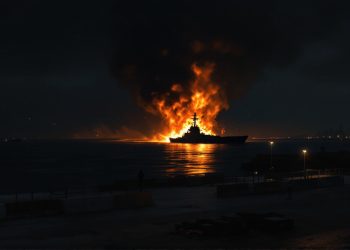
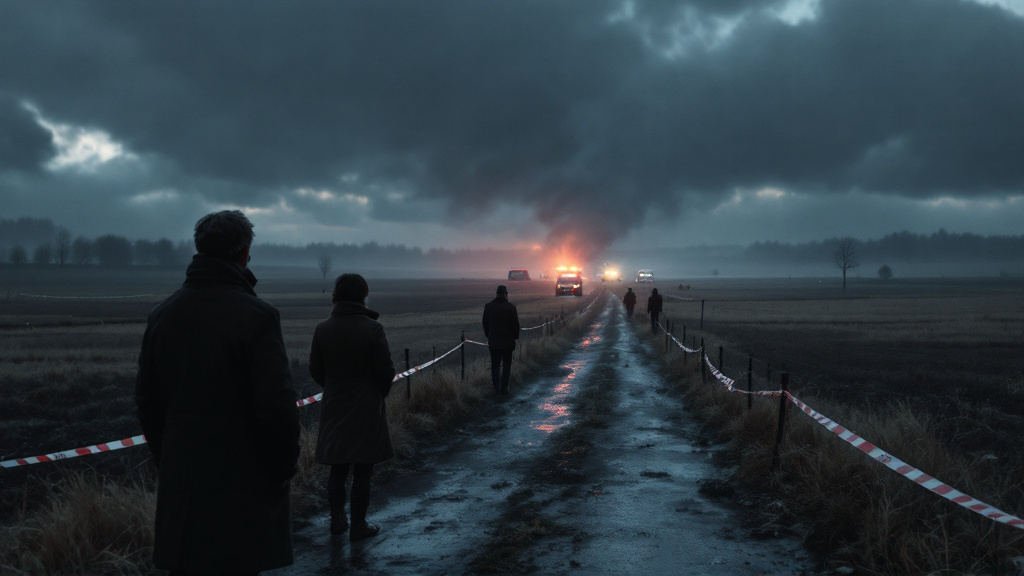
The image accompanying this article is an AI-generated illustrative depiction inspired by the actual scene of the event.