




NASA’s Voyager 1 spacecraft has become the first human-made object to reach a distance of one light-day from Earth, but the probe is currently not transmitting any science or engineering data back to mission control, according to NASA and multiple news outlets. The milestone, achieved on November 18, marks a new chapter in deep space exploration, even as engineers work to resolve a technical issue affecting communications with the nearly 50-year-old spacecraft.
Voyager 1’s team at NASA’s Jet Propulsion Laboratory (JPL) in Southern California received confirmation of the achievement through the spacecraft’s carrier signal and trajectory calculations, with the signal arriving on Earth at 5:16 a.m. ET on November 19. The probe, now more than 16 billion miles (26 billion kilometers) from Earth, continues to beam a steady radio signal, indicating it remains operational and its antenna is still pointed at Earth.
However, since November 14, Voyager 1 has not been sending home any science or engineering telemetry. According to NASA, the radio signal currently received carries no information about the probe’s health or the measurements from its instruments. The spacecraft’s carrier signal confirms that its transmitter and antenna are functioning, but the absence of data has left engineers searching for answers.
NASA officials stated that the likely cause of the problem is a malfunction in the onboard computer responsible for collecting and packaging instrument readings for transmission. Engineers are investigating whether the current outage is related to a similar episode in October, when Voyager 1 temporarily lost all contact for approximately 48 hours before reconnecting on its own.
Despite the technical setback, Voyager 1’s achievement of traveling a light-day from Earth has been widely recognized as a historic milestone. NASA’s Heliophysics Division Director, Joe Westlake, described the accomplishment as a “singular feat for a spacecraft,” highlighting Voyager’s dual legacy as a planetary science pioneer and a vital contributor to the study of the Sun and interstellar space.
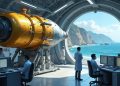
The milestone was celebrated at JPL, where mission personnel gathered to mark Voyager 1’s extraordinary journey. The spacecraft’s continued presence in interstellar space underscores the longevity and resilience of NASA’s longest-operating space mission.
Launched in 1977, Voyager 1 conducted flybys of Jupiter and Saturn before heading toward the outer reaches of the Solar System. It became the most distant human-made object in 1998 and crossed the boundary of the heliosphere—the region influenced by the Sun—into interstellar space in 2012. Its twin, Voyager 2, followed a similar path and also remains operational in interstellar space.
At its current distance, radio signals take about 24 hours to travel from Voyager 1 to Earth and another 24 hours for commands to reach the spacecraft. This communication delay means that any troubleshooting efforts by engineers require at least two days to yield results.
NASA has emphasized that, despite the aging probe’s limited power and technical anomalies, the mission is “not done yet.” Officials at JPL expressed optimism about continuing to receive valuable data from Voyager 1 once the current issue is resolved, noting the spacecraft’s remarkable endurance in the harsh environment of deep space.
Why it matters
Voyager 1’s crossing of the one light-day threshold marks a new frontier for human exploration, demonstrating the reach of technology developed nearly five decades ago. According to NASA, this milestone not only represents a record-setting distance but also highlights the spacecraft’s ongoing contribution to science, even as it faces significant technical challenges.
The current data outage underscores the fragility of long-duration space missions and the complexity of maintaining communication with probes operating at extreme distances. The fact that Voyager 1 continues to transmit a carrier signal, as confirmed by NASA and reported by multiple sources, offers hope that engineers may restore its data stream and extend its scientific legacy.
As both Voyager 1 and Voyager 2 continue their journeys through interstellar space, their progress is closely watched by the scientific community. The ability to troubleshoot and potentially recover data from Voyager 1 will inform future deep space missions, shaping how agencies like NASA design, operate, and support spacecraft venturing beyond the Solar System.
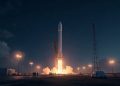
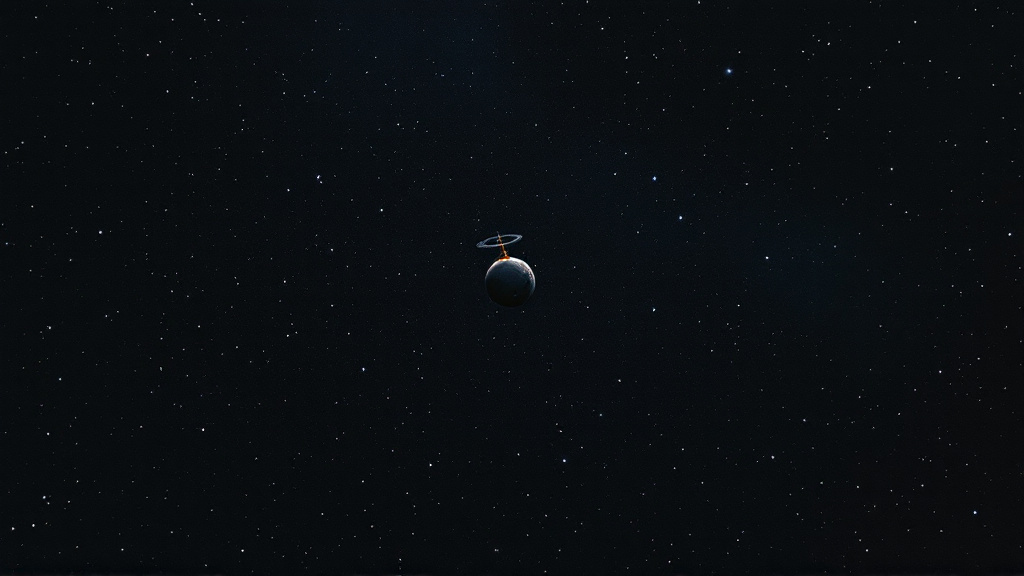
The image accompanying this article is an AI-generated illustrative depiction inspired by the actual scene of the event.