



The United States is reducing its military and diplomatic footprint across the Middle East, as indirect negotiations with Iran over a proposed seven-day ceasefire continue, according to multiple sources. The move comes amid heightened tensions in the region, with U.S. officials citing ongoing threats from Iran and the risk of renewed large-scale conflict.
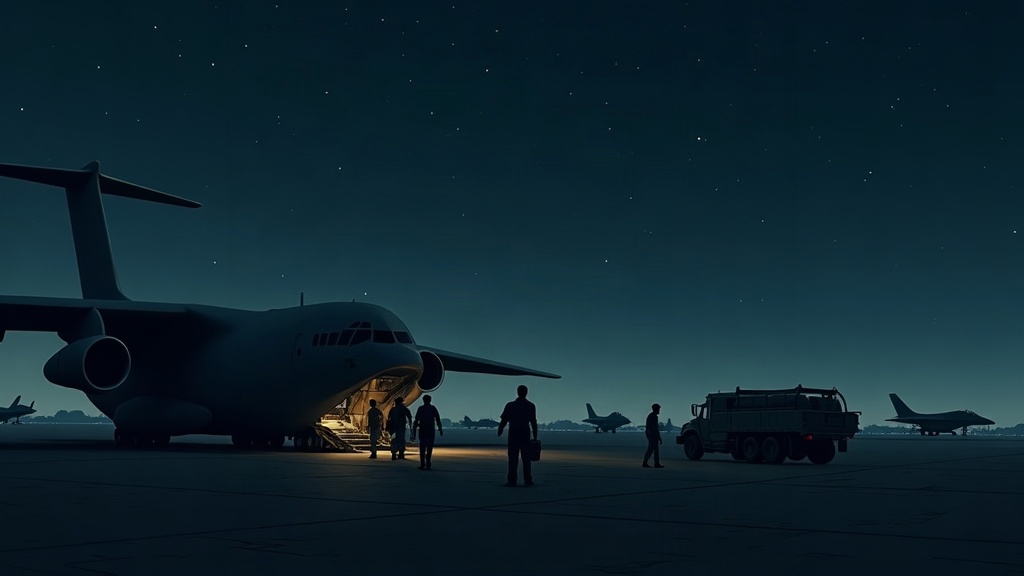
U.S. forces have quietly scaled back their presence at bases in Jordan, Qatar, and Kuwait, while the State Department has ordered staff reductions at several diplomatic missions, including the U.S. Embassy in Saudi Arabia, which remains operational under an “ordered departure” status. According to CBS News, these adjustments are part of broader U.S. military leadership plans to maintain mission readiness while responding to the evolving security landscape.
Operational details about the repositioning of U.S. personnel and assets have not been disclosed, with officials citing security concerns. However, sources indicate that the reductions are intended to minimize risk to American forces and diplomats as the possibility of renewed fighting with Iran remains high.
Indirect talks between the U.S. and Iran are ongoing, with mediation reportedly involving Pakistan and Qatar. Iranian Foreign Minister Abbas Araghchi confirmed that discussions continue over the terms of a seven-day ceasefire proposal, though the U.S. is seeking new clauses. The nuclear issue remains a sticking point, with Iran insisting that “not a single gram of enriched uranium will be removed from Iran,” according to statements from Iranian officials reported by NewsCord.
The security situation in the region remains tense. The Iranian Revolutionary Guard Corps (IRGC) has threatened to target undersea internet cables and U.S. military bases in the region if the U.S. launches new strikes on Iranian infrastructure or continues to assist commercial shipping through the critical Strait of Hormuz. The IRGC’s navy has also warned of potential attacks on U.S. “investments” in response to further American action.
Recent incidents have heightened concerns, including an attack on King Fahd International Airport in Dammam, Saudi Arabia, which killed at least one person and injured eight others, according to CBS News. Iran’s leadership has described the country as being in “war conditions,” with officials warning of further retaliation if attacked and asserting continued control over the Strait of Hormuz, a vital waterway for global oil transit.
Despite the escalations, Iranian officials maintain that diplomacy remains possible. Foreign Minister Araghchi stated that Tehran is open to negotiations but is prepared to defend itself if necessary. Meanwhile, the U.S. has not ruled out further military action but is focusing on reducing its exposure in the region while talks continue.
With indirect negotiations ongoing and both sides issuing warnings, the situation remains fluid. It is unclear whether the current reductions in U.S. personnel will be temporary or signal a longer-term shift in American strategy in the Middle East. The outcome of the ceasefire talks and the broader dispute over Iran’s nuclear program are expected to shape the next phase of the crisis.
The image accompanying this article is an AI-generated illustrative depiction inspired by the actual scene of the event.