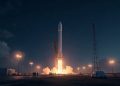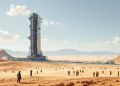





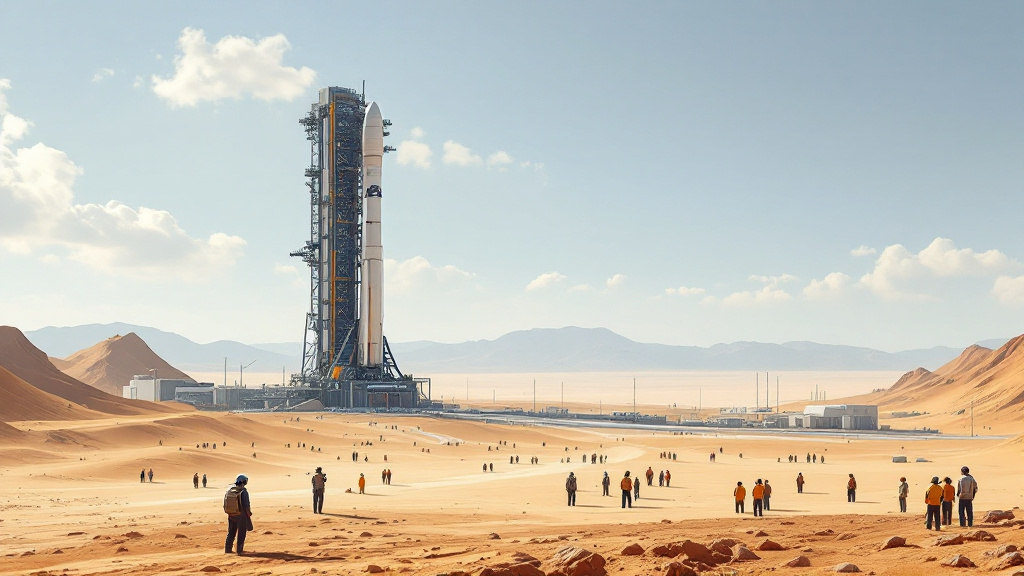
China successfully launched its Shenzhou-24 crewed space mission today, sending three astronauts—including Pakistan’s Muhammad Zeeshan Ali—to the Tiangong space station in a historic first for both countries. The launch took place at 08:18 local time (00:18 GMT) from the Jiuquan Satellite Launch Center in the Gobi desert, according to Chinese officials and international media reports.
The mission marks the first time a foreign astronaut has joined a Chinese space crew, and the first time a Pakistani has traveled to space. Ali, 40, is flying alongside Chinese astronauts Tang Hongbo, 51, and Wu Yi, 39, on a mission that both nations have described as a milestone in their bilateral cooperation.
According to NDTV, the astronauts underwent extensive training in China starting in 2025, covering spacecraft operations, emergency procedures, survival training, scientific experiment protocols, and physical conditioning. Ali was confirmed as the mission’s Pakistani crew member only a day before launch, following a rigorous selection process.
Millions of Pakistanis watched the live broadcast of the launch, which was declared a “complete success” by Chinese space officials. As the rocket lifted off into the dawn sky, Ali waved during a see-off ceremony, symbolizing what many in Pakistan see as the country’s entry into the global space community.
The mission is the result of an agreement signed by China and Pakistan in February 2025, according to CBS News. The flight is being closely watched as a demonstration of China’s willingness to open its manned space program to international partners, and as a reflection of deepening ties between the two countries.
Pakistani Prime Minister Shehbaz Sharif offered his best wishes to the astronauts ahead of the mission, stating on X that “Pakistan-China friendship is surpassing the heights of the Himalayas in its journey to outer space.”
Ali expressed his honor in representing Pakistan and the hopes of 250 million Pakistanis, according to statements reported by several outlets. He is expected to live and work aboard the Tiangong space station, conducting scientific experiments alongside his Chinese colleagues.
The Shenzhou-24 launch was covered by major international broadcasters, with live footage showing the astronauts preparing for their journey and the rocket’s ascent over the Gobi desert. Reuters identified Tang Hongbo as the mission commander, with Wu Yi and Zeeshan Ali as fellow crew members.
The Tiangong space station, which has been under construction since 2021, is China’s flagship orbital outpost and has hosted several Chinese crews. The inclusion of a foreign astronaut for the first time is seen as a significant step in China’s efforts to internationalize its space program.
Why it matters
The launch of Muhammad Zeeshan Ali aboard Shenzhou-24 is a landmark moment for Pakistan, making it one of the few countries to send a citizen into orbit and marking its debut in crewed spaceflight. According to NDTV and CBS News, the event was widely celebrated in Pakistan and is expected to inspire further investment in the country’s space ambitions.
For China, the mission demonstrates the growing sophistication and openness of its space program. By flying a foreign astronaut for the first time, China is signaling its readiness to collaborate more broadly on space exploration, as highlighted by the agreement signed with Pakistan in 2025. This move comes as China seeks to position itself as a leading player in international space cooperation, especially as access to the International Space Station remains limited for Chinese astronauts.
The Shenzhou-24 mission also underscores the strategic partnership between China and Pakistan, which has expanded from economic and military cooperation into the realm of space. As reported by multiple sources, the mission coincides with the 75th anniversary of China-Pakistan cooperation, and may pave the way for future joint projects, including scientific experiments and potential lunar exploration initiatives.
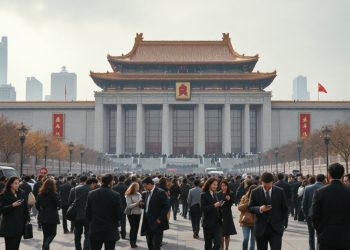
The image accompanying this article is an AI-generated illustrative depiction inspired by the actual scene of the event.