




Iraq’s Prime Minister Ali al-Zaidi has directed the federal Ministry of Oil to assume management of oilfields located in areas currently under the security control of the Kurdish Regional Government (KRG), escalating a longstanding dispute over the country’s vital energy resources. The order, issued today, also instructs the Kurdistan government to approve exports of crude oil and petroleum products exclusively through the federal Oil Ministry, according to official statements reported by multiple news agencies.
The federal order covers oilfields in the provinces of Diyala, Kirkuk, Salahuddin, and Nineveh—regions where Kurdish security forces have maintained a presence but which lie outside the formal boundaries of the autonomous Kurdistan Region. The move is part of a broader effort by Baghdad to crack down on oil smuggling and reassert state authority over key economic assets, officials said.
In addition to the oil sector measures, Prime Minister al-Zaidi has ordered the Border Ports Commission to take control of all border crossings in the Kurdistan Region. This directive follows an investigation into oil smuggling at the North Oil Company, which led to the suspension of the company’s director general and several deputies, according to state news agency reports cited by Reuters and Al-Monitor.
The Kurdistan Regional Government has strongly rejected Baghdad’s decisions. Masrour Barzani, the prime minister of the Kurdish region, stated that the centralisation of control over oilfields and border crossings is unacceptable to Kurdish authorities, according to Reuters. The KRG has historically maintained independent control over its oil exports and border points, a stance that has repeatedly brought it into conflict with Iraq’s federal government.
Officials in Baghdad argue that the new measures are necessary to bring all oil excavation and marketing under the supervision of the State Organization for Marketing of Oil (SOMO), the federal body responsible for Iraq’s oil exports. Al Jazeera’s Mahmoud Abdelwahed reported that the federal government aims to “secure and monitor all oilfields with cameras, including fields within the administrative boundaries of the federal government that are under the security authority of the regional government.”
The dispute over oil revenues and management has been a persistent source of friction between Baghdad and Erbil. Tensions flared in recent years after Kurdish authorities sold oil independently, bypassing the federal government. This led to the suspension of pipeline shipments to Turkey for more than two years, until an agreement was reached in September 2025 to restart exports through federal channels, according to Al-Monitor and Daily Sabah.
The latest federal orders come amid a wider anti-corruption campaign by Prime Minister al-Zaidi, who has pledged to combat illicit oil trade and smuggling networks. Recent crackdowns have included the arrest of officials and investigations into Iran-backed armed groups suspected of involvement in smuggling operations near Baghdad, according to The Times of Israel.
It remains unclear whether the federal government’s decisions were coordinated with the KRG, and the immediate response on the ground in the affected provinces has not been detailed in official statements. However, analysts and local media warn that the moves are likely to exacerbate already strained relations between Baghdad and the Kurdish authorities, with potential implications for Iraq’s internal stability and energy sector.
Why it matters
The federal government’s bid to centralise control over oil production and border management in Kurdish-held areas marks a significant escalation in Iraq’s internal power struggle. The oilfields in Diyala, Kirkuk, Salahuddin, and Nineveh represent a substantial portion of Iraq’s energy output, and control over these assets is crucial for both the federal budget and the Kurdish region’s financial autonomy. According to Reuters and Al Jazeera, the dispute over oil revenues has been a major obstacle to political reconciliation and economic integration between Baghdad and Erbil.
This development also follows a recent resumption of oil exports to Turkey after a prolonged standoff, underscoring the fragility of agreements between the two sides. The federal crackdown on smuggling and corruption, including the suspension of senior oil officials, reflects Prime Minister al-Zaidi’s broader campaign to reassert state authority and address systemic graft, as reported by Al-Monitor and The Times of Israel. The outcome of this confrontation will affect not only Iraq’s internal stability but also its relationships with regional partners and international energy markets.
Observers are watching closely for signs of further escalation or negotiation. With the KRG rejecting Baghdad’s orders and federal authorities determined to enforce them, the coming days will be critical in determining whether Iraq can resolve its deep-rooted disputes over oil and governance or whether tensions will further destabilise the country’s north.
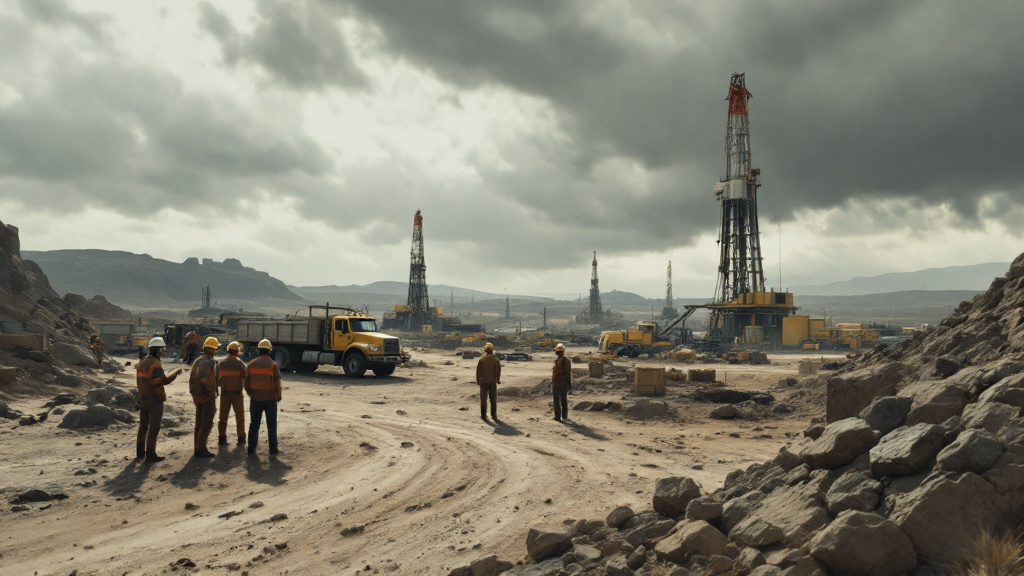
The image accompanying this article is an AI-generated illustrative depiction inspired by the actual scene of the event.