




General-purpose artificial intelligence models Claude and ChatGPT have demonstrated the ability to design new proteins and predict their structures, a feat previously limited to highly specialized AI tools, according to new reports published today by Nature and other science outlets.
Laboratory experiments confirmed that around 11% of protein designs generated by these large language models (LLMs) were able to bind their intended biological targets, Nature reported. In some cases, the models performed as well as established specialist tools in tasks such as designing protein sequences and redesigning existing antibodies.
OpenAI and Anthropic, the companies behind ChatGPT and Claude respectively, have not disclosed the full details of the biology-related data used to train their models. However, their latest research shows that these generalist LLMs can now perform complex tasks in protein biology, including predicting three-dimensional structures and engineering new protein sequences, without relying on biology-specific AI architectures.
OpenAI researchers described their findings in a technical paper and blog post released on 24 November, noting that some of the proteins designed by their models behaved as expected when synthesized and tested in laboratory settings. The results have triggered a wave of interest and experimentation among computational biologists, who are now exploring what other protein biology tasks these LLMs might be capable of handling.
While the models achieved notable success in several areas, their performance in predicting the 3D structure of proteins was sometimes less accurate than that of specialist tools such as AlphaFold2, the Google DeepMind system that revolutionized protein structure prediction in 2020. Nonetheless, the ability of general-purpose LLMs to approach or match specialist performance in certain tasks has surprised many researchers.
Some scientists remain cautious, questioning whether these models truly understand the underlying principles of protein biology or are simply reproducing patterns from their training data. The lack of transparency about the datasets used for training makes it difficult to determine whether the models are demonstrating genuine biological insight or advanced pattern recognition.
Specialist AI tools in biology, such as AlphaFold for structure prediction and RFdiffusion for sequence design, have traditionally required extensive customization and retraining for new tasks. In contrast, the versatility of LLMs like ChatGPT and Claude allows them to adapt to a range of biological challenges with little or no additional training, according to the latest reports.
The findings have sparked debate within the scientific community about the future role of generalist versus specialist AI models in biological research. Some experts suggest that general-purpose LLMs could eventually surpass dedicated tools, while others argue that specialist systems will remain essential for the most demanding applications.
Why it matters
The emergence of general-purpose language models as powerful tools for protein design marks a significant shift in the landscape of computational biology. According to Nature, the ability of Claude and ChatGPT to design proteins and predict their structures—tasks once reserved for specialist systems like AlphaFold—could accelerate research in drug discovery, antibody engineering, and synthetic biology.
This development also raises important questions about the transparency and interpretability of AI-driven research. As noted by researchers cited in Nature and GIGAZINE, the lack of clarity about training data makes it challenging to assess whether these models are truly learning biological principles or simply leveraging vast amounts of memorized information. The debate over generalist versus specialist AI tools is likely to intensify as more laboratories test the capabilities of LLMs in real-world biological applications.
With OpenAI and Anthropic continuing to advance their models, and computational biologists racing to explore new possibilities, the boundary between generalist and specialist AI in science is rapidly blurring. The next phase of research will likely focus on clarifying the mechanisms behind these breakthroughs and determining how best to harness LLMs for practical use in medicine and biotechnology.
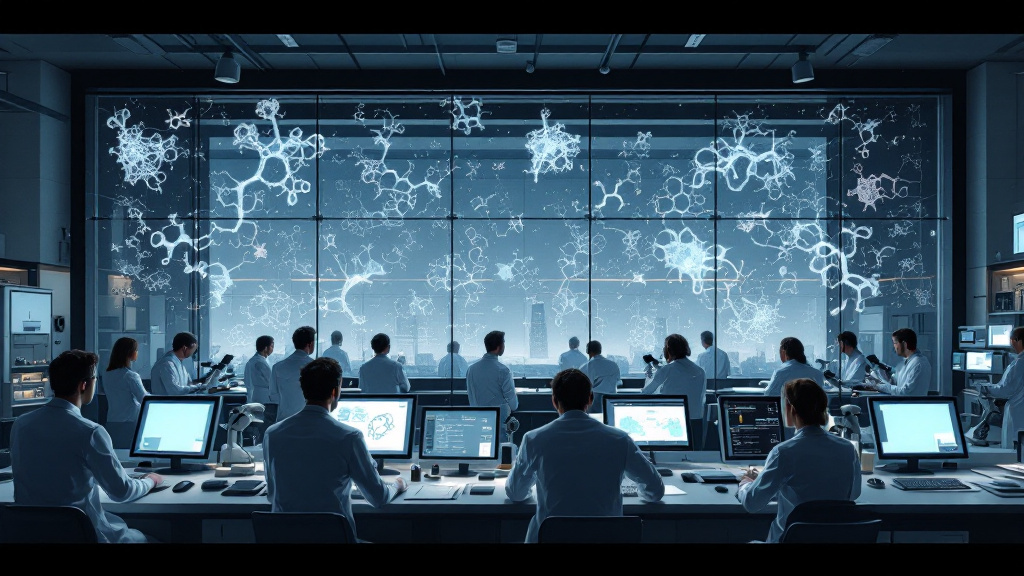
The image accompanying this article is an AI-generated illustrative depiction inspired by the actual scene of the event.