




Scientists have announced the discovery of fossilised red blood cells inside the bone of a dinosaur that lived approximately 115 million years ago in what is now northwestern Brazil. The finding, made by an international research team led by Curtin University in Western Australia, is being described as the most compelling evidence to date of ancient blood cells preserved in dinosaur fossils.
The team examined the limb bones of a theropod dinosaur known as Aratasaurus museunacionali. Through advanced chemical analysis, they identified mineralised red blood cells and intact heme B biomolecules within the fossil, according to reports published today. Heme is the organic compound that enables haemoglobin in blood to transport oxygen throughout the body.
The Guardian, citing the researchers, reports that chemical tests on the Aratasaurus bone confirmed the presence of heme, providing strong molecular evidence that blood cell structures can survive for tens of millions of years under certain conditions. The Times also highlighted the significance of the discovery, noting that similar fossilised cells have been found in the leg of a relative of the Tyrannosaurus rex, further suggesting that key biological molecules can persist for at least 115 million years.
According to the scientists involved, the preservation of such delicate cellular structures is extremely rare. Fossils typically retain only hard tissues such as bones and teeth, while soft tissues and biomolecules are thought to degrade rapidly after death. The identification of intact heme B in the Aratasaurus specimen challenges previous assumptions about the limits of molecular preservation in the fossil record.
The dinosaur bone was excavated from the Crato Formation in northwestern Brazil, a region known for its rich fossil deposits dating back to the Early Cretaceous period. The research team employed a combination of microscopy and chemical techniques to confirm the identity and composition of the fossilised cells.
While earlier studies have hinted at the possible survival of blood cells and proteins in dinosaur fossils, the new findings are being hailed as the clearest evidence yet. The research not only demonstrates the survival of cellular structures but also provides a molecular signature—heme B—that is directly linked to oxygen transport in living animals.
Specialists say the discovery could open new avenues for studying dinosaur physiology, metabolism, and evolutionary relationships. By analysing preserved biomolecules, scientists may gain insights into how these ancient creatures lived, how their bodies functioned, and how they adapted to their environments.
The findings have generated excitement in the paleontological community, with researchers noting that such discoveries could help bridge the gap between the fossil record and the biology of extinct species. The team’s work underscores the value of applying modern chemical and imaging techniques to ancient fossils, potentially revealing details that were previously inaccessible.
Why it matters
This discovery marks a significant advance in paleontology by providing direct molecular evidence of blood cells in a dinosaur fossil, as confirmed by Curtin University researchers and reported by The Guardian. The identification of heme B, a molecule essential for oxygen transport, not only confirms the preservation of red blood cells but also demonstrates that complex organic compounds can survive for over 100 million years under favourable conditions.
The implications extend beyond the Aratasaurus specimen. As The Times notes, similar findings in other dinosaur fossils suggest that a broader range of ancient molecular data may be recoverable. This opens new possibilities for reconstructing the biology, physiology, and evolutionary history of extinct species, using techniques that can detect and analyse preserved biomolecules.
By challenging long-held assumptions about the fragility of soft tissues and proteins in the fossil record, the research encourages further exploration of fossilised remains using advanced chemical and imaging methods. The ability to detect and study ancient blood cells and biomolecules could transform our understanding of dinosaur life and evolution, offering a more detailed and nuanced picture of the distant past.
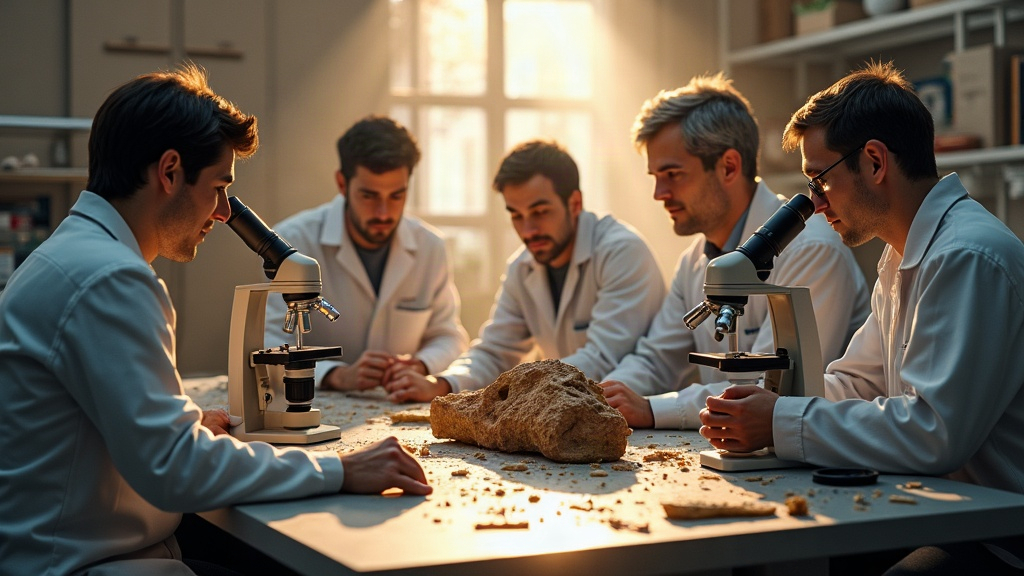
The image accompanying this article is an AI-generated illustrative depiction inspired by the actual scene of the event.