





A knife-wielding attacker was shot dead outside the Israeli Embassy in Belgrade early Wednesday after assaulting a Serbian security officer guarding the diplomatic mission. The incident, which occurred shortly after midnight, prompted Serbian authorities to raise the country’s terror threat level to its highest setting and increase security at key locations, according to statements from the Interior Ministry and multiple news outlets.
The assailant, described by officials as a minor whose identity has not yet been established, approached the embassy and attacked a member of Serbia’s Gendarmerie with two knives. During the assault, the attacker reportedly shouted “Allahu Akbar,” according to Serbian Interior Minister Ivica Dacic and reports from Ynet News and Türkiye Today.
The security officer, who sustained a minor injury including a cut to his face, responded by shooting and killing the attacker in self-defense. The officer was treated for his injuries and is reported to be in stable condition, according to the latest updates from the scene.
Serbian police immediately classified the incident as a terrorist attack. In response, authorities raised the national terror threat level to its highest and deployed additional police units to sensitive sites across Belgrade, including diplomatic missions and public infrastructure. The Interior Ministry said the investigation is ongoing, and efforts are underway to determine the identity and possible motives of the attacker.
This is the second violent incident targeting the Israeli Embassy in Belgrade in just over two years. In June 2024, a man armed with a crossbow wounded a Serbian police officer outside the same embassy before being shot and killed by security forces. That attack was also treated as an act of terrorism by Serbian authorities, who subsequently enhanced security around diplomatic missions in the capital.
Officials have not released further information about any possible links between the two attacks or whether the latest assailant was known to security services. However, reports from Haaretz indicate that previous suspects in similar incidents had expressed support for extremist groups, though there is no confirmation of such affiliations in the current case.
The Israeli Embassy in Belgrade has not issued a public statement on the latest attack. The Israeli government and Serbian authorities are reportedly coordinating closely on security matters following the incident, as both countries have faced heightened concerns over the safety of diplomatic personnel amid ongoing regional tensions.
Serbian Interior Minister Ivica Dacic emphasized the seriousness of the threat, stating that security measures would remain elevated in the coming days. Police presence has been visibly increased around embassies, government buildings, and other potential targets in Belgrade as a precautionary measure.
Why it matters
The attack outside the Israeli Embassy in Belgrade underscores ongoing security challenges facing diplomatic missions in Europe, particularly those representing countries involved in regional conflicts. The fact that the assailant was a minor, as confirmed by Serbian officials and Ynet News, highlights concerns about the radicalization of youth and the potential for lone-wolf attacks inspired by extremist ideologies.
This is the second time in two years that the Israeli Embassy in Belgrade has been targeted, with the previous incident in June 2024 also resulting in a fatal confrontation. According to reports from Ynet News and Türkiye Today, both attacks prompted Serbian authorities to classify the incidents as terrorism and to raise the national terror alert, signaling a pattern that has significant implications for security policy in Serbia and the wider region.
Serbia’s decision to elevate its terror threat level and deploy additional police resources reflects the seriousness with which authorities are treating the risk to diplomatic missions and public safety. The repeated targeting of the Israeli Embassy may influence future cooperation between Serbia and Israel on counter-terrorism efforts, and will likely be closely monitored by other countries concerned about the security of their diplomatic staff abroad.
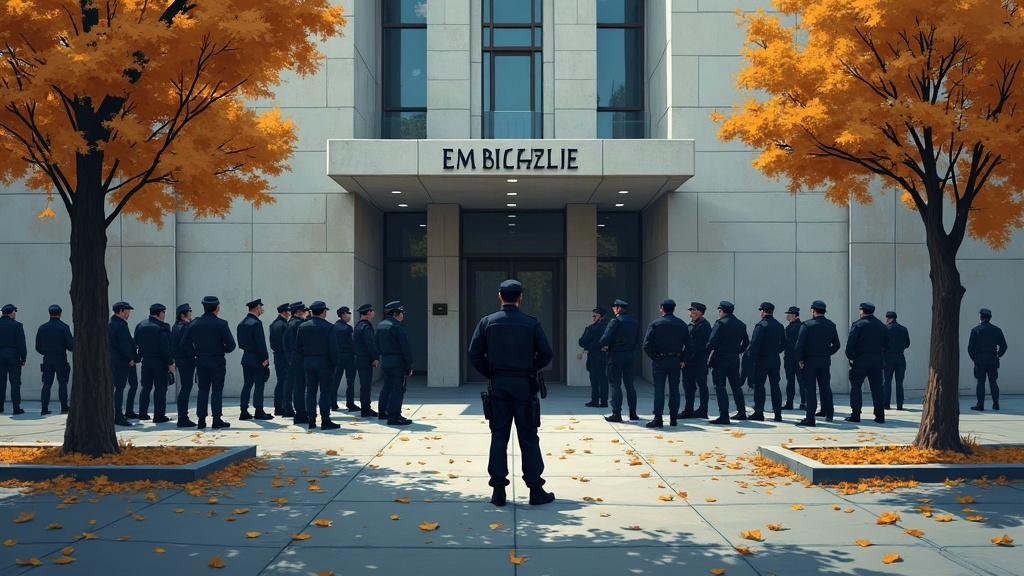
The image accompanying this article is an AI-generated illustrative depiction inspired by the actual scene of the event.