




Donnie Iris, the celebrated Pittsburgh rock musician known for his enduring hits and deep ties to Western Pennsylvania, has died at the age of 83. The singer, who had been battling bladder cancer for three years, passed away after recently announcing his retirement from live performances, according to local media reports and statements from colleagues.
Iris, whose real name was Dominic Ierace, was revered in the Pittsburgh music scene for a career that spanned more than six decades. He first rose to prominence in the late 1960s as a member of The Jaggerz, before achieving solo success in the 1980s with songs like “Ah! Leah!” and “Love Is Like a Rock.” His influence extended beyond his chart successes, making him a beloved figure in his hometown and among generations of fans.
According to the Pittsburgh Post-Gazette, Iris was described by fellow musician Joe Grushecky as “the most beloved Pittsburgh musician of all time.” Grushecky recalled seeing Iris perform with The Jaggerz, noting their early days performing Motown covers in local clubs. “He just had that warmth about him, and it came through in his performance,” Grushecky said.
Iris announced his retirement from live performances earlier this month after a show at Citizens Live at The Wylie. In a letter posted to social media on October 9, Iris wrote, “After much thought, and in light of recent health issues, I have made the difficult decision to retire from future concert performances. From the earliest days to every chapter of my life, your support has been a constant source of joy and inspiration.”
His signature song, “Ah! Leah!”, reached No. 29 on the Billboard Hot 100 in 1980 and became an anthem for Pittsburgh music fans. Other notable tracks included “The Rapper,” which he recorded with The Jaggerz, as well as “Stagedoor Johnny,” “Never Did I,” and “My Girl.” Iris was also known for his work with Donnie Iris and the Cruisers, a band that further cemented his status as a local legend.
Remembrances and condolences poured in following news of his death. Pittsburgh Mayor Corey O’Connor stated on social media that Iris “was more than a local legend – he was part of the soundtrack of our city.” Fans and fellow musicians alike shared tributes, highlighting the impact of Iris’s music and personality on the region’s cultural identity.
Iris was often referred to as the “new king of cool” after a 1980 performance, a nickname that inspired the title of his follow-up album, “King Cool.” Despite his national success, he remained deeply connected to Pittsburgh, regularly performing in local venues and engaging with the community throughout his career.
His passing marks the end of an era for Pittsburgh’s music scene, which has long celebrated Iris as a symbol of local pride and artistic achievement. His influence is evident in the generations of musicians who cite him as an inspiration and in the continued popularity of his songs at sporting events and on local radio.
Why it matters
Donnie Iris’s death is significant not only for Pittsburgh but for American rock music as a whole. As reported by the Pittsburgh Post-Gazette and CBS News, Iris was widely regarded as the most beloved musician in his hometown, a status earned through decades of performances and hit songs that resonated with audiences far beyond Western Pennsylvania.
His career, spanning from the 1960s with The Jaggerz to his solo work in the 1980s and beyond, reflects the evolution of American popular music and the enduring appeal of regional artists who achieve national recognition. The outpouring of tributes from local leaders such as Mayor Corey O’Connor and fellow musicians like Joe Grushecky underscores the deep personal and cultural connections Iris fostered throughout his life.
As Pittsburgh mourns the loss of its “king of cool,” Iris’s legacy is set to endure through his recordings, the musicians he inspired, and the community that continues to celebrate his contributions. His passing may prompt renewed interest in the city’s rich musical heritage and spark conversations about the role of local legends in shaping broader cultural narratives.
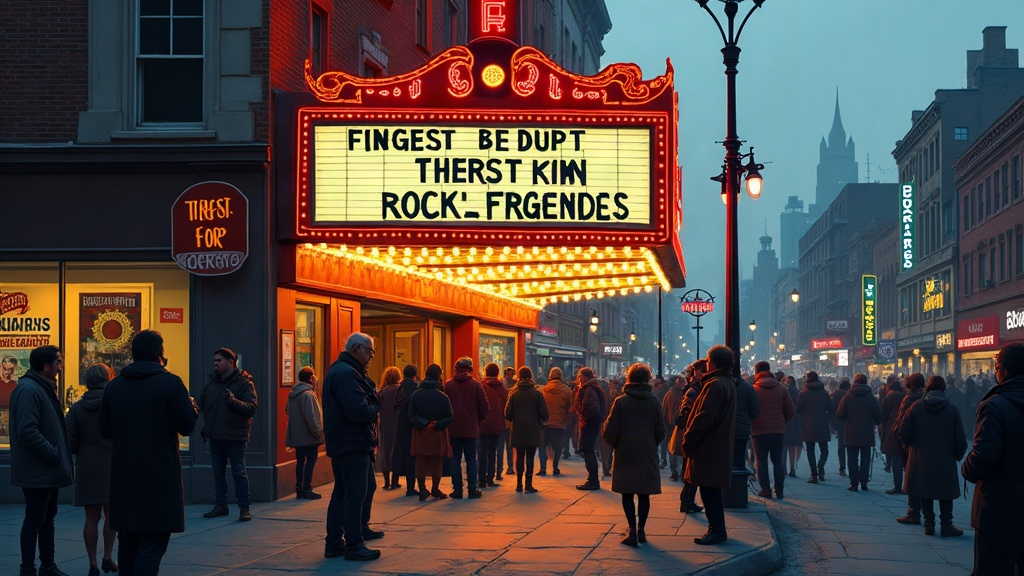
The image accompanying this article is an AI-generated illustrative depiction inspired by the actual scene of the event.