





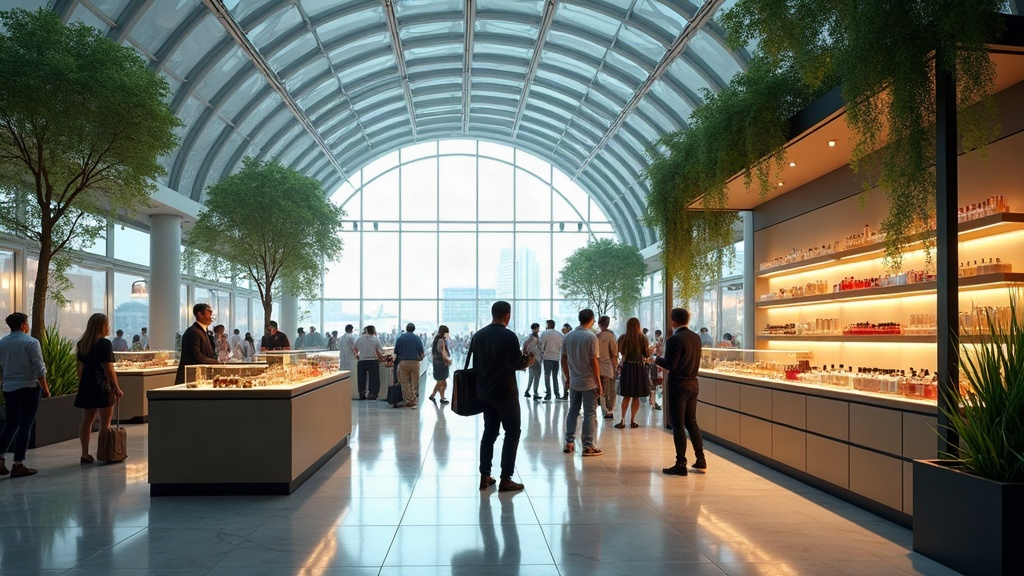
Fragrance is emerging as the most resilient category in travel retail beauty, as brands and retailers increasingly focus on physical discovery, sampling, and personalization to reconnect with consumers. The shift comes amid ongoing challenges in converting the record numbers of travelers into active shoppers, according to recent industry reports.
Travel retail remains a vital platform for beauty brands seeking to reach international travelers, but recovery for the sector is proving elusive. In Western markets, fragrance has taken the lead in beauty sales, while other regions such as North Asia and the Middle East show different product preferences. Skincare continues to drive demand in North Asia, particularly among Chinese shoppers, whereas luxury fragrance and gifting are significant draws in the Middle East, according to industry sources.
Brands are responding to these regional differences by evolving their strategies. The changing profile of fragrance consumers is opening up opportunities for brands beyond traditional luxury perfume houses. Notably, Sol de Janeiro, originally a bodycare business, has shifted its focus since 2023 to become a scent-led beauty brand, reflecting the broader trend towards experiential retail and scent discovery.
Retailers and brands are increasingly collaborating and leveraging data to engage travelers throughout their journey, rather than focusing solely on individual transactions. According to industry reports, this approach involves using passenger insights from across travel ecosystems, such as airlines and cruise ships, to identify target customer groups and tailor engagement strategies accordingly.
Airport duty-free stores, downtown duty-free shopping destinations, airlines, and cruise ships collectively offer access to millions of international travelers each year. Despite the large potential customer base, converting travelers into buyers remains a key challenge for the beauty sector in travel retail. Success is now being measured not just by immediate sales, but also by longer-term brand value and customer engagement.
Industry sources note that the relationship between retailers and brands is becoming more collaborative and data-driven, with both parties working together to maximize engagement and sales opportunities. This shift is particularly evident in Western markets, where fragrance dominates travel retail beauty sales and brands are investing in pop-up experiences and personalized sampling to attract shoppers.
While fragrance is leading the way in travel retail beauty, the sources do not provide a definitive answer on broader trends for other categories such as skincare or cosmetics. The focus remains on leveraging the physical retail environment to offer consumers unique discovery and personalization experiences that are difficult to replicate online.
The evolution of travel retail beauty comes as global travel numbers continue to rise, but with consumer shopping behavior changing in the wake of recent disruptions. Brands and retailers are adapting by prioritizing engagement and long-term relationships over one-off transactions, aiming to build brand loyalty among international travelers.
Why it matters
The renewed emphasis on fragrance and physical discovery in travel retail beauty is significant for both brands and retailers. According to industry sources, fragrance has become the leading category in Western travel retail markets, prompting brands to invest in experiential retail, personalized sampling, and scent-led brand extensions. This shift is reshaping how beauty brands approach international travelers, with a focus on building lasting connections rather than relying solely on traditional sales tactics.
The collaborative, data-driven approach between retailers and brands marks a departure from previous models that prioritized immediate sales. By leveraging passenger insights and engaging consumers throughout their travel journey, companies such as Sol de Janeiro and major airport retailers are seeking to create more meaningful interactions with shoppers. This strategy is particularly relevant as travel retail remains a crucial platform for reaching a diverse, global customer base.
As beauty brands adapt to changing consumer preferences and shopping behaviors, the success of fragrance in travel retail could serve as a blueprint for other categories. The ongoing evolution of the sector will be closely watched by industry stakeholders, especially as brands experiment with new forms of engagement and personalization in a highly competitive environment.
The image accompanying this article is an AI-generated illustrative depiction inspired by the actual scene of the event.