





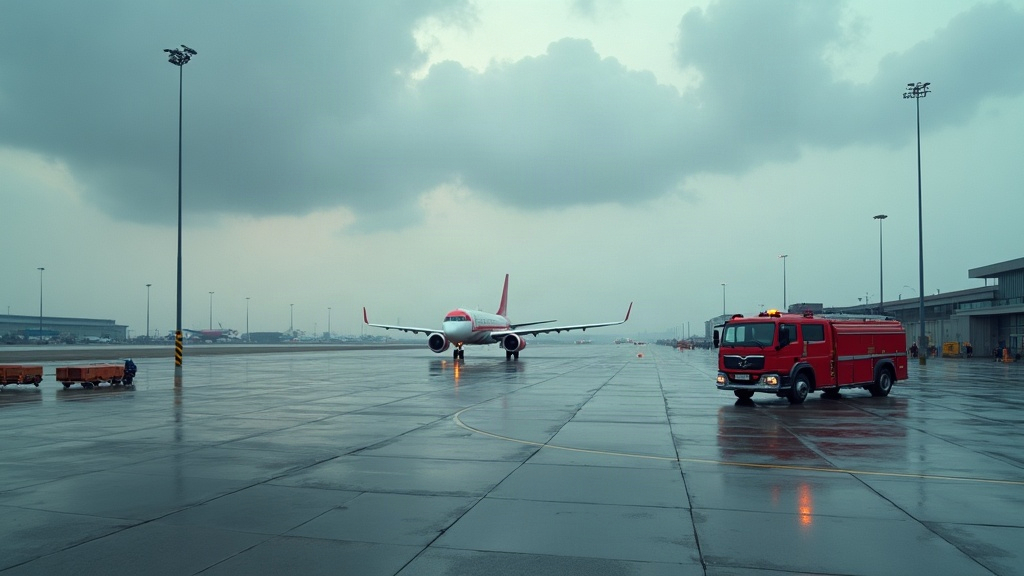
Several commercial flights across Europe were disrupted by bomb threats on Tuesday, prompting emergency landings, airport closures, and security searches, according to officials and airport authorities. Despite the widespread alarm, no explosive devices were discovered on any of the affected aircraft, and all passengers and crew landed safely.
Authorities reported that at least four flights were targeted by bomb threats during the day, following a similar incident on Monday. In Poland, a LOT Polish Airlines flight from London Heathrow to Warsaw Chopin Airport was diverted to Warsaw’s Modlin Airport after a bomb threat was received. Modlin Airport was briefly closed while police and security teams searched the aircraft, but no device was found, and the airport later resumed normal operations, according to statements from airport officials.
Another Warsaw-bound flight, operated by Scandinavian Airlines (SAS) from Copenhagen, landed at Chopin Airport as scheduled. Chopin Airport confirmed that no suspicious device was found on board and that airport operations continued without interruption. Passengers from the diverted LOT flight underwent border control at Modlin before being transported by coach to Chopin Airport, according to Polish press agency reports.
In Spain, a Ryanair flight from Manchester to Murcia was subjected to a bomb threat, leading to the cordoning off of parts of Murcia Airport while police conducted a search. Spanish officials, including Francisco Lucas, a regional government representative, confirmed that security protocols were activated and that no explosives were found on the plane.
Bulgarian authorities reported that two flights to Sofia, including a Wizz Air flight from Italy and a Ryanair flight from Dublin, were also targeted by bomb threats. Both planes landed safely in the Bulgarian capital, and the transportation ministry stated that no explosive devices were discovered during security checks.
Italy’s Fiumicino Airport in Rome received an anonymous email reporting a suspected bomb on board a Ryanair flight from Lisbon. The Italian Air Force escorted the plane until landing as a precaution, and airport officials confirmed that the aircraft was searched and no threat was found.
Officials have not disclosed the source or motive behind the threats, which came amid heightened concern over airspace security in Europe. All affected airlines and airports followed established emergency procedures, including diversions, searches, and passenger screening, before clearing the aircraft and resuming operations.
According to reports from CNN, The New York Times, and local authorities, the incidents caused delays and temporary closures but did not result in any injuries or confirmed security breaches. The bomb threats were ultimately determined to be hoaxes, but they triggered significant disruption and a visible security response across several European countries.
European aviation authorities have not indicated whether the threats were coordinated or linked to any broader security threat. Investigations into the origins of the threats are ongoing, with police in multiple countries involved.
Why it matters
The spate of bomb threats on commercial flights has underscored the vulnerability of European air travel to security scares, even when no actual devices are found. According to statements from airport officials in Poland, Spain, and Bulgaria, the incidents forced authorities to activate emergency protocols, causing delays and anxiety for passengers and staff.
This wave of threats comes at a time of heightened vigilance in European airspace, following recent security alerts and concerns about potential attacks. The rapid and coordinated response by airport authorities and law enforcement, as reported by The New York Times and CNN, reflects the region’s preparedness but also highlights the operational and psychological impact of such hoaxes.
With investigations ongoing and no group or individual claiming responsibility, the events have prompted renewed scrutiny of airport security measures and threat response systems. Airlines such as LOT, Ryanair, and Wizz Air, along with national authorities, are likely to review protocols to minimize disruption while ensuring passenger safety in the face of future threats.
The image accompanying this article is an AI-generated illustrative depiction inspired by the actual scene of the event.