




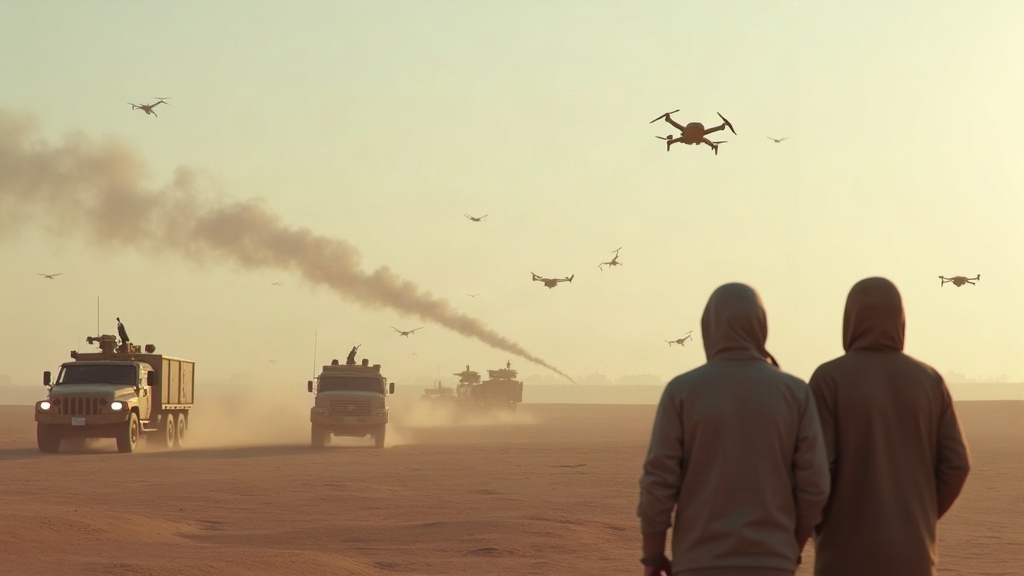
Iranian forces launched drone attacks targeting Bahrain and Kuwait overnight, with both Gulf states reporting successful interceptions as the conflict between Iran and the United States intensified around the strategic Strait of Hormuz.
Bahrain’s air defenses intercepted multiple drones early Wednesday following claims by Iran’s Islamic Revolutionary Guard Corps (IRGC) that it had attacked a US military installation in the country. Kuwaiti authorities also reported that their military responded to “hostile drone threats,” urging residents to heed security instructions amid ongoing alerts.
The IRGC stated that its forces targeted a US radar system at the Al-Riffa helicopter base in Bahrain using six drones, according to Iranian state media. While Bahraini officials confirmed intercepting the attacks, the US military’s Central Command did not immediately comment on the Iranian claims. The US has previously denied similar assertions by Iran regarding strikes on American assets in the region.
In response to the Iranian attacks, the United States carried out an airstrike on an Iranian missile launch site on Qeshm Island, a key location in the Strait of Hormuz. The US continues to enforce a blockade on Iranian ports, aiming to restrict Iran’s ability to export oil and move military equipment through the waterway.
Kuwait’s military reported that its air defenses were actively countering drone incursions and that any explosions heard by residents were the result of successful interceptions. The Kuwaiti Army’s General Staff emphasized the importance of following official guidance as the situation remains volatile.
The latest hostilities have heightened concerns across the Gulf region, where several states host US military facilities and have become increasingly involved in the wider standoff between Washington and Tehran. According to regional officials, the conflict has also led to a surge in attacks on commercial vessels attempting to transit the Strait of Hormuz, a critical chokepoint for global energy shipments.
Diplomatic efforts to de-escalate the situation have so far made little progress. Qatar, which has attempted to mediate, warned that Iran’s continued attacks on Bahrain undermine diplomatic initiatives and pose an “extremely grave danger” to the prospects of reaching a negotiated settlement.
The IRGC also claimed to have shot down a drone over the Strait of Hormuz using domestically developed air defenses, though US officials have not commented on this report. The blockade imposed by the US has significantly impacted Iran’s economy by restricting its crude exports, according to analysts and regional sources.
Why it matters
The escalation of drone attacks against Kuwait and Bahrain marks a significant widening of the conflict beyond Iran and the United States, directly involving Gulf Cooperation Council member states. Both Bahrain and Kuwait host US military facilities, making them strategic targets in Iran’s efforts to retaliate against American pressure, as noted by official statements from the affected countries and the IRGC.
The Strait of Hormuz remains a focal point of global concern, as it is a vital conduit for international oil shipments. According to reporting from NPR and Gulf News, the increase in attacks on commercial vessels and energy infrastructure threatens to disrupt global energy markets and raises the risk of a broader regional conflict.
With diplomatic efforts led by Qatar stalled and both sides continuing military operations, the situation remains highly unstable. The latest developments underscore the risk of further escalation involving US allies in the Gulf, as well as the potential for wider economic and security repercussions if hostilities continue or intensify.
The image accompanying this article is an AI-generated illustrative depiction inspired by the actual scene of the event.