




Mongolia’s President Ukhnaa Khurelsukh announced his resignation on Tuesday, following mounting pressure over corruption allegations and threats of impeachment from the opposition Democratic Party. The decision, made public during a press conference in Ulaanbaatar, marks a significant turn in the country’s political landscape as the president agreed to step aside to allow for a formal investigation into the claims.
Khurelsukh stated that he would relinquish his duties as president, emphasizing his intent to restore his reputation through cooperation with investigators. “The Democratic Party has said that I should step down from my duties so that the truth can be established. I agree with this. I will therefore hand over my duties as President of Mongolia. I will be investigated and will have my honor restored,” Khurelsukh said, according to statements carried by the state news agency Montsame and cited by multiple international outlets.
The resignation is not yet final and must be approved by Mongolia’s parliament, the State Great Khural. The opposition Democratic Party had demanded Khurelsukh’s resignation or impeachment, accusing him of being linked to “serious crimes,” including alleged financial misconduct related to government infrastructure projects. Khurelsukh has denied all allegations, insisting, “I am someone who has never stolen from the people or the state during my time as president.”
The accusations against Khurelsukh were brought forward by Khishgeegiin Nyambaatar, the former mayor of Ulaanbaatar and a member of a different faction within the ruling Mongolian People’s Party (MPP). Nyambaatar specifically alleged that Khurelsukh benefited financially from the Tavantolgoi-Gashuunsukhait railway project, a major infrastructure initiative, during his tenure as prime minister seven years ago.
Khurelsukh described the allegations as “unbelievable and extremely serious,” and characterized the opposition’s campaign as defamatory and insulting. He argued that attacks on the presidency were attacks on the reputation of the Mongolian people, and promised to seek justice against those he said had defamed him.
The Democratic Party’s demands followed weeks of political turmoil and public debate over corruption and transparency in Mongolia’s government. The party issued a list of demands that included a thorough investigation into senior officials, including Khurelsukh, and called for immediate accountability at the highest levels of government.
Mongolia has experienced ongoing political turbulence in recent months, with infighting reported within the ruling MPP and growing public scrutiny of government officials. The latest crisis erupted after Nyambaatar’s public accusations, which intensified pressure on Khurelsukh and exposed divisions within the ruling party.
Khurelsukh’s announcement comes as Mongolia faces broader challenges related to governance, economic development, and public trust in institutions. The Tavantolgoi-Gashuunsukhait railway project, at the center of the allegations, is one of the country’s most significant infrastructure undertakings, intended to boost coal exports and economic growth.
Why it matters
The resignation of President Khurelsukh represents a rare and dramatic shift in Mongolia’s political leadership, triggered by allegations of corruption and internal party conflict. This development highlights the influence of the opposition Democratic Party, which successfully pressured the head of state to step aside and face investigation—an unusual occurrence in the country’s recent political history.
The case has exposed deep divisions within the ruling Mongolian People’s Party, as the allegations originated from a former Ulaanbaatar mayor belonging to a different faction of the MPP. This infighting could have lasting implications for the party’s unity and for Mongolia’s political stability, particularly as the State Great Khural prepares to decide whether to accept Khurelsukh’s resignation.
With the Tavantolgoi-Gashuunsukhait railway project under scrutiny and public attention focused on anti-corruption efforts, the outcome of the investigation and the parliamentary response will be closely watched both domestically and by Mongolia’s international partners. The case underscores the ongoing challenges of governance and transparency in Mongolia, and may set precedents for how future allegations against top officials are handled.
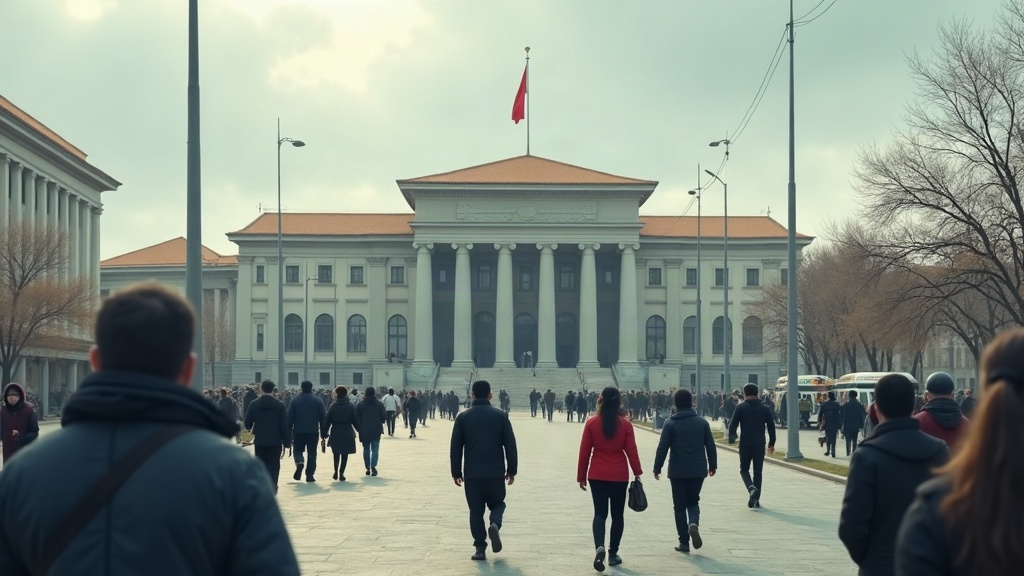
The image accompanying this article is an AI-generated illustrative depiction inspired by the actual scene of the event.