



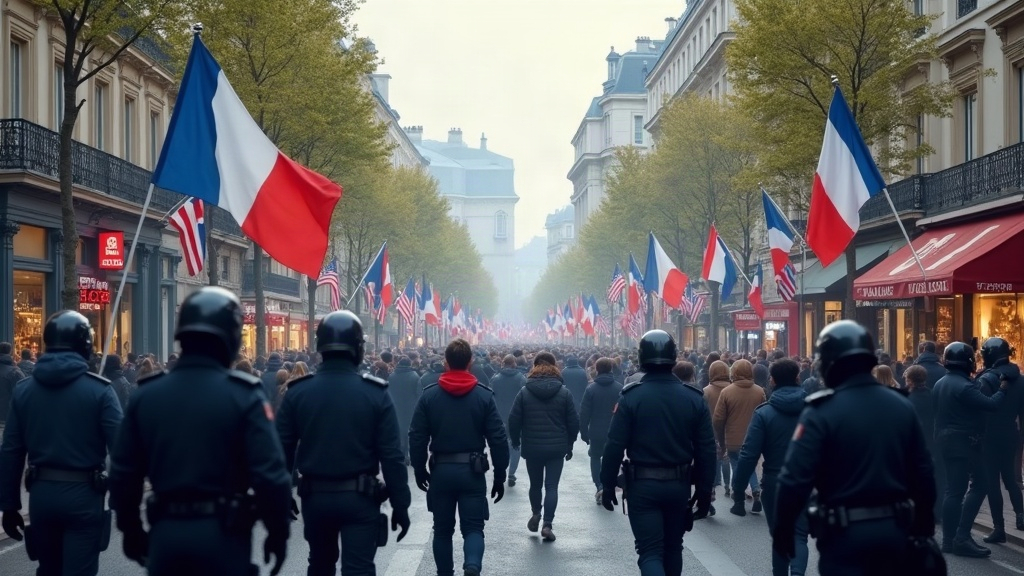
French President Emmanuel Macron has announced that only demonstrations organised by trade unions will be authorised across France this Saturday, following a wave of violent protests and looting that erupted last weekend over the rising cost of living. The move comes as authorities seek to prevent a repeat of the unrest that swept through several French cities, prompting curfews and heightened security measures.
Macron stated that so-called “illegitimate” protests would not be permitted, emphasising that the new restrictions are intended to protect city centres, businesses, and public buildings. According to the president, the decision follows “actions led by radical far-left groups who aimed to bring the Republic down,” as well as opportunistic criminals who took advantage of the chaos to loot shops and vandalise property.
Authorities in multiple cities, including Lyon and Nice, have already imposed bans on planned demonstrations and introduced curfews in response to last weekend’s violence. The Rhône prefecture announced a decree prohibiting any demonstration in the city of Lyon this Saturday, citing the risk of further unrest. Similar bans have been enacted in Paris, Lille, and Grenoble, with officials arguing that the measures are necessary to prevent street violence and protect public order.
The unrest last weekend was among the most severe France has seen in recent years, with widespread clashes between protesters and police, looting of shops, and vehicles set alight in several urban centres. Much of the mobilisation was linked to the “gilets jaunes” (yellow vest) movement, which previously led mass demonstrations over fuel prices and economic inequality in 2018 and 2019. Student groups and other activists also joined the recent protests, voicing anger over living costs and education policies.
Prime Minister Sebastien Lecornu has indicated that additional curfews may be imposed where necessary, with local authorities coordinating closely with mayors to assess the situation in their regions. The government has stressed its desire for a return to calm, but the restrictions have drawn criticism from some quarters as an infringement on the right to protest.
Paris police have justified the bans by pointing to the scale of last weekend’s violence, which saw masked youths clashing with police, looting, and arson attacks. The authorities maintain that while peaceful protest is a fundamental right, public safety concerns require temporary limitations on gatherings in sensitive areas.
President Macron, in a national address, distinguished between legitimate grievances over economic conditions and the “seditious” acts of extremist groups. He called for the prosecution of those responsible for the violence and destruction, while offering unions alternative routes for authorised demonstrations to minimise disruption to businesses and residents.
It remains unclear how protest organisers and the wider public will respond to the new measures, and whether further unrest can be avoided. The government has indicated it will continue to monitor the situation closely and adjust restrictions as needed in the coming days.
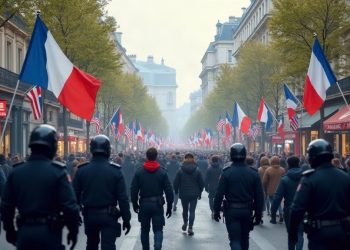
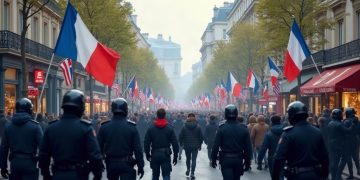
The image accompanying this article is an AI-generated illustrative depiction inspired by the actual scene of the event.