




Thousands of schools across Italy, the United Kingdom, and Ireland were disrupted today after receiving bomb threats that authorities have deemed to be hoaxes. The alerts triggered widespread evacuations and heightened security responses, but officials in all three countries have stated there is no credible risk to students or staff.
According to Italian officials, around 6,300 schools in Italy received bomb warnings via email early Wednesday, leading to the evacuation of at least 300 schools as a precaution. The messages, seen by Reuters, were signed “Mikhail Andropov, leader of the Vilayat of Misoginistan,” a group banned by Moscow.
Similar threats were sent to more than 300 schools in Northern Ireland and a number of schools in Scotland, prompting evacuations and police investigations. Police Service of Northern Ireland (PSNI) said the emails were treated as hoaxes, and Police Scotland confirmed there was nothing to suggest the threats posed any credible danger to the public.
In Ireland, hundreds of schools also received bomb threats, with authorities coordinating closely with their UK and Italian counterparts. The coordinated nature of the threats and their timing led officials to suspect a cyber-attack rather than a genuine security risk.
Italian Education Minister Giuseppe Valditara described the incidents as likely part of a “cyber-attack, not a genuine risk,” and warned that the number of affected schools could rise as more reports come in. Valditara told Italian television that the threats appeared to be part of a clear strategy targeting schools and other institutions across Europe.
Prime Minister Giorgia Meloni has called a meeting of top ministers and intelligence chiefs to assess the situation and coordinate the national response. Italian authorities noted this is the third wave of similar threats targeting schools in the past month.
The emails were sent to schools in major Italian cities including Rome, Naples, Vicenza, Florence, Pisa, and Trieste. In several cases, pupils and staff were evacuated from buildings as a precaution while police conducted searches. Images from Rome showed children at the Elementary School of Princess Mafalda being led out by teachers.
In the UK, the Independent reported that some pupils in Kinross, Scotland, huddled under foil blankets to keep warm after being evacuated from their classrooms. Police Scotland said the threatening messages were widely distributed but originated from outside the UK.
Authorities in all affected countries have emphasized that, while the threats caused significant disruption and concern, there is no evidence of any actual danger. Investigations are ongoing to identify the source of the emails and prevent further incidents.
Why it matters
The wave of hoax bomb threats has disrupted the education of thousands of students across Italy, the UK, and Ireland, highlighting the vulnerability of public institutions to cyber-enabled intimidation tactics. According to Italian Education Minister Giuseppe Valditara, the scale and coordination of the threats suggest a deliberate attempt to sow fear and chaos, rather than a credible security risk.
This incident follows similar waves of threats targeting schools and other public spaces in Europe in recent weeks, raising concerns among authorities about the growing use of digital tools to spread panic. The fact that the emails were signed by a purported leader of a banned extremist group adds a layer of complexity, though officials have not attributed the campaign to any specific actor.
With Prime Minister Giorgia Meloni convening top ministers and intelligence chiefs, and police forces across the UK and Ireland on alert, the response underscores the seriousness with which governments are treating threats to public safety—even when deemed non-credible. As investigations continue, officials are likely to focus on strengthening cyber defenses and improving protocols for responding to similar incidents in the future.
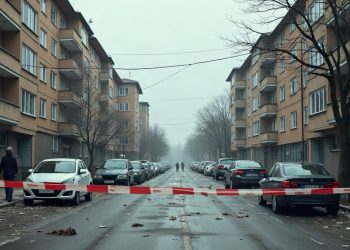
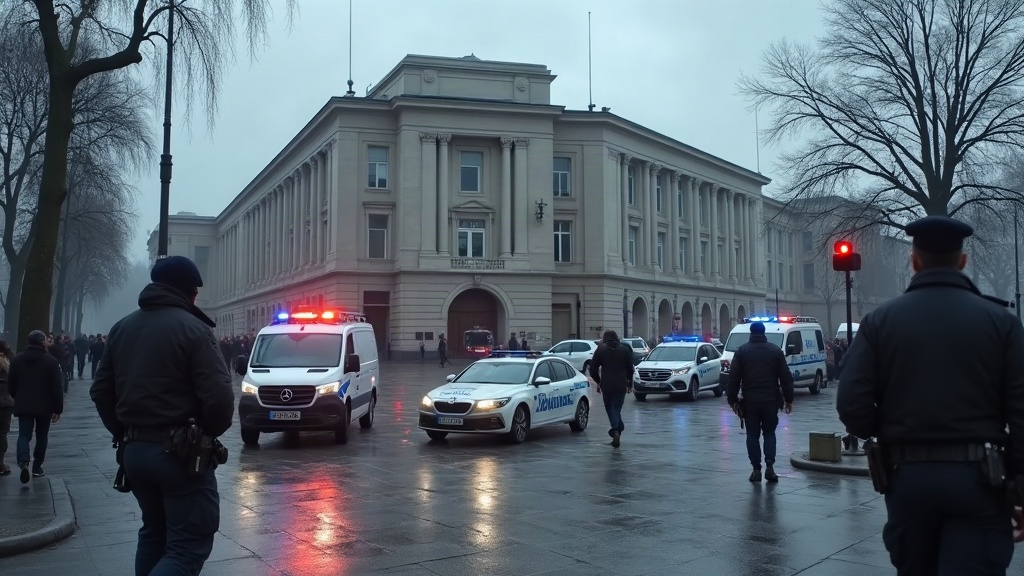
The image accompanying this article is an AI-generated illustrative depiction inspired by the actual scene of the event.