




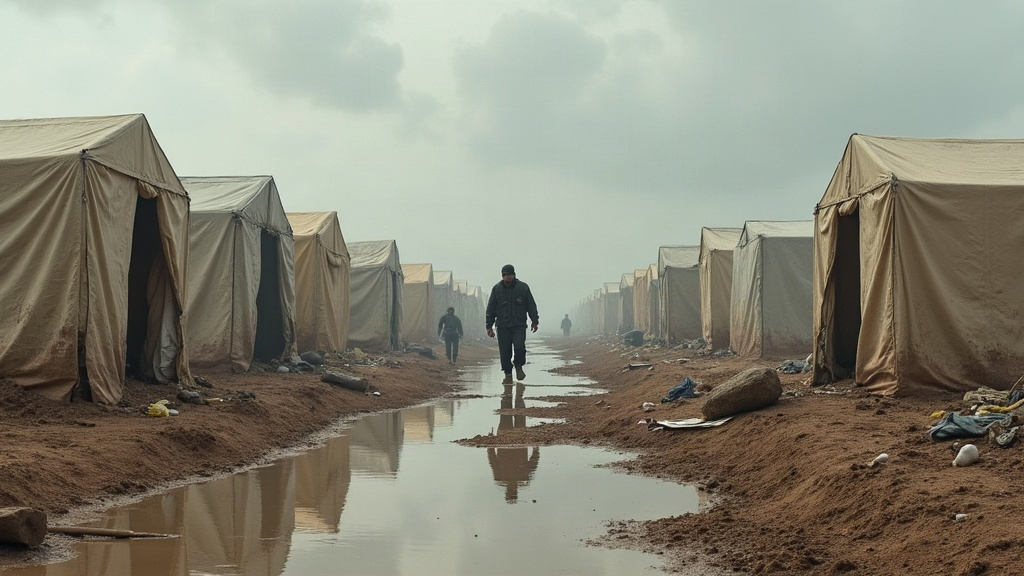
The Board of Peace, a US-backed body overseeing the Gaza peace process, has sharply criticised Israel’s response to severe flooding in Gaza, calling it “insufficient” and urging immediate action to allow essential humanitarian supplies into the enclave. The criticism comes as tens of thousands of displaced Palestinians face worsening conditions after heavy winter rains inundated shelters and tents across the territory.
In a statement released today, the Board of Peace said that delays in approving the entry of vital shelter, water, and sanitation materials had “exacerbated the consequences of a foreseeable humanitarian challenge”. The Board, established to monitor the implementation of US President Donald Trump’s Gaza peace plan, acknowledged steps Israel was considering but insisted that “the response remains insufficient”.
The United Nations has echoed the Board’s assessment, with deputy UN spokesman Farhan Haq confirming that the organisation “certainly agrees” Israel’s response has not met the scale of the crisis. According to the UN humanitarian office, more than 26,000 households have reported damaged shelters or belongings, and over 150,000 tents are awaiting dispatch into Gaza.
Philippe Lazzarini, former head of the UN Relief and Works Agency for Palestine Refugees (UNRWA), described the Board’s criticism as an “understatement” and noted its “rare recognition” that Israel is not doing enough to address Gaza’s humanitarian needs. Lazzarini also criticised the Board for not using its leverage to address what he termed the “disgraceful dystopian misery” of Palestinians in Gaza.
The Board of Peace specifically called on Israel to “authorize the entry of essential materials for temporary shelter, water and sanitation infrastructure, waste management, drainage, and sewage removal.” Much of Gaza’s civilian infrastructure has been destroyed or severely damaged during years of conflict, leaving the population especially vulnerable to seasonal flooding and harsh winter conditions.
Israel has attributed delays in aid entry to “logistical and budgetary challenges,” according to statements cited by international media. However, humanitarian groups and the UN have warned that the slow pace of approvals is worsening an already dire situation for nearly 2 million displaced Palestinians, many of whom are living in makeshift shelters.
The Board also linked the aid delays to broader political issues, stating that the slow entry of supplies is holding up the start of decommissioning weapons and the transfer of governing authority from Hamas to a transitional government, as outlined in the US-backed peace plan. The Board urged both Israel and Hamas to fulfil their obligations under the agreement.
Hamas, which remains the de facto authority in Gaza, rejected the Board’s criticism, arguing that it distorts the nature of the crisis and fails to hold Israel accountable for its role. The group called for a clear timetable and mechanism to verify the implementation of the peace plan’s roadmap.
The UN said humanitarian teams are currently pumping floodwater, reinforcing displacement sites with sandbags, and distributing emergency supplies, but lack sufficient equipment for the scale of the disaster. Many families remain exposed to cold and unsanitary conditions as winter approaches.
Why it matters
The Board of Peace’s unusually direct criticism of Israel marks a significant shift in international oversight of the Gaza peace process. The Board, created by the Trump administration and backed by a UN Security Council resolution, has typically avoided strong public rebukes of Israeli policy. Its statement today, echoed by the UN and humanitarian leaders like Philippe Lazzarini, signals mounting frustration over the pace of aid and reconstruction efforts in Gaza.
The crisis highlights the fragility of the current ceasefire arrangements and the challenges facing nearly 2 million displaced Palestinians as winter sets in. With much of Gaza’s infrastructure destroyed and shelter materials in short supply, the humanitarian response is under intense scrutiny. The Board’s warning that aid delays are also stalling the political transition away from Hamas underscores the interconnectedness of humanitarian and diplomatic efforts in the region.
How Israel and the international community respond in the coming days will be closely watched, as further delays risk deepening the humanitarian emergency and complicating the implementation of the peace plan. The Board’s call for immediate action places new pressure on all parties to prioritise civilian protection and step up support for Gaza’s most vulnerable residents.
The image accompanying this article is an AI-generated illustrative depiction inspired by the actual scene of the event.