



Storm Boelo has unleashed severe weather across the UK and Ireland, bringing widespread flooding, major travel disruption, and extensive power cuts. The storm, which struck northern parts of the UK overnight and into Sunday, has prompted amber weather warnings in Scotland, parts of Northern Ireland, and the north of England, with authorities warning of dangerous conditions and urging people to avoid unnecessary travel.
According to the BBC and other news agencies, more than 80,000 customers across Great Britain lost power, with additional outages reported across the island of Ireland. The Met Office warned that wind gusts could reach up to 85 mph in exposed coastal areas, increasing the risk of further damage and disruption. Network Rail reported that trees had fallen onto railway lines at numerous locations in Scotland, causing significant delays and cancellations. Ferry services in affected regions were also widely suspended, stranding passengers and disrupting transport links.
Footage from Largs, Ayrshire, showed water surging through the town centre, while in Glasgow, tracks at Dalmarnock station were submerged, highlighting the extent of flooding in some areas. In the south-west of England, hundreds of properties remained without power, with some outages not expected to be resolved until late Sunday evening, according to National Grid updates. The BBC reported that communities in England, Scotland, and Ireland have been plunged into darkness, with emergency services responding to numerous incidents of flood damage and fallen trees.
The Met Office issued a yellow wind warning for parts of Northern Ireland, cautioning that conditions could deteriorate further and that warnings may be updated as the situation evolves. Local authorities have advised residents to stay indoors where possible and to report power outages using official channels. Sporting events and other public gatherings were cancelled in several regions due to safety concerns.
Storm Boelo is the second named storm of the season, arriving on the heels of earlier severe weather that had already left some communities vulnerable. The combination of high winds and heavy rainfall has tested local infrastructure, with emergency crews working to clear debris and restore services. The storm’s impact has been felt particularly strongly in coastal and upland areas, where wind speeds have been highest and floodwaters have risen rapidly.
Travel disruption is expected to persist into Monday, with rail operators warning of ongoing delays and cancellations as crews work to clear lines and repair damage. Ferry operators are monitoring conditions and will resume services when it is safe to do so. Power companies are prioritising the restoration of electricity to affected homes, but some customers may face extended outages depending on local conditions.
Looking ahead, forecasters predict that the second half of the coming week will bring quieter, drier, and less windy weather, offering some relief to hard-hit communities. However, authorities continue to monitor the situation closely, warning that further updates may be issued if conditions worsen or new hazards emerge.
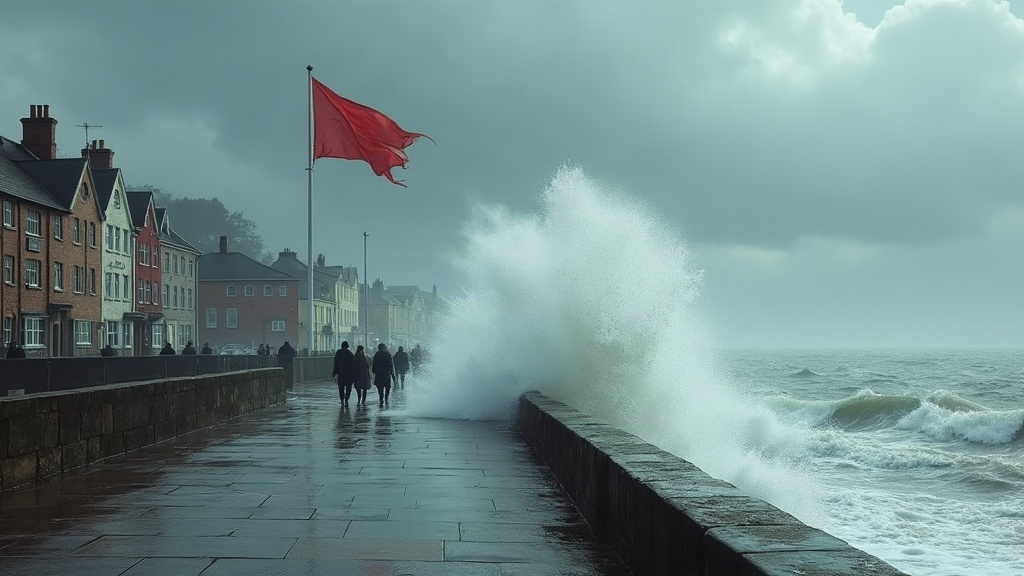
The image accompanying this article is an AI-generated illustrative depiction inspired by the actual scene of the event.