



Voters across Serbia are casting ballots today in a highly contested parliamentary election that pits the ruling Serbian Progressive Party, led by longtime political figure Aleksandar Vucic, against a surging student movement demanding sweeping reforms. The outcome is widely seen as a referendum on Vucic’s more than decade-long rule and the future direction of the country.
According to the latest opinion polls, the race is extremely close. An Ipsos poll published ahead of the vote gave Vucic’s party 47 percent of the vote, with the student movement trailing at 40 percent. However, other surveys have indicated the students could be in the lead, underscoring the uncertainty surrounding the final result. The state election commission is not expected to release official results before Monday.
The student movement, which has rapidly gained momentum over the past two years, has drawn tens of thousands to rallies and turned the election into a direct challenge to the current regime. Their campaign, encapsulated by the slogan “Serbia or the mafia,” has focused on allegations of corruption, government repression, and demands for greater accountability.
The roots of the student protests trace back to November 2024, when a deadly collapse of a canopy at the newly renovated Novi Sad railway station killed 16 people. The tragedy was widely blamed on government corruption and a lack of oversight, sparking mass demonstrations that have since evolved into a nationwide anti-corruption movement led by university students.
Rights groups and activists report that the government’s response to the protests has grown increasingly harsh. According to Reuters and other sources, students have faced intimidation, surveillance, arrests, and even violence at the hands of police and groups allegedly linked to organized crime. Several protest leaders have reportedly suffered serious injuries, while dozens have faced criminal charges or gone into exile.
Vucic, who resigned as president to run for prime minister in this election, has accused the student movement of being part of a foreign-backed attempt to destabilize the country. Despite these claims, the movement has attracted support from many established opposition parties, which have largely stepped aside to back the student-led list.
Observers note that this is the most significant challenge to Vucic’s rule since his party came to power in 2012. The election follows a wave of political change in the region, including the recent defeat of Hungary’s longtime leader Viktor Orban, a close ally of Vucic, in a similar populist-nationalist context.
As polls close, concerns are mounting over possible instability if the results are close or disputed. Some analysts warn of potential unrest in the event of contested outcomes, given the high stakes and deep divisions exposed during the campaign.
The final results are expected to be announced on Monday. Until then, both sides are urging their supporters to remain calm and await the official tally, as the country faces a pivotal moment in its political future.
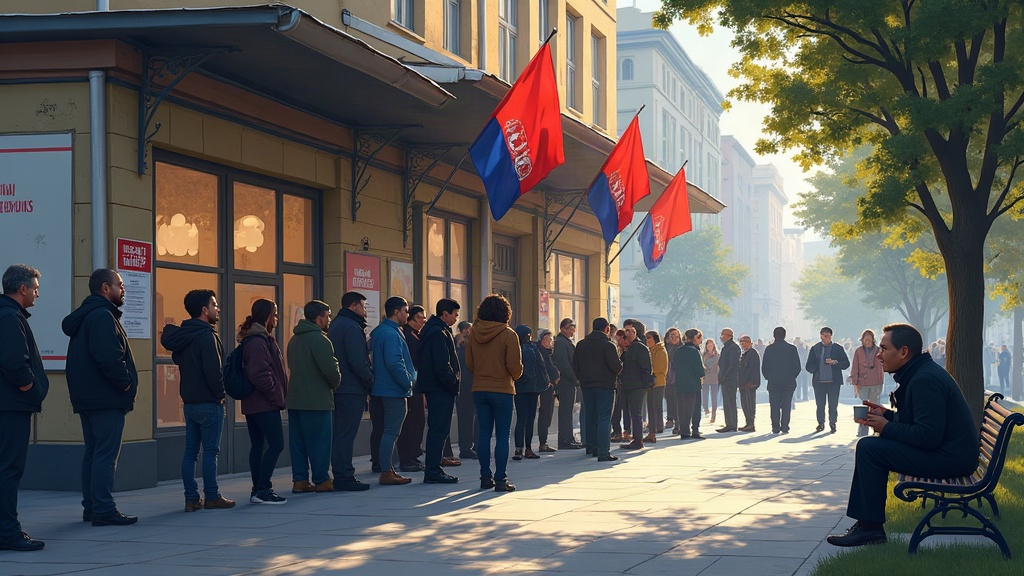
The image accompanying this article is an AI-generated illustrative depiction inspired by the actual scene of the event.