





Russian military convoys carrying vehicles bound for Libya have turned back or halted in the Mediterranean after a Ukrainian maritime drone strike sank a Russian naval corvette in Benghazi port, according to multiple military and security sources. The diversion of the convoys, which had not been previously reported, underscores Moscow’s efforts to protect its naval assets far from the Ukraine front.
According to Reuters and other sources familiar with the movement, the main convoy, escorted by the Russian navy frigate Golovko, reversed course near the Strait of Sicily on November 22, the same day as the attack in Benghazi. A second convoy also turned near the Strait of Sicily and later paused off the coast of Algeria, sources said.
The Benghazi attack targeted the Russian corvette Merkury, which had been docked at the city’s naval base. Ukrainian President Volodymyr Zelenskiy confirmed the strike, which was carried out using maritime drones. The Merkury had been accompanying a cargo ship delivering military vehicles to Libya, according to a European military official tracking the flotilla.
The convoys, operated by Russia-based JSC Sovfracht and MG-Flot—both under European Union and United States sanctions—set off from Kaliningrad on November 5. The vessels were last tracked near Algeria on November 25, but their current destination remains unclear, officials said.
A Ukrainian military intelligence official and a Middle East security source, both familiar with the convoys, confirmed they had abandoned their original routes to Libya following the sinking of the Merkury. Russia’s defence ministry has not commented publicly on the incident or the status of the convoys.
Ship tracking data cited by sources showed that three Russian-flagged cargo or Ro/Ro vehicle-carrying ships—the Maia 1, Lady R, and Lady D—were last recorded in the Bay of Biscay on November 12 before their positions went dark. The flotillas reportedly halted or reversed their journeys after the attack, highlighting Moscow’s immediate response to the loss of a warship far from the Ukrainian battlefield.
Libya’s eastern-based government confirmed that the Merkury had been docked at Benghazi naval base at the time of the attack. The incident marks a rare extension of Ukrainian military activity into North Africa, some 2,000 kilometers from the main theatre of conflict in Ukraine.
This development comes as Russia continues to support eastern Libyan authorities and maintain a naval presence in the Mediterranean. The use of Ukrainian maritime drones to strike Russian naval assets so far from Ukraine signals a new phase in the ongoing conflict, according to European officials tracking the situation.
Why it matters
The diversion of Russian military convoys following the sinking of the Merkury exposes the vulnerability of Russian naval operations beyond the Black Sea, according to European and Middle Eastern officials cited by Reuters and other outlets. The attack demonstrates Ukraine’s expanding operational reach, using maritime drones to strike targets far from the immediate war zone.
The incident also disrupts Russia’s efforts to supply military vehicles to allies in Libya, potentially affecting the balance of power in the region. The operators of the affected vessels, JSC Sovfracht and MG-Flot, are already under Western sanctions, highlighting the international scrutiny of Russian military logistics and support networks.
With the convoys’ current whereabouts unclear and Russia’s defence ministry silent, officials and analysts are closely watching for further movements. The episode marks a significant escalation in Ukraine’s maritime campaign and raises questions about the security of Russian naval assets in the wider Mediterranean.
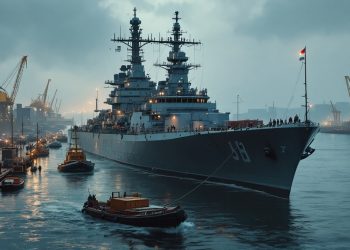
The image accompanying this article is an AI-generated illustrative depiction inspired by the actual scene of the event.