




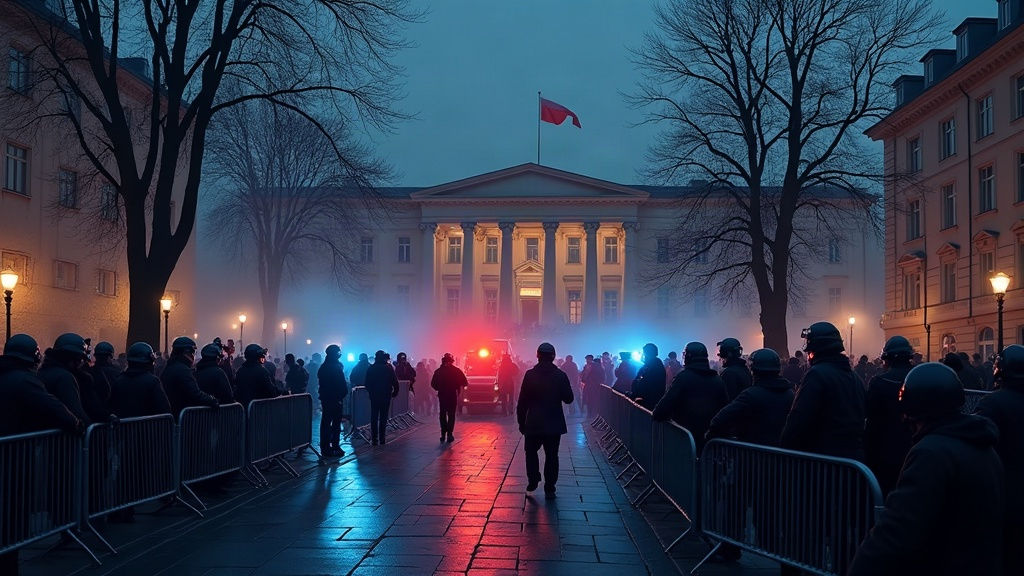
Riot police were deployed around Poland’s Constitutional Tribunal in Warsaw today after the court’s chief justice, Bogdan Święczkowski, was suspended in a dramatic escalation of tensions between the centrist government and the nationalist right. The move triggered protests by supporters of the opposition Law and Justice (PiS) party and prompted President Karol Nawrocki to return to the capital mid-flight from Africa to address the unfolding crisis.
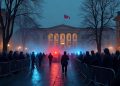
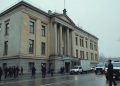
Police officers guarded the entrance to the Constitutional Tribunal as demonstrators gathered outside, some holding Roman Catholic rosaries and religious images, according to AFP. The court’s official social media account described the suspension as a “coup d’etat”, reflecting the deep divisions over the legitimacy of the government’s actions and the future of the judiciary in Poland.
The suspension of Święczkowski was announced by fellow judge Anna Korwin-Piotrowska, who stated that the decision was necessary to “restore the rule of law”. Justice Minister Waldemar Żurek, who also serves as attorney general, told journalists that he had requested the lifting of legal immunity for both Święczkowski and the court’s vice-president, Bartłomiej Sochański, in order to bring criminal charges against them. “This court has become private property; we must restore its proper functioning,” Żurek said, according to AFP.
The deployment of riot police and the high-profile return of President Nawrocki underscored the gravity of the situation. According to multiple reports, Nawrocki cancelled his official visit to Africa and turned back to Warsaw as news of the suspension and protests broke. The president was reportedly seen struggling to gain entry to the court building amid the heightened security presence.
Supporters of the opposition PiS party, which previously held power, protested outside the court, denouncing what they described as a politically motivated purge. Some demonstrators prayed and displayed religious symbols, highlighting the party’s close ties to conservative and Catholic groups in Poland. The court’s official X account echoed the opposition’s claims, alleging that the government’s actions amounted to a “coup d’etat”.
The Constitutional Tribunal has been at the centre of a protracted struggle over judicial independence and the rule of law in Poland. The previous PiS government had installed loyalists in key judicial positions, leading to repeated clashes with the European Union and domestic opponents over the separation of powers. The current centrist government, which took office after last year’s elections, has pledged to reverse what it calls the politicisation of the courts and to restore judicial independence.
Justice Minister Żurek’s request to strip Święczkowski and Sochański of their immunity is seen by government supporters as a step towards accountability and the restoration of lawful judicial procedures. However, opposition figures and some legal experts have warned that the move could deepen political divisions and undermine public trust in the judiciary.
Prime Minister Donald Tusk, leader of the centrist coalition, defended the government’s actions in a statement on social media, arguing that restoring the rule of law is essential for Poland’s democracy. The government’s critics, however, accuse it of overreach and warn that the confrontation could set a dangerous precedent for political interference in the courts.
Why it matters
The standoff at Poland’s Constitutional Tribunal marks a critical moment in the country’s ongoing battle over judicial independence and the rule of law. The suspension of chief justice Bogdan Święczkowski and the deployment of riot police signal the government’s determination to confront what it views as the legacy of politicisation left by the previous PiS administration. Justice Minister Waldemar Żurek’s call to lift judicial immunity from Święczkowski and Sochański further raises the stakes, potentially opening the door to criminal proceedings against top judges.
This crisis has immediate implications for Poland’s political stability and its relationship with the European Union, which has repeatedly criticised Warsaw over judicial reforms enacted by the former PiS government. The return of President Karol Nawrocki to Warsaw in response to the emergency underscores the seriousness of the situation and the risk of further polarisation. With opposition supporters mobilising and the government pressing ahead with its reform agenda, the outcome of this confrontation will shape the future of Poland’s judiciary and its democratic institutions.
The image accompanying this article is an AI-generated illustrative depiction inspired by the actual scene of the event.