




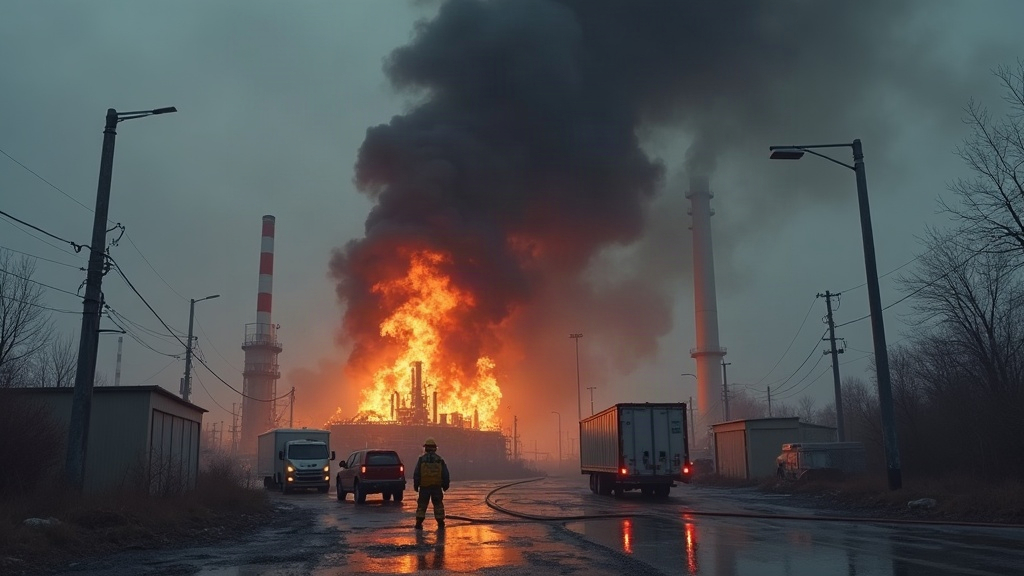
A major fire erupted overnight at the Novokuybyshevsk Oil Refinery in Russia’s Samara Oblast following a suspected Ukrainian drone attack, according to footage and reports published by Ukrainian monitoring channel Exilenova+. The refinery, owned by Russian state-controlled oil giant Rosneft, is a key facility in Russia’s energy sector and has previously been targeted in similar attacks.
Photos and videos shared by Exilenova+ and cited by multiple monitoring channels showed extensive flames in the vicinity of the refinery, with local residents reporting the sound of drones overhead. The incident marks the first reported Ukrainian strike on a Russian oil refinery since an unofficial pause in such operations began in mid-October.
The Novokuybyshevsk facility processes approximately 8.8 million metric tons of crude oil annually and produces a range of petroleum products, including aviation fuel, gasoline, diesel, and lubricants. The refinery has been targeted in earlier Ukrainian drone attacks, including a notable strike in August this year.
According to monitoring channels and Ukrainian media, this attack is being described as a ‘resumption of strikes’ on Russian energy infrastructure, breaking a pause that had lasted for several weeks. The pause reportedly followed pressure from US President Donald Trump, as reported by the Wall Street Journal and other outlets, with Ukrainian units instructed to halt new attacks until after the US midterm elections.
In addition to the refinery incident, Ukrainian drones reportedly struck the Konservsushprod factory in the town of Starodub, located in Russia’s Bryansk region. Details about the extent of damage or casualties at either site have not yet been independently confirmed.
The reported pause in Ukraine’s campaign against Russian oil infrastructure was said to be part of wider diplomatic efforts, with the US seeking to revive peace talks and reduce escalatory risks ahead of the American elections. During the pause, Russia continued its own strikes on Ukrainian energy and civilian infrastructure, according to Ukrainian officials.
Rosneft, the owner of the targeted refinery, is one of Russia’s largest state-controlled oil companies and a critical player in the country’s export economy. Disruptions at major refineries such as Novokuybyshevsk could have implications for both domestic fuel supplies and Russia’s ability to generate export revenue.
Ukrainian President Volodymyr Zelensky previously stated that Ukraine had refrained from targeting ships carrying diesel fuel from Russia to the US under a new agreement announced by President Trump in early October. However, Ukrainian officials have maintained that they will respond to Russian attacks on Ukrainian infrastructure with their own measures.
Why it matters
The reported attack on the Novokuybyshevsk Oil Refinery signals a potential escalation in Ukraine’s campaign to target Russia’s energy infrastructure after a period of restraint. The facility’s processing capacity of 8.8 million metric tons annually makes it a strategic asset for Rosneft and for Russia’s broader energy export system.
This renewed strike comes after an unofficial pause reportedly prompted by US diplomatic pressure, as detailed by the Wall Street Journal and other sources. The timing—immediately following the US midterm elections—suggests that political considerations in Washington continue to influence the tempo and targets of Ukrainian operations.
With Russia having intensified its own attacks on Ukrainian energy and civilian infrastructure during the pause, the resumption of Ukrainian strikes raises the risk of further tit-for-tat escalation. The targeting of major refineries and industrial facilities could have significant implications for Russian fuel production and export revenues, while also impacting global energy markets and diplomatic efforts to de-escalate the conflict.
The image accompanying this article is an AI-generated illustrative depiction inspired by the actual scene of the event.