




Two staff members of Doctors Without Borders (Médecins Sans Frontières, MSF) were killed in an Israeli airstrike on one of the organisation’s clinics in Gaza, according to statements from MSF and multiple news agencies. The attack occurred at a facility that MSF says was clearly marked with its logos and whose location had been communicated to the Israeli military.
MSF described the incident as a “direct hit” on its clinic, expressing devastation and outrage over the deaths of the two employees, both of whom worked as security guards. The organisation reported that the strike brings the total number of its staff killed in Gaza since the start of the conflict to 17.
“Our premises were clearly marked with MSF logos, and their location had been communicated to and was known by the Israeli military,” MSF said in a statement posted on X. The group called for accountability and said it stands in solidarity with the families and loved ones of the victims.
The Israeli military confirmed the strike but claimed, without providing evidence, that the two MSF staff members were members of Hamas. The Israel Defense Forces (IDF) identified the men as Moaz Yousef Alitsbach, described as a Hamas artillery cell commander, and Ahmed Sufyan Muhammad Ali Abu. MSF has not commented on these claims, and no independent verification has been provided.
The attack took place near al-Shifa Hospital, a key medical facility in Gaza City. MSF and other humanitarian organisations have repeatedly warned about the dangers faced by medical and aid workers operating in the territory amid ongoing hostilities.
The World Health Organization’s Director-General, Tedros Adhanom Ghebreyesus, condemned the attack, calling it “outrageous and unacceptable.” He stressed on social media that “attacks on health facilities, health workers and humanitarian personnel in Gaza are outrageous and unacceptable. Those risking their lives to save others must be protected, not attacked.”
According to the Euro-Med Human Rights Monitor, the strike on the MSF clinic is part of a broader pattern of attacks on humanitarian personnel and facilities in Gaza. The organisation accused Israel of “systematic targeting of humanitarian personnel and facilities.”
Since the escalation of hostilities in Gaza, health workers and humanitarian staff have faced extreme risks. More than 1,700 health workers have reportedly been killed in Gaza, with MSF alone losing 17 staff members. The ongoing conflict has severely impacted the ability of international organisations to deliver aid and medical care to civilians.
MSF reiterated its call for accountability and for the protection of medical and humanitarian missions. The organisation has repeatedly stated that it shares the coordinates of its facilities with all parties to the conflict to prevent such incidents.
Why it matters
The killing of two MSF staff members in a strike on a clearly marked clinic underscores the acute dangers faced by humanitarian workers in Gaza. MSF’s assertion that its location was known to the Israeli military highlights the ongoing challenges in protecting medical personnel and facilities during armed conflict, despite international humanitarian law.
This incident adds to a growing toll on aid workers in Gaza, where, according to MSF and the World Health Organization, dozens of humanitarian staff have been killed in recent months. The repeated targeting or collateral damage of medical facilities threatens the already fragile health system in Gaza and complicates efforts to deliver essential services to civilians.
The Israeli military’s claim that the two MSF staff members were Hamas operatives, made without supporting evidence, raises questions about the process used to verify such allegations and the safeguards in place to protect neutral humanitarian actors. The response from international organisations, including the WHO and Euro-Med Human Rights Monitor, signals mounting concern over the safety of aid workers and the need for accountability in conflict zones.
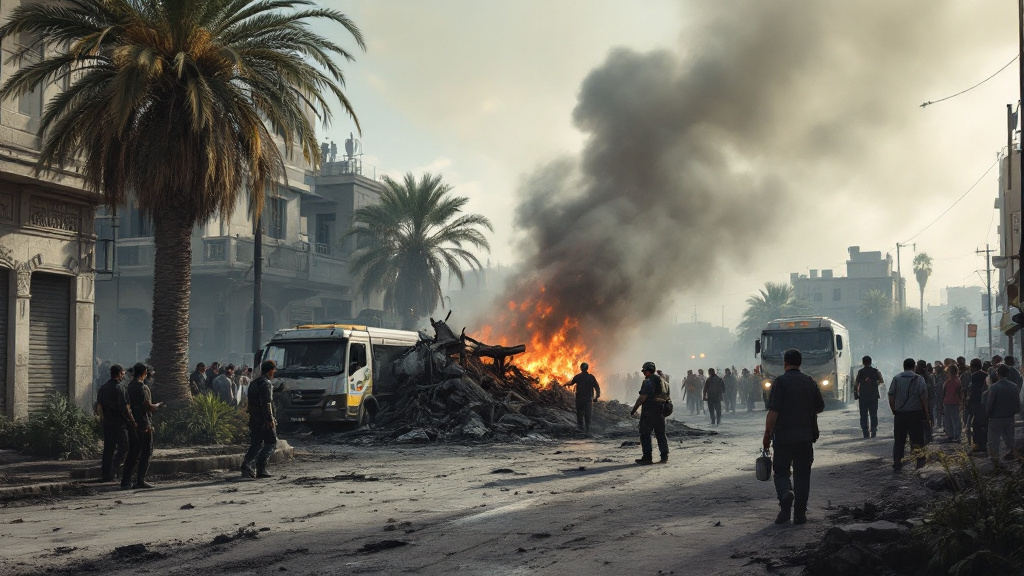
The image accompanying this article is an AI-generated illustrative depiction inspired by the actual scene of the event.