





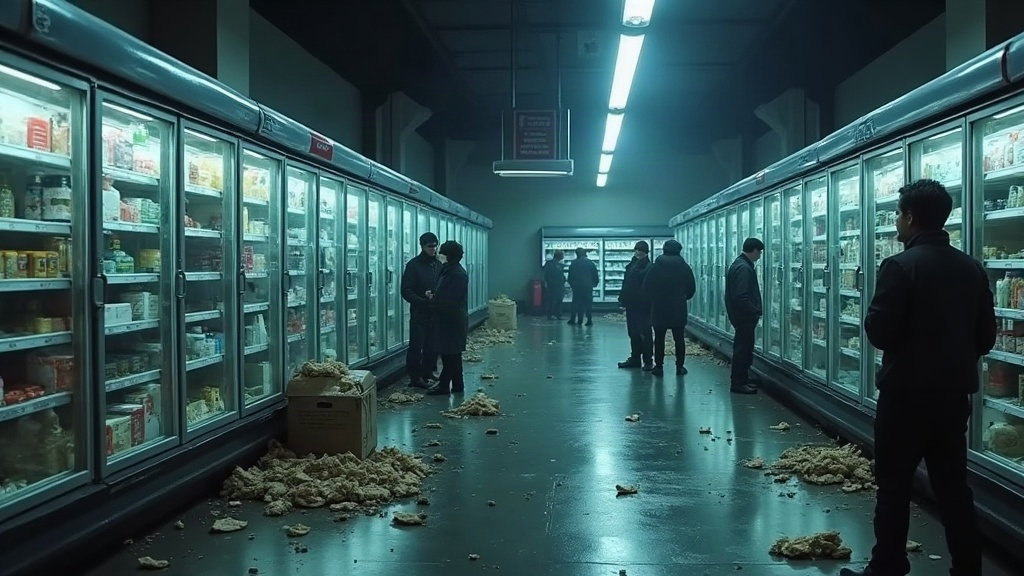
French authorities have accused Iran’s Islamic Revolutionary Guard Corps (IRGC) of orchestrating a large-scale cyberattack that disrupted supermarket refrigerators and freezers across France, leading to the spoilage of fresh and frozen food at hundreds of retail locations. The incident has prompted both France and the United States to launch investigations, with officials describing the attack as a significant threat to national security and public welfare.
French Foreign Minister Jean-Noël Barrot announced that the cyberattack was carried out by the IRGC, stating that the operation was “unprecedented in both its scale and its level of aggression.” According to Barrot, the attack compromised refrigeration systems at approximately 700 supermarkets, causing millions of euros in food losses and raising concerns about the vulnerability of critical infrastructure.
The Paris prosecutor’s office has opened an investigation into the head of an offensive cyber unit linked to the IRGC and two of his deputies. Investigators cited evidence including the use of Farsi language and IP addresses traced to devices located in Iran. The French government has also summoned the Iranian ambassador to Paris to address the allegations and announced plans to seek European-level sanctions against those responsible.
US officials have expressed support for France’s investigation, with the Pentagon confirming that it is working with French authorities to determine any possible connections to similar incidents. In August, refrigerators at several US military commissaries malfunctioned in what Pentagon investigators are treating as a suspected cyberattack. While Reuters reported that the US and France are collaborating on the inquiry, it remains unclear whether the incidents in the US and France are directly linked.
The cyberattack in France was not isolated, as supermarkets in at least seven other European countries experienced similar disruptions to their refrigeration systems last week. However, authorities have not yet established whether these incidents are connected to the French case or share the same perpetrators.
Iran has not yet responded publicly to the accusations. The attack comes amid heightened tensions between Iran and Western countries, with ongoing concerns about state-sponsored cyber operations targeting critical infrastructure in Europe and North America.
The scale of the damage in France has been described as severe, with tens of millions of dollars’ worth of food spoiled and significant disruption to supply chains. Images of empty refrigerator shelves in major French supermarket chains have circulated widely, prompting public concern about food security and the resilience of essential services.
French officials have characterized the attack as a turning point in the country’s approach to cybersecurity, emphasizing the need for enhanced defenses and international cooperation to deter and respond to similar threats in the future.
Why it matters
The cyberattack attributed to Iran’s IRGC marks one of the most significant disruptions of civilian infrastructure in Western Europe by a foreign state actor, according to statements from French officials and coverage by Reuters and the BBC. The incident demonstrates the growing capability of state-backed hackers to target everyday services, such as food supply chains, with potentially severe economic and social consequences.
This event has prompted calls for tighter cybersecurity measures across Europe, especially in sectors considered critical to public welfare. French Foreign Minister Jean-Noël Barrot’s announcement of planned European-level sanctions underscores the seriousness with which the EU is treating the threat of cyber-enabled sabotage. The US involvement, particularly in investigating similar incidents at military commissaries, highlights the transatlantic dimension of the challenge.
As investigations continue, the response from Iran and the effectiveness of international efforts to attribute and deter such attacks will be closely watched. The case is likely to influence future policy on cybersecurity, sanctions, and diplomatic engagement with states accused of hostile cyber operations.
The image accompanying this article is an AI-generated illustrative depiction inspired by the actual scene of the event.