





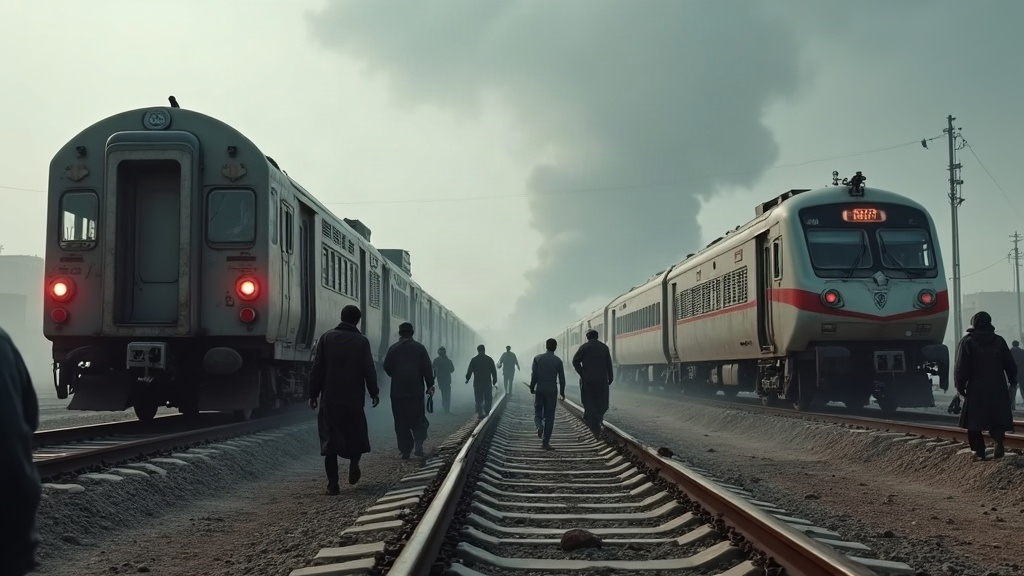
At least seven people have been killed and more than 100 injured after two passenger trains collided today in the Al-Ayyat district of Giza province, just south of Cairo, according to Egyptian health authorities. The incident has prompted a large-scale emergency response and raised fresh concerns about railway safety in Egypt.
The collision occurred when a train traveling from Giza to Fayoum crashed into the rear of another train heading from Cairo to Aswan, officials said. The impact caused several carriages to derail, leaving a scene of twisted metal and scattered debris along the tracks. The exact cause of the crash is still under investigation, with Egypt’s public prosecutor’s office launching an inquiry into the technical reasons behind the disaster.
Conflicting reports have emerged regarding the number of casualties. According to the Egyptian health ministry, at least seven people have died and more than 112 have been injured, as reported by Reuters and the BBC. Other official statements have confirmed at least four deaths and 88 injuries. Among the dead is at least one train driver, according to the health ministry.
Emergency services were quickly dispatched to the site, with more than 70 ambulances and multiple rescue teams working to evacuate the wounded and clear the wreckage. The injured have been transported to three nearby hospitals, where medical staff have been placed on heightened alert to manage the influx of patients. The Egyptian Railway Authority has also sent emergency teams and cranes to the scene in an effort to restore rail services on the busy Cairo-Upper Egypt line.
The crash took place between Kafr Ammar and Al-Raqqa stations, a stretch of track that has seen previous rail incidents. Al-Ayyat itself is the site of Egypt’s worst-ever rail disaster, when a fire on a train killed more than 370 people in 2002. Train services between Giza and Upper Egypt have been suspended as authorities work to clear the tracks and complete their investigation.
Egypt has one of the oldest and largest railway networks in the region, but accidents involving casualties are not uncommon. The government has invested billions of Egyptian pounds in recent years to modernise the network, aiming to reduce the frequency of such incidents. Despite these efforts, fatal crashes and derailments continue to occur, often attributed to outdated infrastructure and human error.
According to officials, the current investigation will focus on determining whether technical failures, signalling issues or operator mistakes contributed to the collision. The Egyptian Railway Authority has not yet specified which train derailed or provided a timeline for the full restoration of services.
Local media have reported that the government is closely monitoring the situation, and that senior officials from the transport and health ministries have visited the crash site. The incident has prompted renewed calls for comprehensive reforms and improved safety standards across Egypt’s railways.
Why it matters
This latest train collision in Giza province underscores persistent safety challenges within Egypt’s national railway system, despite substantial government investment in recent years. The Egyptian Railway Authority, responsible for one of the region’s largest networks, has faced repeated scrutiny following high-profile accidents, including the deadly 2002 Al-Ayyat disaster referenced by multiple sources.
With more than 100 people injured and train services between Giza and Upper Egypt suspended, the crash disrupts a critical transportation artery for millions of Egyptians, particularly those traveling between Cairo and the south. The response by emergency services and the rapid deployment of ambulances and rescue teams highlight both the scale of the incident and the ongoing need for robust crisis management infrastructure.
As the public prosecutor’s office investigates the cause of the collision, the outcome may influence future railway safety measures and government policy. The incident has already reignited debate over the pace and effectiveness of railway modernisation efforts, and the findings could shape priorities for further investment and reform within Egypt’s transport sector.
The image accompanying this article is an AI-generated illustrative depiction inspired by the actual scene of the event.