




Estonia has announced it will close all of its border crossing points with Russia starting December 1, following an attempted arson attack on the Estonian defense company Threod Systems. The move comes after Estonian authorities accused Russia’s military intelligence service, the GRU, of orchestrating the failed sabotage operation, which was thwarted by the company’s security team early Saturday morning.
Prime Minister Kristen Michal and Foreign Minister Margus Tsahkna said the decision was made in response to what they described as “clear evidence” of Russian involvement in the attack. According to statements from Estonian officials, eight Latvian nationals have been detained in connection with the incident, which targeted Threod Systems’ premises in Viimsi, just north of Tallinn.
“If Russia continues its hybrid operations in Estonia, and we know that Russian intelligence services exploit border crossings to exert influence over people, we must be prepared to reduce the risks we face,” Prime Minister Michal said in a statement, as reported by CNN. He added that closing the border would “reduce the threat to people in Estonia and send a clear message that attacks on Estonia’s defense industry and defense capabilities are unacceptable.”
The attempted arson took place at around 3 a.m. on November 14, when the suspects tried to break windows to pour flammable liquids into the building, according to Margo Palloson, director general of Estonia’s Internal Security Service (KAPO). Prosecutor General Astrid Asi credited Threod’s security staff with preventing significant damage. No injuries were reported, and the company’s production and delivery operations were not affected, officials said.
This latest incident follows another arson attack in August targeting Milrem Robotics, another Estonian defense company, which authorities also attributed to Russian intelligence services. Estonia’s Internal Security Service stated that intelligence gathered by its officers showed the attack on Threod Systems was commissioned by Russia’s GRU.
Estonia currently maintains three open border crossings with Russia at Narva, Luhamaa, and Koidula, which handle pedestrian and freight traffic for 12 hours daily. These crossings are now set to close, a move that will halt legal cross-border movement between the two countries for the foreseeable future.
There has been no immediate response from Russian officials to Estonia’s accusations or the decision to close the border. Moscow has regularly denied involvement in sabotage operations in Europe, according to Reuters.
Estonia’s defense ministry issued a statement on X (formerly Twitter), affirming that the country “will not be intimidated” and will continue to support Ukraine alongside its allies. The ministry emphasized that Estonia stands firm against Russian aggression.
Why it matters
The closure of Estonia’s border crossings with Russia marks a significant escalation in tensions between Tallinn and Moscow, underscoring growing security concerns in the Baltic region. Estonia’s decision follows a pattern of alleged Russian sabotage operations targeting critical defense infrastructure in NATO member states, as highlighted by the attacks on Threod Systems and Milrem Robotics.
This move will directly affect cross-border trade, travel, and local communities, particularly in eastern Estonia, where many residents have familial and economic ties to Russia. According to ERR News, the crossings at Narva, Luhamaa, and Koidula are key points for freight and pedestrian movement, and their closure is expected to disrupt daily life and commerce in the region.
The incident also signals Estonia’s determination to respond forcefully to perceived Russian hybrid threats and to set a precedent for other European countries facing similar challenges. As Estonia’s defense ministry stated, the country remains committed to supporting Ukraine and resisting Russian aggression, a stance that aligns with broader NATO and EU efforts to counter malign activities attributed to Russian intelligence services. Observers will be watching for Moscow’s response and for potential ripple effects on regional security and diplomatic relations.
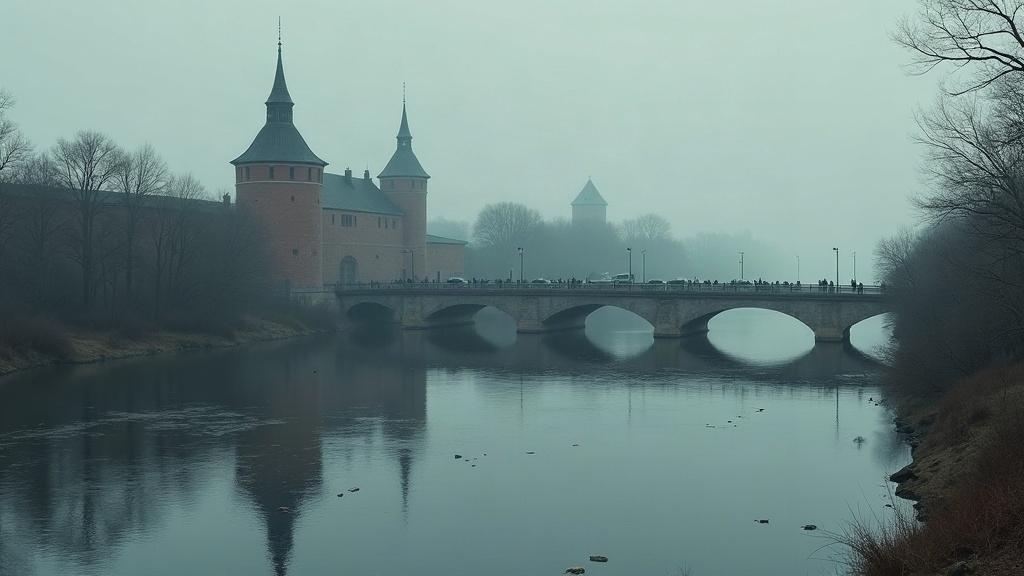
The image accompanying this article is an AI-generated illustrative depiction inspired by the actual scene of the event.