




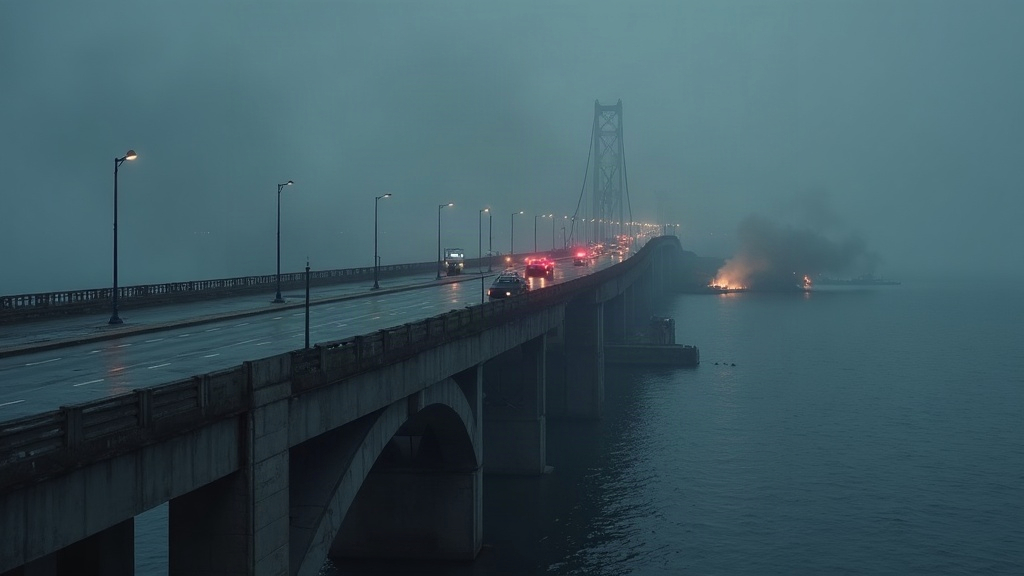
The Crimean Bridge, a strategic link between Russia and the occupied Crimean Peninsula, has come under attack for the third time this week, according to Sergei Aksyonov, the Russian-installed governor of Crimea. The latest strike has forced the temporary suspension of both road and rail traffic, as emergency services assess the extent of the new damage.
Sergei Aksyonov announced early Thursday local time that all relevant emergency services were at the scene and that an assessment was underway. Russia’s transport ministry confirmed that train traffic on the bridge was also halted following what it described as an overnight drone attack. There have been no reports of casualties so far.
The latest incident follows two earlier strikes this week that resulted in severe damage to the bridge, including the collapse of a section into the Kerch Strait. Ukrainian forces have claimed responsibility for the attacks, which they describe as part of a phased operation targeting Russian military infrastructure and supply routes in response to ongoing Russian strikes on Ukrainian infrastructure.
The 19-kilometer Kerch Bridge, also known as the Crimean Bridge, serves as the only direct road and rail connection between mainland Russia and Crimea, which Russia annexed from Ukraine in 2014. The bridge is a vital supply line for Russian troops operating in southern Ukraine and holds significant symbolic value for Russian President Vladimir Putin, who personally oversaw its construction.
Ukrainian President Volodymyr Zelensky has described the strikes as a culmination of a multi-stage operation by Ukraine’s military and security services. According to Ukrainian officials, the attacks were made possible by earlier efforts to destroy Russian air defenses, radar, and electronic warfare equipment in the region.
Russian officials have sought to downplay the impact of the repeated attacks. Kremlin spokesman Dmitry Peskov stated that the bridge would be rebuilt “even better than before,” according to Russian state media. However, the repeated strikes have disrupted both civilian and military logistics, with Russian authorities confirming significant interruptions to traffic and cargo movement.
Ukrainian Defense Minister Yevhenii Khmara emphasized that the latest attacks were carried out exclusively with Ukrainian-made weapons and technologies. Ukraine’s General Staff also responded with a pointed message on social media, noting that the Vasco da Gama Bridge in Lisbon had now become the longest bridge in Europe, a title previously held by the Kerch Bridge.
The attacks on the bridge come as Russian President Vladimir Putin prepares for joint talks with US and Chinese leaders in China, underscoring the international attention on the conflict and its broader geopolitical implications.
Why it matters
The repeated attacks on the Crimean Bridge mark a significant escalation in Ukraine’s campaign to disrupt Russian supply lines and military movements in occupied territories. The bridge is not only a critical logistical route for Moscow’s forces but also a symbol of Russia’s control over Crimea, making its targeting both strategically and politically significant.
The strikes have forced Russian authorities to suspend both road and rail traffic, impacting the movement of troops, equipment, and civilian goods. According to Russian and Ukrainian officials, the attacks are part of a broader Ukrainian strategy to weaken Russia’s military infrastructure by targeting key assets such as air defenses and electronic warfare systems. The disruption of the Kerch Bridge comes at a time when Russia is under increased international scrutiny, with President Putin engaged in high-level diplomatic talks.
The situation highlights the evolving tactics of the Ukrainian military, which has demonstrated the capability to strike deep into Russian-held territory using domestically developed technologies. As both sides continue to target each other’s critical infrastructure, the conflict’s impact on civilian and military logistics is likely to remain a central issue in the months ahead.
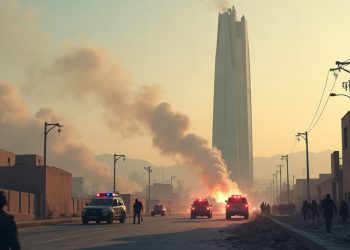
The image accompanying this article is an AI-generated illustrative depiction inspired by the actual scene of the event.