




A British healthcare worker who tested positive for Ebola while working in the Democratic Republic of Congo is being evacuated to the United Kingdom for specialist treatment, according to official statements and documents seen by Reuters.
The patient, who was in Congo as part of a humanitarian response to the ongoing Ebola outbreak, is currently in stable condition. UK authorities say the individual is expected to arrive in Britain on Wednesday or Thursday, where they will be transferred by specialist ambulance to a high-consequence infectious disease unit.
This marks the first confirmed case of a British national contracting Ebola during the current outbreak in the Democratic Republic of Congo, which began in May and has since become the fastest-growing and most widespread Ebola epidemic on record, according to the Africa Centres for Disease Control and Prevention (Africa CDC).
British health officials emphasize that the risk to the wider UK public remains low. “The UK has well-established procedures for dealing with cases like this, and those processes have been activated,” a government spokesperson said, as reported by the BBC. The National Health Service (NHS) is prepared to manage suspected and confirmed Ebola cases, with protocols in place to prevent further transmission.
The ongoing outbreak in DR Congo has resulted in more than 10,000 confirmed cases and over 5,300 deaths, the vast majority of them in the DRC, according to Africa CDC and Euronews. The Bundibugyo strain of the Ebola virus, which is responsible for the current outbreak, has also spread to Uganda and Kenya, with a fatality rate of more than 50 percent. There is currently no approved vaccine or treatment for this strain.
Other European countries have also faced imported cases linked to the outbreak. Switzerland evacuated an Ebola patient from Nigeria last month, and France reported its first confirmed case in June, involving a doctor returning from a humanitarian mission in Congo, according to Reuters. The World Health Organization (WHO) declared a public health emergency of international concern in May after cases were first confirmed in the DRC.
The British patient was deployed to Congo by a humanitarian organization to support the response to the outbreak. The UK government has not released further details about the individual’s identity or the specific organization involved, citing privacy and security concerns.
Health authorities across Europe are on alert, with increased preparedness measures in place. Officials from Africa CDC have warned that the unprecedented speed and scale of the outbreak mean all countries should review their readiness to respond to potential imported cases.
Why it matters
The evacuation of a British healthcare worker with Ebola from DR Congo highlights the ongoing risks faced by international aid workers during one of the deadliest outbreaks in recent history. According to Africa CDC, the Bundibugyo strain responsible for the current epidemic has led to over 5,300 deaths and has spread beyond the DRC to other African nations, raising concerns about cross-border transmission and the global response capacity.
This incident tests the UK’s established protocols for managing high-consequence infectious diseases and underscores the importance of international cooperation in outbreak response. The NHS’s readiness to handle such cases, as noted by UK officials and Reuters, will be closely watched as the patient arrives for treatment. The case also draws attention to the lack of approved vaccines or treatments for the Bundibugyo strain, complicating efforts to contain the virus.
With the World Health Organization having declared the outbreak a public health emergency of international concern, and other European countries already reporting imported cases, the situation in DR Congo and its international ramifications remain a critical concern for global health authorities. The response to this British case will serve as a benchmark for preparedness and containment strategies as the outbreak continues to evolve.
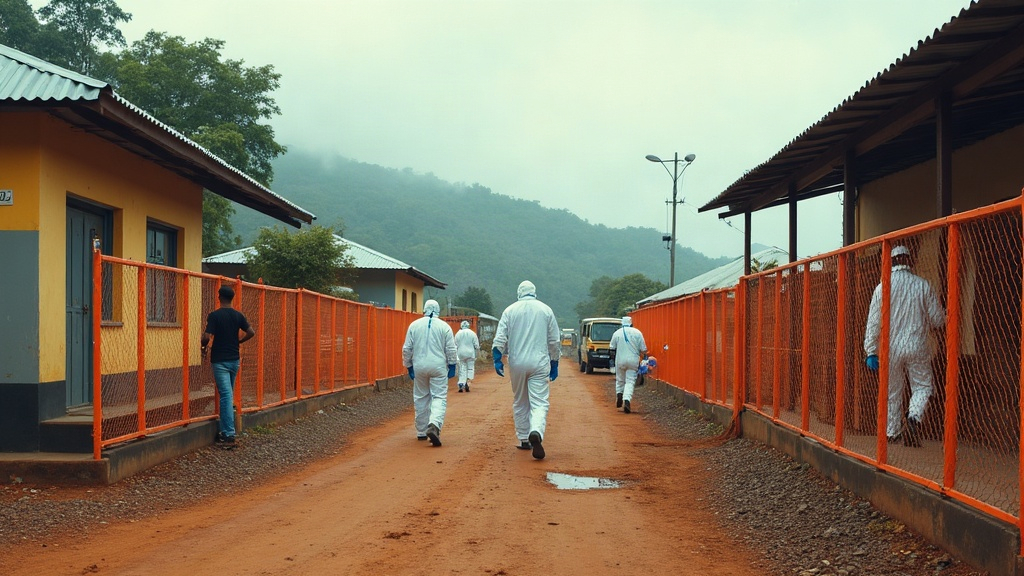
The image accompanying this article is an AI-generated illustrative depiction inspired by the actual scene of the event.