




A powerful storm is sweeping up the East Coast of the United States today, bringing torrential rain, damaging winds, and widespread flooding, according to weather officials and local authorities. The severe weather has caused major travel disruptions for millions attempting to gather for Thanksgiving, with significant delays and cancellations reported at major airports and on roadways across the region.
The National Weather Service has issued high wind warnings for parts of New Jersey, Maryland, Delaware, and eastern Pennsylvania, with gusts of up to 70 miles per hour expected in some coastal locations. In New York City, officials warned of wind gusts reaching 65 miles per hour, prompting the unprecedented postponement of the annual Macy’s Thanksgiving Day Parade to Saturday. This marks the first time in the parade’s 100-year history that it will not take place on Thanksgiving Day, according to city officials and event organizers.
Dangerous flooding has been reported in New Jersey, New York City, and other mid-Atlantic states, with the worst of the storm forecast to hit between 2 p.m. and 8 p.m. local time. The New York Post described scenes of people in Ocean City, New Jersey, navigating fast-moving floodwaters, as the nor’easter battered coastal communities. Rainfall totals of 1 to 3 inches are expected in New York City and surrounding areas, with more than 250 million people across 25 states affected by the storm’s path, according to forecasters.
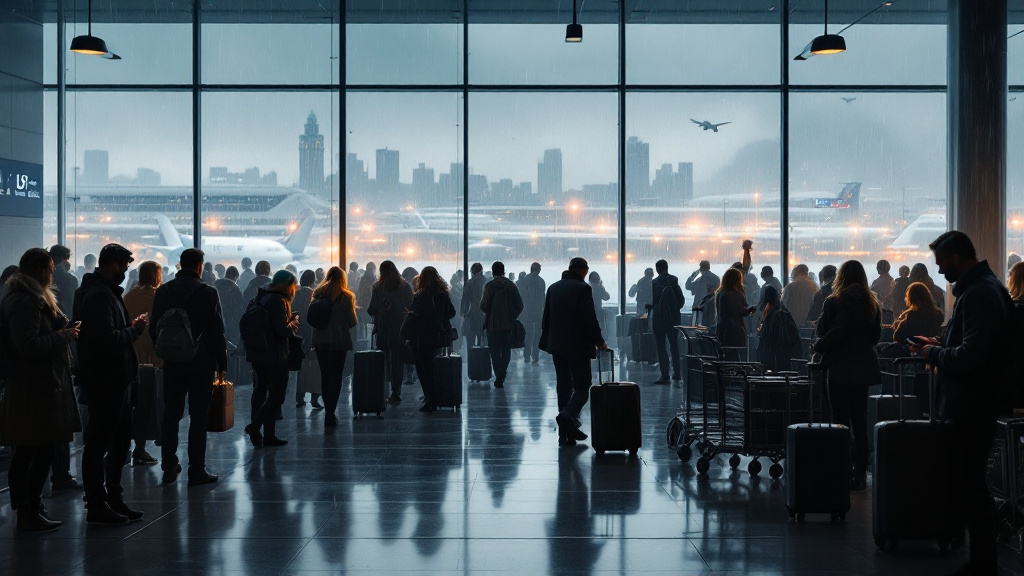
Travelers are facing significant delays at Northeast hub airports, including LaGuardia, Newark Liberty, and JFK, as well as at airports in Chicago, Pittsburgh, Cincinnati, Detroit, and Seattle. The Federal Aviation Administration has warned that gusty winds could slow flights at these major airports, compounding the holiday travel chaos. Earlier today, a FedEx plane overshot the runway in Miami, leading to a temporary ground stop at Miami International Airport, further highlighting the widespread impact of the storm on air travel.
The Weather Channel reports that the storm began ramping up in the Southeast on Wednesday, bringing rain, wind, and coastal flooding before moving up the Eastern Seaboard. As the system tracks northeastward, it is expected to bring moderate to major coastal flooding from Georgia and the Carolinas to Long Island, with at least minor flooding forecast in coastal New England. Some areas in the Midwest are also experiencing a mix of rain and snow as colder air wraps into the system.
Officials have warned of the potential for power outages and tree damage due to the strong winds, especially in areas under high wind warnings. In addition to flooding, the storm is causing beach erosion and hazardous driving conditions, making travel risky for those attempting to reach holiday gatherings.
New York City’s emergency management office, along with Macy’s and the NYPD, made the decision to postpone the parade in order to protect public safety. Mayor Zohran Mamdani stated that the worst of the storm is expected to hit the city during the afternoon and evening hours, with severe weather conditions anticipated throughout the day.
The storm’s impact is expected to linger into Friday, with ongoing risks of flooding and wind damage in affected areas. Emergency services and local governments are urging residents to stay indoors, avoid unnecessary travel, and monitor updates from official sources as the situation develops.
Why it matters
The Thanksgiving storm is disrupting one of the busiest travel periods of the year in the United States, affecting millions of people and forcing the postponement of major public events such as the Macy’s Thanksgiving Day Parade. According to the National Weather Service and city officials, the decision to delay the parade for the first time in a century underscores the severity of the weather and the risks posed to public safety.
Major airports along the East Coast, including LaGuardia, Newark, and JFK, are experiencing significant delays due to high winds and heavy rain, as reported by the Federal Aviation Administration. This has a cascading effect on travel nationwide, with ripple impacts at airports as far away as Seattle and Miami, where a FedEx plane incident further compounded delays. The widespread nature of the storm, affecting over 250 million people across 25 states, highlights the vulnerability of critical infrastructure during extreme weather events.
With coastal flooding, power outages, and hazardous road conditions reported from the Southeast to New England, local authorities and emergency services are on high alert. The storm’s timing, coinciding with Thanksgiving, amplifies its impact on families, businesses, and public services, and raises questions about preparedness and resilience as severe weather events become more frequent across the region.
The image accompanying this article is an AI-generated illustrative depiction inspired by the actual scene of the event.