




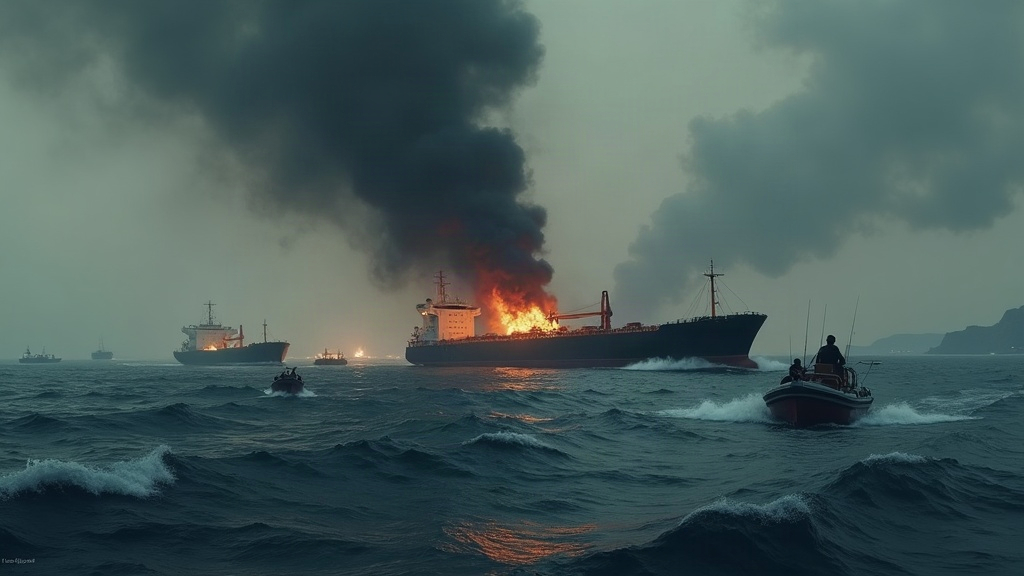
Fires broke out on three oil tankers after they struck naval mines while transiting the Strait of Hormuz, according to statements from Iran’s navy and Revolutionary Guards early Saturday. The incidents occurred as the vessels attempted to cross the strategic waterway, with Iranian authorities accusing them of navigating through unauthorized routes and disabling their tracking systems.
The Iranian Revolutionary Guards Navy said that two of the tankers had switched off their radar and positioning systems and were secretly attempting to transit the strait when they exploded and caught fire after hitting naval mines. A separate statement from Iran’s conventional navy reported that another tanker was forced to stop after catching fire in the eastern part of the strait, also as a result of striking a mine while its tracking and identification systems were off.
Iranian officials did not disclose the names or origins of the affected vessels. However, the Guards indicated that at least one of the ships involved was a supertanker. No immediate information was provided regarding casualties or the extent of damage to the ships.
The incidents reportedly occurred overnight and into the morning hours, with video footage released by Iranian state media showing a vessel ablaze in the waterway. Iran’s armed forces have reported several similar incidents in recent weeks, often attributing explosions or fires on board ships in the strait to naval mines.
Since the outbreak of war with the United States in February, Tehran has imposed strict controls on navigation through the Strait of Hormuz, requiring all vessels to obtain Iranian authorization before transit. Iranian forces have previously targeted ships that do not comply with these restrictions, citing security concerns and the need to safeguard their territorial waters.
The Strait of Hormuz is one of the world’s most critical maritime chokepoints, with a significant portion of global oil shipments passing through its narrow passage. Disruptions in this area have immediate implications for international energy markets and maritime security.
There has been no immediate response from international shipping authorities or governments regarding the latest incidents. The Iranian navy has warned that other tankers entering prohibited areas without proper identification could face similar threats from naval mines.
Maritime security in the region remains tense, with recent weeks seeing a rise in reported attacks and threats to commercial shipping. The situation has heightened concerns among global energy traders and shipping companies over the safety of transit through the strait.
Why it matters
The Strait of Hormuz is a vital corridor for global oil exports, and any disruption to shipping in this region can have significant ripple effects on international energy supplies and prices. According to Iranian military sources, the three tankers struck mines while attempting unauthorized passage, underscoring the risks facing vessels that do not comply with Tehran’s new navigation rules.
The latest incidents come amid heightened tensions following the outbreak of war between Iran and the United States, with Iran increasing its control over the waterway and enforcing stricter transit requirements. The Iranian Revolutionary Guards and navy have repeatedly warned that unauthorized vessels could face attacks or accidents, making the strait a focal point for regional and global security concerns.
Shipping companies, insurers, and governments will be closely monitoring the situation for further developments. The repeated reports of mines and attacks raise the stakes for maritime operations in the area, with potential consequences for oil markets, regional stability, and international trade routes.
The image accompanying this article is an AI-generated illustrative depiction inspired by the actual scene of the event.