





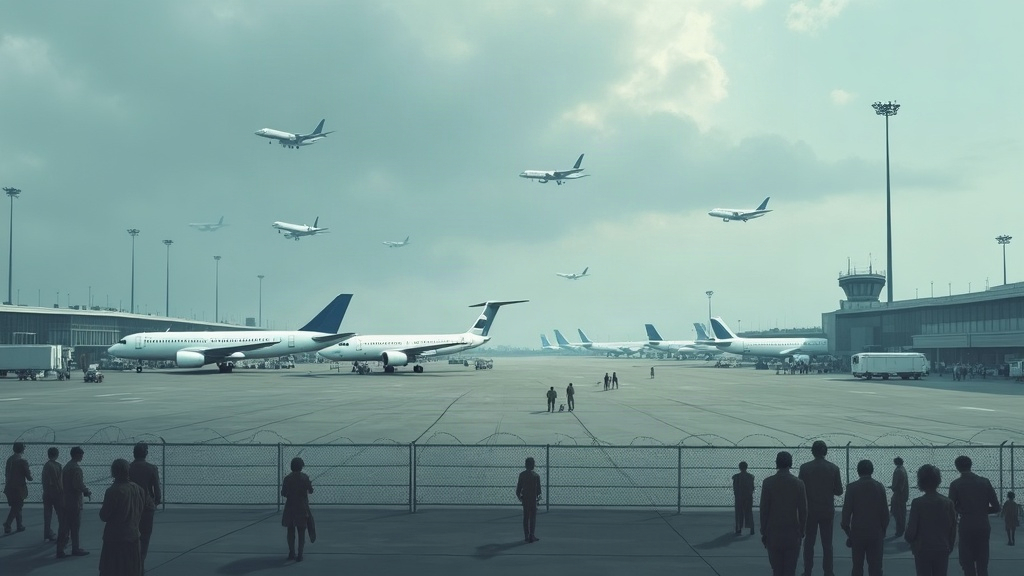
Flights across the United States were brought to a standstill today after the Federal Aviation Administration (FAA) ordered a nationwide ground stop, citing communications problems at regional air traffic control centers. The unprecedented move halted departures and arrivals at airports nationwide, affecting thousands of travelers and airlines.
The FAA said the ground stop was being imposed “due to extraordinary circumstances and for reasons of safety,” according to an official notice. Transportation Secretary Sean Duffy confirmed that a communications issue is impacting the 22 regional air traffic control centers responsible for directing planes between airports across the country. FAA technicians are currently investigating the cause of the disruption.
Officials have not indicated that the incident is related to a cyberattack or any other nefarious activity. The full scope of the communications failure remains under investigation, and there is no immediate estimate for when normal operations will resume.
This is the first time since January 2023 that the FAA has implemented a nationwide ground stop. On that occasion, a key FAA computer system malfunctioned, leading to widespread delays and cancellations. Prior to that, the last nationwide halt of air traffic occurred in the aftermath of the September 11, 2001, terrorist attacks.
According to industry experts, the current disruption appears similar to a regional outage in September that affected flights in the Northeast, but this time the impact is nationwide. Aviation safety expert Steve Arroyo noted that if air traffic controllers lose the ability to communicate with pilots, “you’ve got to stop airplanes on the ground, and not put them in the air where you’re going to risk not being able to communicate with them.”
The FAA and the Department of Transportation have been working to modernize the country’s aging air traffic control infrastructure. After Congress approved $12.5 billion for upgrades last year, efforts have been underway to replace miles of old copper wiring with fiber optic lines and to update outdated radio systems. However, Transportation Secretary Duffy has warned that an additional $30 billion will be required to complete the overhaul, and the White House has begun lobbying Congress for further funding.
Travelers at airports across the US have been left stranded, with airlines advising passengers to check their flight status and expect significant delays. Airport officials and airline representatives have urged patience, stating that they are awaiting further guidance from the FAA.
While the immediate focus is on restoring communications and resuming normal air traffic operations, the incident has reignited concerns over the reliability of the nation’s air traffic control systems and the pace of technological upgrades.
Why it matters
The nationwide grounding of flights highlights the vulnerability of the US air traffic control system to technical failures. With over 20 regional control centers affected, the disruption underscores the critical role of reliable communications in ensuring aviation safety and the smooth functioning of the nation’s transportation infrastructure.
This incident comes as the FAA and Department of Transportation continue efforts to modernize outdated technology, following a similar nationwide ground stop in January 2023 caused by a computer system failure. Transportation Secretary Sean Duffy’s recent calls for an additional $30 billion in funding reflect the scale of the challenge, as the current crisis demonstrates the ongoing risks posed by legacy systems.
Airlines, passengers, and the broader economy are likely to feel the effects of today’s disruption for days to come. The event places renewed pressure on policymakers to accelerate the overhaul of air traffic control infrastructure, with the reliability of the US aviation system now firmly in the spotlight.
The image accompanying this article is an AI-generated illustrative depiction inspired by the actual scene of the event.