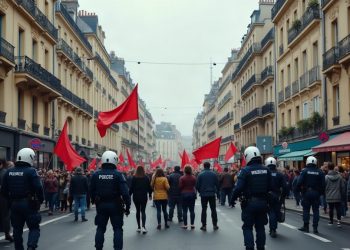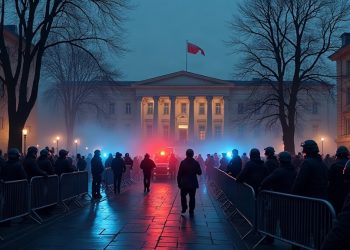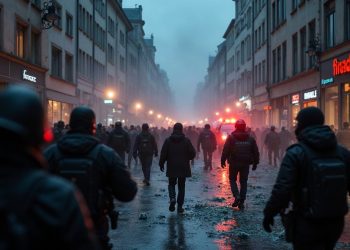





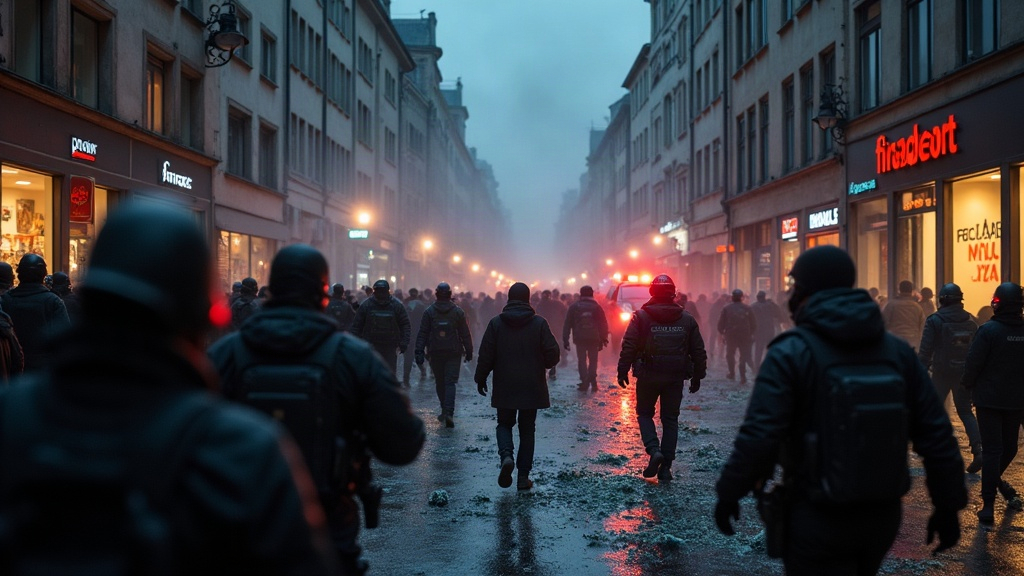
Violence broke out in central Frankfurt and other German cities overnight as mass protests over the cost of living, organised by the youth campaign group “Gen Z regelt!”, escalated into riots and looting. Police in Frankfurt reported that rioters smashed shop windows, looted stores—including a gun shop—and threw molotov cocktails at emergency workers, prompting officers to deploy water cannons and make several arrests.
According to Reuters and other agencies, the unrest followed largely peaceful demonstrations earlier in the day, which saw tens of thousands gather in cities across Germany to protest against rising living costs, cuts to education and social services, and the reintroduction of military conscription. The violence in Frankfurt was echoed by incidents in Berlin, Cologne, and Hamburg, where protesters targeted police and emergency services with fireworks, stones, and bottles.
Frankfurt police stated on social media that “violent riots” were taking place in the city centre, with multiple shops suffering smashed windows. In a particularly serious incident, the windows of a gun shop were broken and two weapons were seized after police arrested a suspect at the scene. Several police officers were reported injured in the clashes, and authorities confirmed that molotov cocktails were thrown at emergency personnel.
Police in Cologne and Hamburg also used water cannons to disperse crowds after groups of masked youths began attacking emergency workers and damaging property. In Berlin, a separate protest not directly organised by “Gen Z regelt!” turned violent in the evening, with police reporting being pelted with eggs and bottles. Additional disturbances were reported in Leipzig and Bonn, where officers used pepper spray and at least one officer suffered minor injuries.
The demonstrations were called by “Gen Z regelt!” (translated as “Gen Z has got this!”), a youth-led campaign group demanding increased funding for schools, protection of social and cultural services, and action to address the high cost of living. The group also opposes recent government proposals to reinstate compulsory military service. Protesters in several cities wore costumes, with some donning outfits ranging from dinosaurs to comic book characters as the rallies coincided with Halloween.
Officials have not yet released a full tally of arrests or injuries, but confirmed that several suspects were detained in connection with the violence and looting. The situation in Frankfurt was described as especially severe, with police and emergency services facing coordinated attacks from groups of rioters. Authorities are continuing to investigate the incidents and assess the extent of the damage to businesses in the affected areas.
The unrest in Germany comes as youth-led protests over similar issues have swept across parts of Europe. On the same day, more than 320,000 people reportedly demonstrated in France, according to international media, highlighting a wave of discontent among young people over economic pressures and government austerity measures.
In response to the violence, German officials have condemned the attacks on emergency workers and the destruction of property, while reiterating the right to peaceful protest. The events have sparked renewed debate over the government’s handling of economic challenges and public spending priorities, as well as the effectiveness of policing strategies during large-scale demonstrations.
Why it matters
The outbreak of violence during the cost of living protests in Germany marks a significant escalation in youth-led activism, underscoring deep frustration over economic pressures and cuts to public services. The incidents in Frankfurt, Berlin, Cologne, and Hamburg signal that grievances over inflation, education funding, and proposed military conscription are resonating widely among younger generations, as evidenced by the scale of the demonstrations organised by “Gen Z regelt!” and the parallel protests in France involving hundreds of thousands of participants.
The looting of a gun shop and the seizure of weapons, as reported by Reuters and confirmed by police, raise particular concerns about the potential for further escalation and the risks posed to public safety during such unrest. The use of water cannons and the reported injuries to police officers highlight the challenges authorities face in maintaining order while respecting the right to protest.
With tensions running high and similar protests occurring across Europe, the German government is likely to face increased pressure to address the underlying causes of discontent, including the high cost of living and public spending cuts. The events of the past 24 hours will be closely watched by policymakers, law enforcement, and campaign groups as they consider their next steps in responding to both the demands of protesters and the need to ensure public safety.
The image accompanying this article is an AI-generated illustrative depiction inspired by the actual scene of the event.