




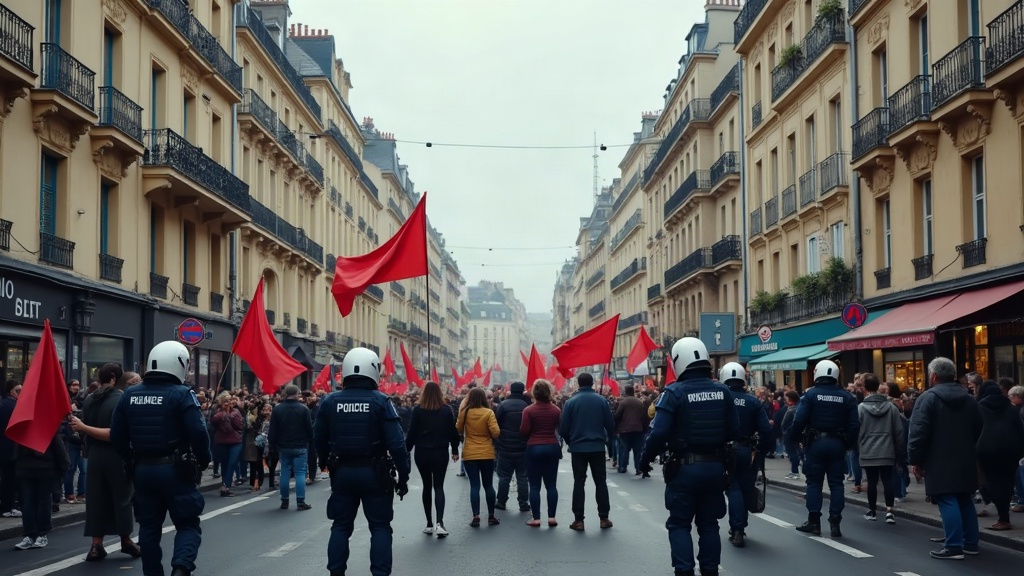
France is deploying 70,000 police officers and gendarmes nationwide today as thousands are expected to join Halloween protests over the cost of living and deteriorating public services. The government is on high alert following a week of unrest that has seen widespread damage and hundreds of arrests, with officials warning of further disruptions.
The Interior Ministry has reported that more than 550,000 people have taken to the streets across France since the protests began, with demonstrations growing in size and intensity. According to officials, over 3,000 shops have been attacked or looted, some destroyed, and more than 2,700 people have been arrested in connection with the unrest.
The protests, initially sparked by student anger over poor education conditions, have rapidly evolved into a broader social movement. Demonstrators are now voicing frustration over rising fuel prices, inflation, and what they describe as chronic underfunding of essential public services.
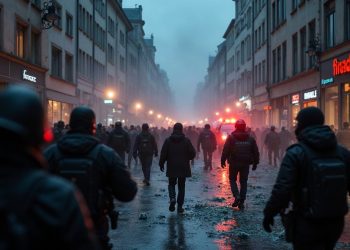
Authorities say the majority of protests have remained peaceful, but violent incidents have continued to draw concern. The Interior Minister stated that more than 1,000 law enforcement officers have been injured since the start of the movement. Images from recent demonstrations show tear gas deployed in cities such as Bordeaux and Montpellier, with riot police clashing with groups of protesters.
Last week’s protests saw significant damage to public buildings and businesses, particularly on October 17, when officials reported some of the worst violence. The government has condemned the attacks and called for calm, while also acknowledging the underlying grievances fueling the demonstrations.
Today’s protests coincide with Halloween, a date that has drawn additional attention and is expected to see even larger crowds. The government’s decision to mobilize 70,000 security personnel underscores the scale of the anticipated unrest and the authorities’ determination to prevent further violence and property damage.
The movement’s expansion has not been limited to France. According to CNN, cost-of-living protests are now spreading to Germany, where tens of thousands are expected to demonstrate today in solidarity with French protesters and in response to similar economic pressures.
Officials have not provided a precise estimate of how many protesters are expected in France today, but the large police deployment reflects concerns over possible escalation. The government continues to urge demonstrators to remain peaceful and has pledged to address some of the concerns raised by the movement.
Why it matters
The current wave of protests in France marks one of the most significant challenges to the government in recent years, both in terms of scale and public anger. With more than 550,000 people participating and over 3,000 shops attacked, the unrest has already had a major impact on French cities and the national economy.
The decision to deploy 70,000 police officers, as confirmed by the Interior Ministry, highlights the seriousness with which authorities are treating the situation. The spread of similar protests to Germany, as reported by CNN, suggests that the cost-of-living crisis is resonating across borders and could trigger wider social movements in Europe.
As officials work to contain the demonstrations and address their root causes, the outcome of today’s protests will be closely watched by governments, businesses, and civil society groups across the region. The scale of the response and the persistence of the movement underscore the urgent need for solutions to the economic challenges facing millions in France and beyond.
The image accompanying this article is an AI-generated illustrative depiction inspired by the actual scene of the event.