



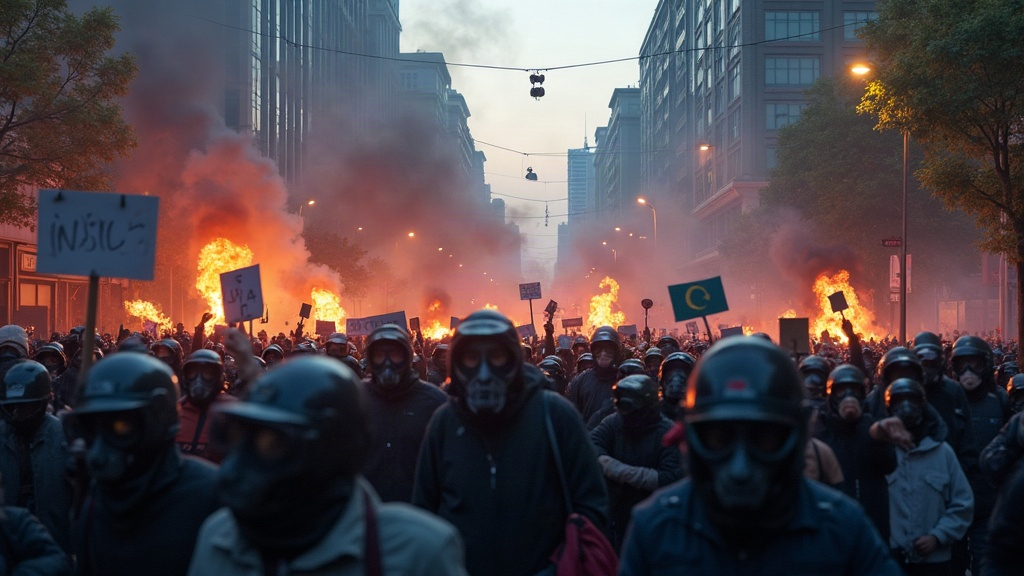
Student-led protests have plunged Albania’s capital into chaos, as the country experiences its most serious political crisis in years. Demonstrations, now in their second week, reached a new peak of violence on the fifth consecutive day of unrest, according to the latest reports.
The protests, described as an attempted revolution styled as a student movement, have seen large crowds clashing with authorities in Tirana. The unrest is reportedly driven by a combination of grievances, including economic hardship, housing shortages, education and healthcare concerns, as well as wider anxieties over climate, war, and technology.
According to coverage by UnHerd, the mood in Albania has shifted dramatically from earlier disaffection with Prime Minister Edi Rama to what is now described as a “burning, visceral hatred” among sections of the population. The demonstrations have been marked by escalating confrontations, with the latest violence overshadowed only by turmoil elsewhere in Europe.
The wave of protests in Albania is part of a broader pattern of unrest sweeping across the continent. Multiple European countries are facing similar movements, as citizens express deepening frustration with political leadership and the perceived failure of institutions to address mounting crises.
In Albania, the protests have centered on the government of Edi Rama, who has been in power since 2013. While the country has previously experienced political tensions, the current unrest is seen as the most severe in recent memory, with some observers warning that it could have lasting consequences for the country’s stability.
Despite the scale of the demonstrations, there is no clear consensus on whether the movement in Albania constitutes a true revolution or a broader anti-government uprising. Sources note that the situation remains highly volatile, with further escalation possible if grievances are not addressed.
The crisis in Albania is also fueling a wider sense of disenchantment with the European project. Some analysts suggest that the events in Tirana may reflect a deeper malaise affecting the continent, as citizens in both core and peripheral nations question the effectiveness of European institutions.
With protests continuing and no immediate resolution in sight, the future of Albania’s political landscape remains uncertain. Observers are closely watching for signs of government response or potential mediation efforts, but for now, the unrest shows no sign of abating.
The image accompanying this article is an AI-generated illustrative depiction inspired by the actual scene of the event.