





Shipping companies seeking to cross the Red Sea are now required to email Yemen’s Iran-backed Houthi rebels for transit clearance, as the group enforces new maritime restrictions amid ongoing regional conflict. The process, administered by the Houthis’ Humanitarian Operations Coordination Center (HOCC), obliges operators to declare that their vessels have no connections to the United States, United Kingdom, Israel, or Saudi Arabia.
This clearance system, established by the HOCC earlier this year, has become a key checkpoint for international shipping traffic in the Red Sea, a critical global trade route. Shipping operators must submit detailed vessel information via email to the HOCC, after which they typically receive a response within 24 hours. The clearance, which is free of charge according to Houthi officials, is valid for approximately seven days, provided ships keep their Automatic Identification System (AIS) and VHF communication channels active during transit.
The Houthis have denied charging any transit fees for the clearance, emphasizing that the process is intended to enforce their restrictions on vessels linked to countries they consider hostile. The new protocol comes as fighting between the Houthis and a Saudi Arabia-led coalition intensifies, with the conflict now affecting maritime security in the Red Sea corridor.
According to recent reports, the Red Sea has become a flashpoint in the broader Middle East conflict, which escalated after the United States and Israel attacked Iran earlier this year. The Houthis, supported by Iran, have expanded their operations beyond Yemen, targeting shipping lanes and seeking to exert control over maritime traffic through the region.
International shipping companies are adapting to the new requirements, with many now routinely emailing the HOCC before attempting to transit the Red Sea. The process requires operators to confirm that neither their vessels nor their cargo have any links to the US, UK, Israel, or Saudi Arabia—countries the Houthis have identified as adversaries in the ongoing conflict.
The Red Sea is a vital artery for global trade, connecting the Mediterranean Sea to the Indian Ocean via the Suez Canal. Disruptions in this corridor have significant implications for global shipping, energy supplies, and regional economies. The introduction of the Houthi clearance system has added a new layer of complexity for shipping firms already facing heightened security risks in the area.
Amid the deepening humanitarian crisis in Yemen, the Houthis’ advance and the ongoing fighting have displaced hundreds of thousands of civilians, according to the United Nations. The conflict’s spillover into the Red Sea underscores the growing regional impact of the war, which has drawn in international actors and complicated efforts to ensure safe passage for commercial vessels.
Saudi Arabia, seeking to counter Houthi influence, has recently secured increased regional support through new defense agreements, including a trilateral pact with Turkey and Pakistan. The broader conflict, intensified by the US-Iran confrontation, continues to destabilize the region and disrupt key trade routes.
Why it matters
The Houthis’ email-based clearance system marks a significant shift in how maritime security is managed in one of the world’s busiest shipping lanes. By requiring vessels to declare the absence of US, UK, Israeli, or Saudi links, the group is leveraging its control over parts of Yemen to influence international trade and assert its political objectives. This directly affects global shipping companies, which must now navigate not only physical threats but also new bureaucratic hurdles to ensure safe passage.
The conflict’s expansion into the Red Sea, as reported by AP News and other sources, has already led to increased military activity and the involvement of regional powers such as Saudi Arabia, Turkey, and Pakistan. The new clearance process is a response to these developments and reflects the Houthis’ growing confidence in their ability to shape events beyond Yemen’s borders. With the Red Sea’s importance to global commerce, any disruption or delay in shipping traffic can have far-reaching economic consequences.
As the humanitarian crisis in Yemen worsens and the conflict continues to draw in international actors, the stability of the Red Sea corridor remains uncertain. Shipping companies, regional governments, and global markets will be closely watching how the new Houthi clearance system evolves and whether it becomes a permanent feature of maritime transit in the region.
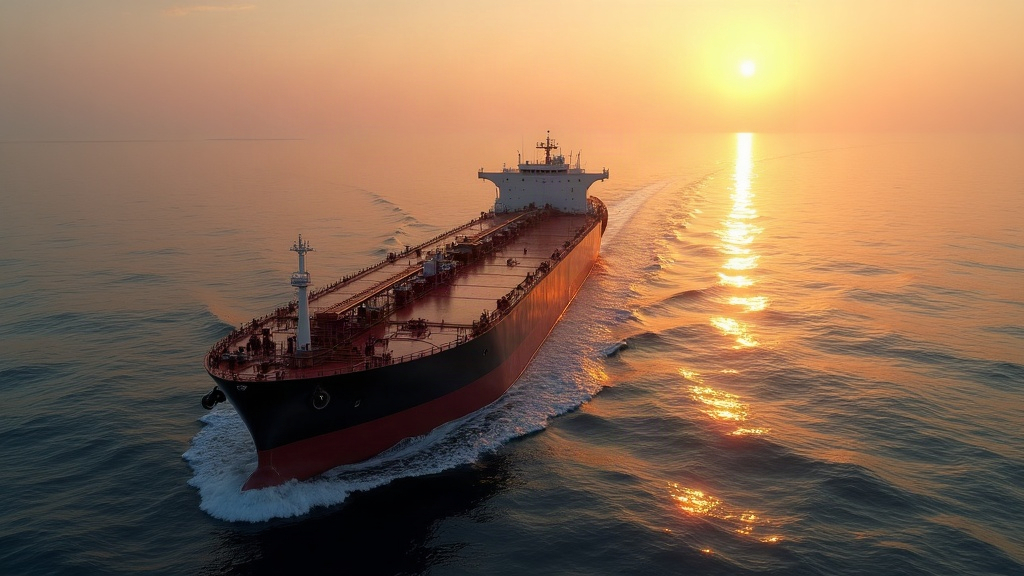
The image accompanying this article is an AI-generated illustrative depiction inspired by the actual scene of the event.