




Canadian authorities have confirmed that four grizzly bears—a mother and her three cubs—were responsible for the deaths of Jennifer Balcarras, 48, and her daughter Selah Reed, 20, near a hiking trail outside Bella Coola, British Columbia. The women were found dead earlier this month after family members reported them missing, prompting a large search and investigation.
Inspector Jeff Tyre of the British Columbia Conservation Officer Service announced that DNA testing conclusively linked the female grizzly and her cubs to the fatal attack. “Our investigation also found that this attack likely involved predatory behavior, which I can tell you is very rare,” Tyre said during an online briefing, according to multiple news outlets.
The remains of Balcarras and Reed were discovered about 150 meters apart, with Reed’s body found in a bear cache—a site where bears store food. Authorities believe all four bears were “actively involved” in the attack, as confirmed by forensic analysis at the scene.
Officials moved quickly to capture and assess local bears in the area. The adult female grizzly was reportedly in her teens, while the three cubs were all born within the past year. All four animals were euthanized after authorities determined they could not be rehabilitated or relocated due to the risk they posed to public safety.
Inspector Tyre emphasized that bears involved in fatal attacks on humans are not candidates for rehabilitation or relocation. “This type of behavior presents an extreme risk to the public, and such bears are dispatched to protect the public and prevent similar attacks in the future,” he stated.
The incident has deeply affected the local community, particularly the Nuxalk Nation, which is still recovering from a previous bear attack last year. In response to the latest tragedy, local authorities imposed a voluntary curfew and police escorted children to school as a precaution. Tlhmtimut Samuel Schooner, the Nuxalk Nation’s elected chief councilor, said the attack has been “deeply re-triggering for our community members.”
All trapping equipment used in the response has now been removed, and the Conservation Officer Service has concluded its investigation. Officials said further analysis will examine the response and circumstances that led to the fatal event, but stressed that attacks of this nature are extremely uncommon.
Grizzly bears are native to western Canada and are generally not considered a significant threat to humans unless provoked or attracted by food. However, predatory attacks—where bears actively hunt or consume humans—are exceedingly rare, according to wildlife experts and officials.
Why it matters
This fatal attack stands out as a rare instance of predatory behavior by grizzly bears, a fact highlighted by Inspector Jeff Tyre and echoed by wildlife officials. Such attacks are unusual even in regions where bear encounters are more common, underscoring the unpredictable risks associated with wildlife in remote communities like Bella Coola.
The incident has heightened concerns about public safety in bear country, prompting immediate changes in local routines, such as curfews and increased police presence. The Nuxalk Nation’s response, including emotional support for community members, reflects the lasting psychological impact of such events, especially in communities already affected by previous bear attacks.
Authorities’ decision to euthanize all four bears, including the cubs, follows established protocols for handling animals involved in fatal attacks. The case is likely to influence future wildlife management and public safety measures in British Columbia, as officials continue to review the circumstances and response to this unprecedented event.
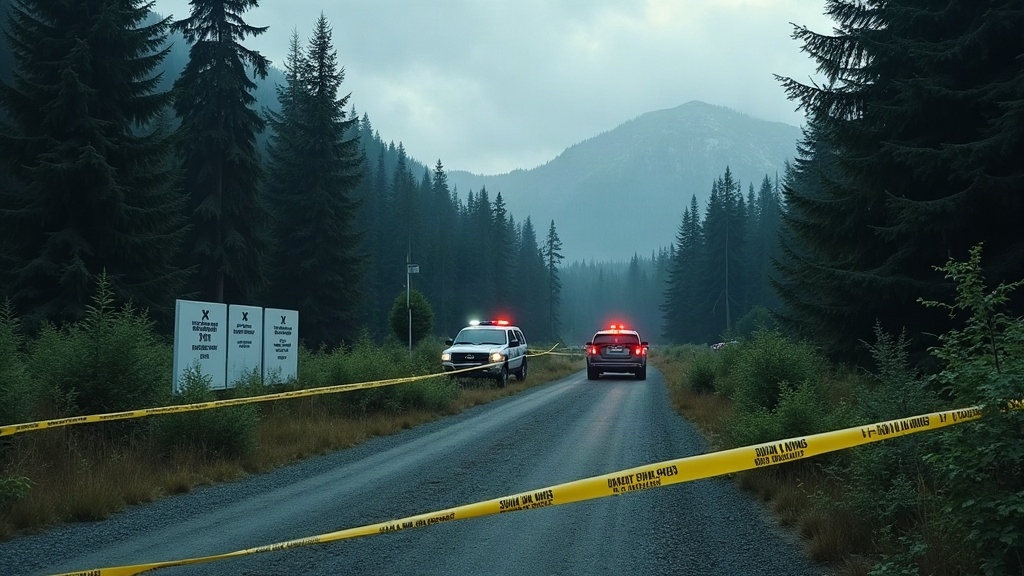
The image accompanying this article is an AI-generated illustrative depiction inspired by the actual scene of the event.