




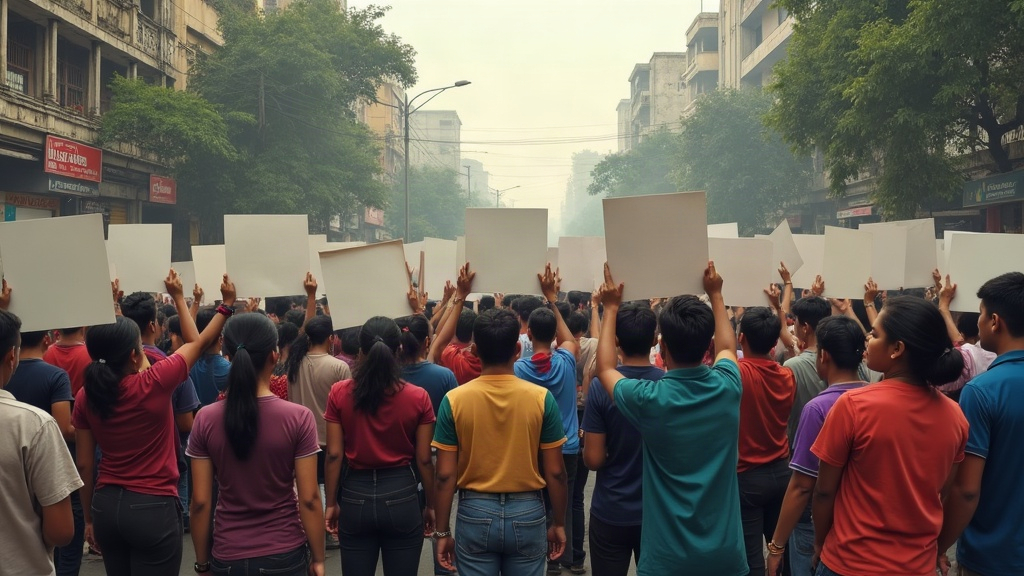
Dozens of garment factories in Bangladesh have been forced to close as thousands of workers walk out in protest, demanding a substantial increase in the minimum wage. The industrial action, which escalated overnight and into today, has brought production to a halt in key manufacturing hubs, threatening a sector that is vital to the country’s economy.
Police officials confirmed that at least 29 factories were shut in Gazipur, near the capital Dhaka, after workers staged walkouts and blocked major roads. According to Police Superintendent Mohammad Amjad Hossain, officers intervened to close 13 factories on Saturday night and another 16 during unrest on Sunday morning after employees refused to return to work.
The workers are calling for a new minimum monthly wage of 30,000 taka (around $240), representing a 140 percent increase from the current rate of 12,500 taka. Many say that the existing wage is no longer sufficient to cope with the rising cost of living. “We went to the factory in the morning, punched in and came back home,” said a garment worker named Khanam, reflecting the widespread participation in the strike.
The unrest has disrupted operations across the country’s vast garment sector, which employs more than four million people and is the world’s second-largest exporter of ready-made clothing after China. Major international brands, including H&M, Primark, and Zara, source their products from Bangladesh, making the stability of this industry critical for global supply chains.
Industry groups such as the Bangladesh Garment Manufacturers and Exporters Association (BGMEA) report that more than 100 factories have been affected by the strikes in recent days. The BGMEA, which represents over 4,500 member factories, has warned that owners are now considering a “no work, no pay” policy in response to the ongoing industrial action.
The government established a minimum wage board on 1 November to review and recommend a revised pay structure for garment workers. However, the board has yet to announce its decision, with recommendations expected by the end of November. Any new wage rates are due to take effect from January, leaving workers uncertain about when and how much their pay will increase.
Protests have spilled into the streets, with workers briefly blocking the Dhaka-Tangail highway in Gazipur, further highlighting the scale of the unrest. Police have been deployed to prevent further disruption and to maintain order around factory sites.
The garment industry is a cornerstone of Bangladesh’s economy, generating nearly $40 billion in annual exports and accounting for about 10 percent of the country’s GDP. The sector represents roughly four-fifths of Bangladesh’s export earnings, making the current standoff particularly significant for both the national economy and millions of workers’ livelihoods.
Why it matters
The shutdown of garment factories in Bangladesh due to wage strikes has immediate and far-reaching consequences for the country’s economy and the global fashion industry. With over four million workers involved and major brands such as H&M, Primark, and Zara relying on Bangladeshi suppliers, any prolonged disruption could impact international supply chains and retail markets.
According to the BGMEA, the garment sector contributes around $38 billion to Bangladesh’s annual exports, accounting for four-fifths of the country’s export earnings. The uncertainty surrounding the wage board’s decision and the threat of a “no work, no pay” policy have heightened tensions between workers and factory owners, raising the risk of further unrest if a resolution is not reached soon.
The outcome of the current dispute will set a precedent for labor relations in Bangladesh’s most important industry. As the wage board prepares to announce its recommendations, all eyes will be on whether the government and industry leaders can balance the demands of workers with the pressures facing manufacturers in a globally competitive market.
The image accompanying this article is an AI-generated illustrative depiction inspired by the actual scene of the event.