




A Bahraini court has sentenced 64 Shia Muslims, most of them clerics, to life in prison on terrorism charges, in a move that rights groups have described as an unprecedented crackdown on the country’s Shia community. The High Criminal Court also handed down 15-year prison terms to five additional defendants, according to statements from the Bahrain Institute for Rights and Democracy (BIRD) and other advocacy groups.
The mass sentencing, announced by the advocate general and head of the Terrorist Crimes Prosecution, follows accusations that the defendants established a terrorist group linked to Iran’s Islamic Revolution Guard Corps (IRGC) and called for the suspension of Bahrain’s constitution and a change in the system of government. The prosecution further alleged that the group promoted “Velayat-e Faqih,” the system of rule by a supreme jurist that underpins Iran’s theocracy.
BIRD reported that 47 of those sentenced to life imprisonment were Shia clerics, including prominent religious leaders such as Sheikh Mohammed Sanqour and Sheikh Ali al-Sadadi, both of whom led prayers at major mosques in Bahrain. Nine others were described as affiliates, including religious reciters. The remaining defendants included activists and other members of the Shia community.
Some of the sentences were delivered in absentia, including that of Sheikh Isa Ahmed Qassim, the leader of Bahrain’s Shia community. According to rights groups, 13 of the clerics were tried in absentia. The court also imposed fines of $265,000 on some defendants and ordered the confiscation of $21.2 million for what it described as charitable purposes.
Rights organisations, including the Bahrain Human Rights Forum and Human Rights Watch, have condemned the verdicts, calling them a blow to religious freedoms and political rights in Bahrain. Sayed Ahmed Alwadaei, director of BIRD, described the rulings as “deeply unjust” and said they represented “an attack on the faith and identity of Bahrain’s Shia community.” In an open letter, several groups called for the immediate and unconditional release of those detained and an end to judicial proceedings related to the case.
The charges and verdicts have sparked protests in several parts of Bahrain, with demonstrators gathering to denounce the court’s decision. Footage circulated by regional media outlets showed crowds marching in protest, although the location and timing of the demonstrations have not been independently verified.
Bahraini authorities have defended the mass trial, stating that the group was involved in terrorist activities and maintained links to Iran’s IRGC. The prosecution claimed that the defendants incited terrorist acts and sought to undermine the country’s constitutional order. No death sentences were issued in the case, despite earlier warnings from opposition groups that harsher penalties could be imposed.
According to BIRD, 56 of the defendants had been arrested in May and June. The organisation and other rights groups have raised concerns about the fairness of the proceedings, including allegations of coerced confessions and restrictions on legal representation. They argue that the scale of the sentencing marks an escalation in Bahrain’s campaign against its Shia minority and religious leaders.
The Bahraini government has long accused Iran of seeking to destabilise the kingdom by supporting opposition groups and fomenting unrest among the Shia population, which constitutes a majority in the Sunni-ruled country. The latest verdicts come amid heightened regional tensions and follow a pattern of crackdowns on groups accused of having ties to Iran.
Why it matters
The sentencing of 64 Shia clerics and activists to life in prison represents one of the largest mass trials targeting religious figures in Bahrain’s history, according to the Bahrain Institute for Rights and Democracy. This development is seen by rights groups as a significant escalation in the government’s efforts to suppress dissent and curtail religious freedoms among the Shia community.
The verdicts have already triggered protests and drawn condemnation from international human rights organisations, including Human Rights Watch and the Bahrain Human Rights Forum. The scale of the crackdown, which includes prominent clerics such as Sheikh Mohammed Sanqour and Sheikh Isa Ahmed Qassim, is likely to deepen sectarian tensions in the kingdom and strain relations with Shia-majority communities elsewhere in the region.
Bahrain’s actions come against the backdrop of ongoing regional rivalries, particularly between Sunni-ruled Gulf states and Iran. The government’s claims of IRGC involvement reflect longstanding accusations of Iranian interference in Bahraini affairs. Observers are watching closely to see how these sentences will affect domestic stability, regional alliances, and the broader debate over human rights and religious freedom in the Gulf.
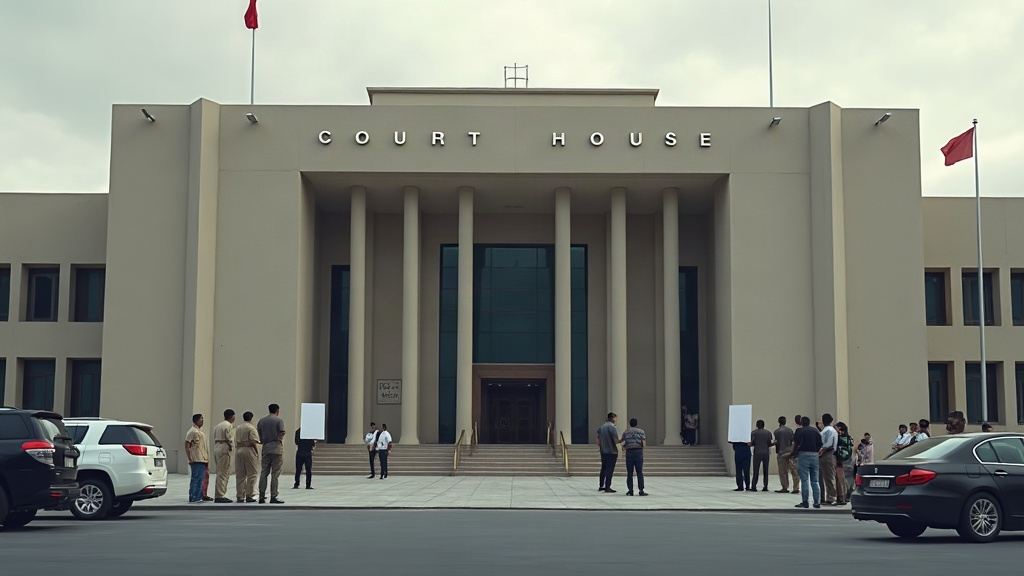
The image accompanying this article is an AI-generated illustrative depiction inspired by the actual scene of the event.