





Russian authorities reported today that their air defenses intercepted more than 1,300 drones launched by Ukraine in what officials described as the largest aerial attack on Russian territory since the start of the full-scale war. The Russian Defense Ministry stated that 1,336 Ukrainian drones were brought down overnight across 16 regions, marking a new record for such attacks.
The reported drone barrage surpassed the previous record of 1,254 drones launched on October 29, highlighting a significant escalation in Ukraine’s use of unmanned aerial vehicles against Russian targets. According to Russian officials, the intercepted drones were detected over the annexed Crimean peninsula, the Sea of Azov, and the Black Sea, as well as multiple regions inside Russia itself.
Local authorities in Russia’s southern Krasnodar region said that six people were wounded during the attack. In the Rostov region near the Ukrainian border, three people in the city of Azov were injured by drones, according to regional governor Yuri Slyusar. The city of Azov is notable for its oil depots, which have previously been targeted in the conflict.
While the Kremlin described the damage from the latest attack as minor, the scale and reach of the operation have drawn attention from analysts and officials alike. Ukraine has intensified its campaign of long-range drone strikes in recent months, targeting not only military infrastructure but also energy facilities and supply routes deep inside Russian territory.
President Volodymyr Zelenskiy of Ukraine claimed on Sunday that recent strikes had disabled more than half of Russia’s oil refining capacity, though this figure could not be independently verified by Reuters or other outlets. Ukrainian officials have not commented directly on the latest drone attack, in line with Kyiv’s usual policy of strategic ambiguity regarding cross-border operations.
Analysts cited by multiple sources say that Ukraine’s increased use of drones serves several purposes: to disrupt Russian military logistics, to inflict economic costs by targeting infrastructure, and to demonstrate to both Russian citizens and international supporters that Ukraine remains capable of striking back despite the ongoing conflict.
The Russian Defense Ministry said that many of the drones were intercepted before reaching their intended targets, with air defense systems deployed across a wide area. Reports indicate that some drones were shot down over the waters near Crimea and the Black Sea, while others were intercepted over land in regions including Krasnodar and Rostov.
Since the summer, Ukraine has steadily expanded the scale and frequency of its drone operations, with several attacks involving more than 1,000 drones. The latest incident is seen as part of a broader strategy to bring the realities of war closer to Russian territory and to undermine Moscow’s narrative of inevitable victory.
Oil refineries and supply depots have been among the primary targets of Ukraine’s drone campaign, particularly since late October. These attacks have complicated Russia’s efforts to maintain front-line supply routes and have forced Moscow to divert additional resources to air defense and infrastructure protection.
Why it matters
The unprecedented scale of the latest Ukrainian drone attack, as reported by Russia’s Defense Ministry, signals a new phase in the conflict’s aerial dimension. With 1,336 drones reportedly intercepted, Ukraine has demonstrated an ability to coordinate and launch large-scale operations that challenge Russian air defenses across multiple regions. This escalation comes amid ongoing efforts by Kyiv to disrupt Russia’s military logistics and energy infrastructure, as seen in the recent strikes on oil refineries referenced by President Zelenskiy.
The attack has immediate implications for both sides. For Russia, the need to defend a wider array of targets—including critical infrastructure in regions far from the front lines—places additional strain on its air defense resources. For Ukraine, the ability to carry out such large-scale drone operations serves both as a tactical tool and a message to domestic and international audiences that it remains actively engaged in the fight, despite battlefield challenges. Analysts cited by Reuters and other outlets note that these attacks are designed to undermine Russian morale and complicate Moscow’s military planning.
Looking ahead, the continued escalation of drone warfare is likely to influence both military strategy and civilian life on both sides of the conflict. The targeting of energy infrastructure, such as oil refineries and depots in cities like Azov, highlights the economic dimensions of the war and the potential for further disruptions. As Ukrainian officials seek to maintain international support and pressure Russia, the frequency and intensity of such attacks are likely to remain a key factor in the evolving conflict.
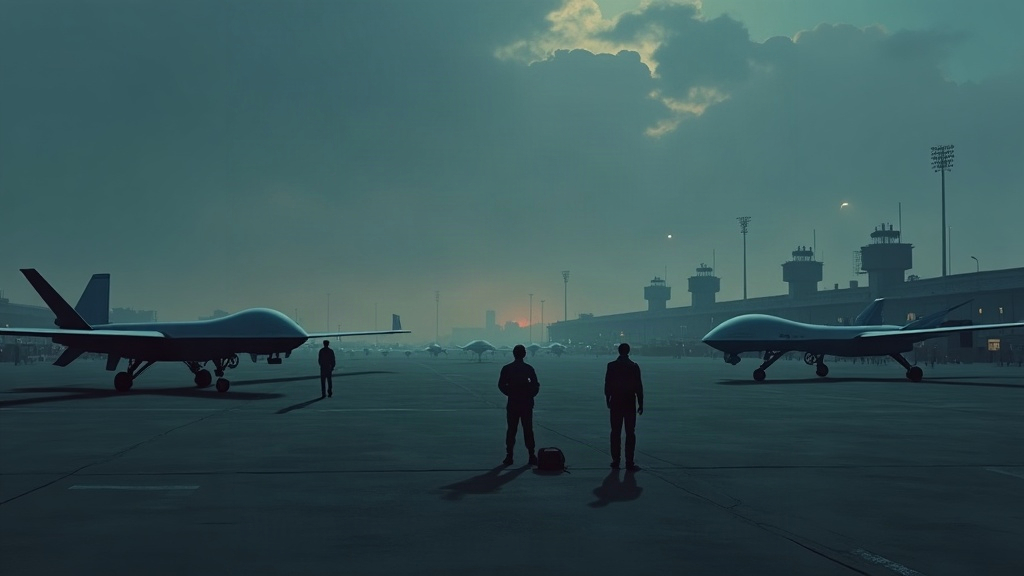
The image accompanying this article is an AI-generated illustrative depiction inspired by the actual scene of the event.