




Houston Mayor John Whitmire has directed city police to sharply limit their cooperation with federal immigration authorities, following months of public scrutiny over Immigration and Customs Enforcement (ICE) operations in the city. The move, announced Friday, means Houston police will only contact ICE if a person arrested for a jailable offense also has an administrative ICE warrant.
The directive comes amid heightened tensions in Houston after an ICE officer fatally shot a man who was reportedly driving to work, sparking widespread protests and calls for reform. According to Houston Police Chief Noe Diaz, officers will no longer notify ICE about individuals detained for nonviolent offenses, such as routine traffic stops, unless an ICE warrant is present.
Mayor Whitmire, a Democrat, stated the policy aims to “begin a healing process” and reduce fear and anxiety across Houston’s diverse communities. “I also do this knowing that elections matter,” Whitmire said during a press conference, referencing the recent Democratic victories in Texas’ midterm elections that shifted the state’s political landscape.
This change marks a significant departure from the approach of outgoing Republican Governor Greg Abbott, who had threatened to withhold state funding from Houston over previous attempts to restrict cooperation with ICE. Abbott, a staunch ally of former President Donald Trump, had prioritized aggressive immigration enforcement during his tenure.
Houston’s new policy comes in the wake of two high-profile incidents involving ICE agents: the indictment of an ICE officer for aggravated assault and an ongoing investigation into the fatal shooting by an immigration agent. These events have intensified public debate over ICE’s presence and tactics in the city.
Under the new directive, police are specifically instructed not to contact ICE for nonviolent offenses. Administrative ICE warrants, which are issued internally by the Department of Homeland Security, are now the only grounds for police to notify federal agents when making an arrest for a jailable offense.
ICE responded sharply to the mayor’s announcement, posting on social media that the decision “protects some of the worst criminals in America.” The agency criticized the classification of certain offenses as “nonviolent,” citing crimes such as child pornography and drug trafficking as examples of offenses that could now escape federal attention under the new policy.
Mayor Whitmire acknowledged the potential political risks of his decision, noting that Republican officials remain in office until January. Nevertheless, he defended the move as necessary to restore trust between law enforcement and Houston’s immigrant communities.
Why it matters
The directive from Mayor Whitmire signals a major shift in Houston’s approach to immigration enforcement, reflecting the impact of recent Democratic gains in Texas politics. As the state’s largest city, Houston’s policy could influence similar decisions in other urban centers, especially following the Democratic “blue tsunami” that ousted Governor Abbott and challenged longstanding Republican priorities on immigration.
For Houston’s immigrant population, the change is likely to reduce fear of routine police encounters leading to deportation, particularly after recent incidents involving ICE agents. According to statements from Whitmire and Police Chief Diaz, the policy is designed to rebuild community trust and encourage cooperation with law enforcement without the threat of federal immigration action for minor offenses.
Nationally, the move adds to ongoing debates over the role of local police in federal immigration enforcement. ICE’s strong condemnation highlights the persistent divide between federal agencies and local governments over how to balance public safety with community relations. Observers will be watching closely to see if other Texas cities follow Houston’s lead, and how state and federal authorities respond as the new policy takes effect.
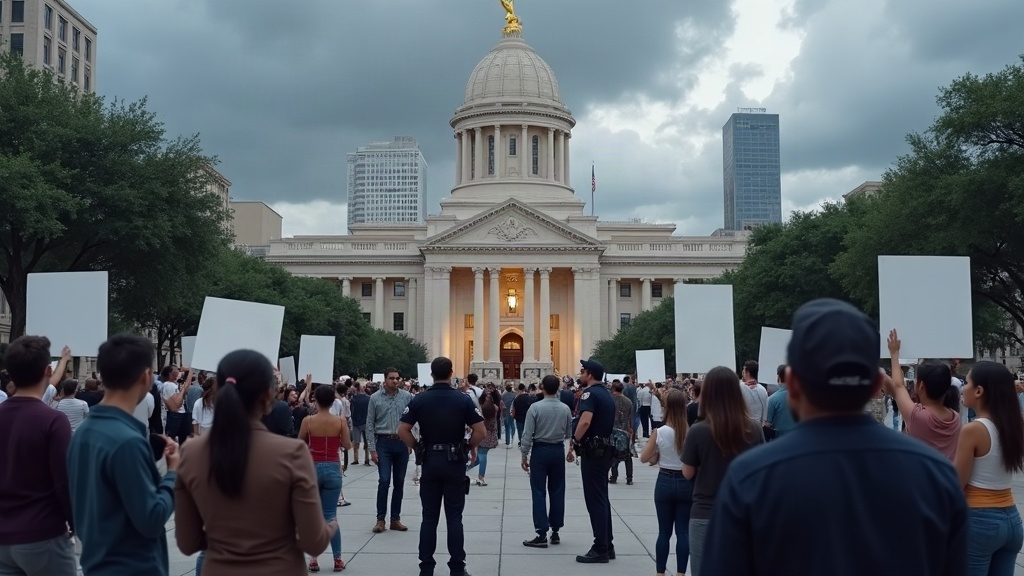
The image accompanying this article is an AI-generated illustrative depiction inspired by the actual scene of the event.