



Hundreds of thousands of people have taken to the streets across France today, with demonstrations over school funding and soaring living costs erupting into sporadic violence in several major cities. Authorities have deployed 70,000 police officers and military personnel nationwide in an effort to prevent a repeat of last weekend’s unrest, which saw widespread rioting and looting.
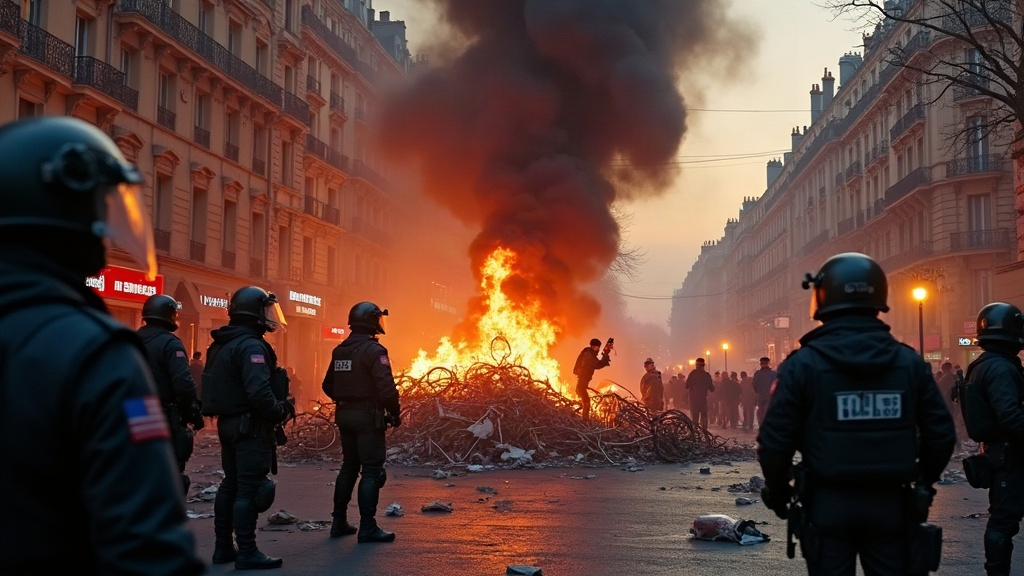
According to police estimates cited by multiple sources, around 410,000 people joined protests in cities including Paris, Marseille, and Lyon. In the capital, Paris, officials reported that 110,000 demonstrators marched through the city, with clashes breaking out between protesters and security forces near the end of the rally. Police fired tear gas and used water cannons to disperse crowds after projectiles were thrown and barricades erected.
The French government has responded to the unrest by imposing curfews and restricting large gatherings in several urban areas. Over 2,500 people have been arrested since the protests began, and authorities say nearly 1,000 police officers have been injured in the confrontations. More than 3,000 stores were looted during last weekend’s violence, prompting concerns about public safety and the government’s ability to maintain order.
The protests, organized by students, trade unions, and anti-government groups, are challenging President Emmanuel Macron’s administration as he enters the final months of his presidency ahead of elections scheduled for May. Demonstrators are demanding increased funding for schools and urgent action to address the rising cost of living, which has become a central issue for many French households.
Interior Minister Laurent Nuñez offered his resignation in the wake of the violence, but President Macron refused to accept it, signaling the government’s determination to maintain a firm stance. The far-right National Rally party has accused Macron’s government of failing to protect the public and has called on voters to express their anger at the ballot box.
Authorities have warned that some groups, including elements from the far left and radical factions, have used social media to incite violence and vandalism during the protests. In Lyon, where the demonstration was officially banned, police used tear gas to disperse crowds early in the day. Meanwhile, a separate peaceful rally took place in Orléans against the far right as the National Rally held a party congress in the city.
The current wave of protests began last month with a walkout over staff shortages at a high school southeast of Paris but has since grown into a nationwide movement reflecting broader discontent with government policies. The unrest comes at a critical time for Macron, whose authority is being tested as public frustration mounts over economic and social issues.
With tensions still high and restrictions in place, officials say they are bracing for further demonstrations and potential violence in the days ahead. The situation remains volatile, and it is unclear whether the government’s measures will be enough to restore calm or address the protesters’ demands.
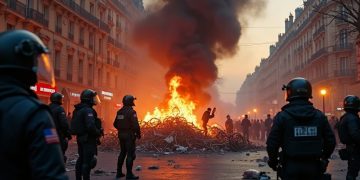
The image accompanying this article is an AI-generated illustrative depiction inspired by the actual scene of the event.