



Hundreds of residents in Toledo, Ohio, have been forced to evacuate or shelter in place after a chemical tank explosion late Tuesday night, prompting fears of a toxic release and the risk of another blast, according to city officials and emergency services.
The explosion occurred at a chemical trucking facility in North Toledo, where a tank containing glycidyl methacrylate—a hazardous industrial chemical used to improve plastics, paints, and coatings—ruptured and began leaking. City authorities ordered everyone within a one-mile radius to evacuate their homes and businesses, affecting more than 900 people, while a shelter-in-place order was issued for residents within a three-mile radius beyond that zone, according to statements from Toledo Fire & Rescue and the mayor.
Officials said the chemical can cause burning sensations in the eyes, nose, mouth, and skin, and may also lead to headaches, dizziness, tiredness, nausea, and vomiting if inhaled or touched. The Toledo Fire & Rescue Department warned that the release of the chemical is ongoing and that the tank, which can hold up to 5,500 gallons, may still be at risk of another explosion within 12 hours of the initial incident. Emergency crews remain on site to monitor the situation and reassess the risk throughout the day.
To assist evacuees, the Red Cross and local transit authorities provided transportation and support at designated locations. According to the city, all residents within the immediate evacuation zone had left by Wednesday morning. A sheriff’s deputy responding to the scene was injured but was able to drive himself to the hospital, officials said.
Residents outside the evacuation zone reported waking up to dense fog and a plastic-like odor in the air, causing additional anxiety about the extent of the chemical release. City officials clarified that the fog was unrelated to the chemical incident, but urged everyone in the affected area to remain indoors, close windows and doors, and turn off any ventilation systems that draw in outside air.
Glycidyl methacrylate is classified as a hazardous material, and health officials described it as mainly an irritant at this stage, though they cautioned that it is toxic if touched or ingested. The chemical is widely used in industrial manufacturing to enhance the properties of plastics and coatings, but poses significant health risks in the event of a large-scale leak or explosion.
Authorities have not yet determined the exact cause of the explosion. The mayor and emergency teams emphasized that their primary concern is the safety of residents, first responders, and facility employees, and that further updates will be provided as the situation develops.
As of Wednesday morning, the hazardous materials team continues to monitor the site and reassess the risk of a secondary explosion. The cause of the initial blast remains under investigation, and officials have not indicated when it will be safe for residents to return to their homes.
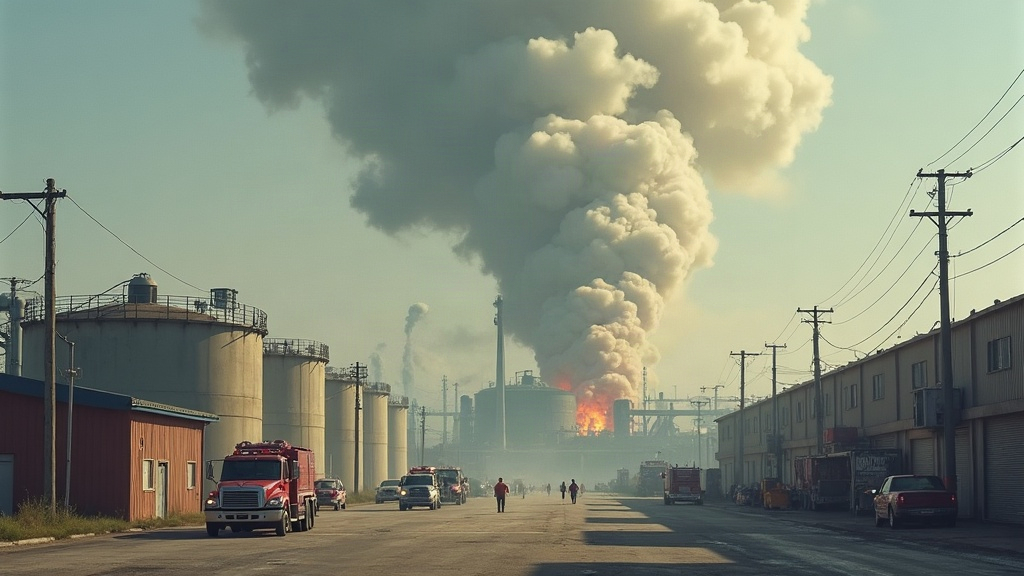
The image accompanying this article is an AI-generated illustrative depiction inspired by the actual scene of the event.