





European leaders have firmly rejected Russia’s latest push to overhaul the continent’s security arrangements, amid ongoing diplomatic efforts to end the war in Ukraine. The move comes as the United States encourages Moscow to propose a new security agreement that would include steps to ease tensions, according to multiple reports.
The debate over Europe’s security architecture intensified after U.S. envoys Jared Kushner and Steve Witkoff arrived in Moscow for talks with Russian President Vladimir Putin. Their discussions reportedly focused on the future of European security as part of broader negotiations to secure peace in Ukraine, sources told the Financial Times and the BBC.
European Union foreign policy chief Kaja Kallas stated that Europe already has a security framework in place and stressed that any new agreement must include the EU as a central participant. “We already have a European security architecture in place,” Kallas told journalists in Warsaw, according to the Daily Tribune. She added, “The problem remains that Russia keeps breaking the treaties that underpin it. NATO posed no threat to Russia in 2021, and it poses no threat to Russia at the moment. Putin does not have a veto over European security.”
Concerns have grown in European capitals that Russia’s proposals are aimed at weakening NATO, the military alliance that has underpinned European security for decades. According to Euronews, European leaders fear that Moscow is attempting to use peace talks over Ukraine as a vehicle to reshape the continent’s security structures to its advantage.
Reports from the Financial Times indicate that U.S. President Donald Trump has predicted a “very big” deal with Moscow that would encompass not only Ukraine but “all of Europe.” This has triggered alarm among some European officials, who worry about the prospect of Washington and Moscow negotiating over Europe’s future without full European participation.
Norwegian Prime Minister Jonas Gahr Støre also voiced skepticism about the prospects for an imminent ceasefire in Ukraine, warning that Europe’s security must not become the price of peace, according to statements ahead of planned talks in Abu Dhabi.
The sources reviewed do not provide a definitive outcome from the current round of negotiations, but highlight a clear divide between European leaders and the approach being pursued by the United States and Russia. While Washington appears open to discussing a broader security deal, European officials insist that any agreement must be based on existing frameworks and include the EU as an equal partner.
Background to the current tensions includes Russia’s 2022 invasion of Ukraine and the subsequent deterioration of relations between Moscow and the West. European security has since become a central issue, with NATO expanding and EU member states increasing defense cooperation in response to Russian actions.
Why it matters
The rejection of Russia’s proposals by European leaders underscores a growing rift between the United States and its European allies over how to manage security on the continent. The insistence by EU foreign policy chief Kaja Kallas that Europe must be directly involved in any new agreement reflects deep concerns about being sidelined in negotiations that could reshape the region’s future.
This development comes at a critical moment as U.S. envoys, including Jared Kushner, seek to broker a broader deal with Russia that would end the war in Ukraine and redefine postwar security arrangements. European fears that Moscow is using peace talks to undermine NATO, as reported by Euronews and the Financial Times, highlight the stakes involved for the alliance and for the balance of power in Europe.
With no clear outcome yet from the ongoing talks, the debate over Europe’s security architecture is set to remain a central issue in both diplomatic and political discussions, affecting not only the future of Ukraine but the wider stability of the continent.
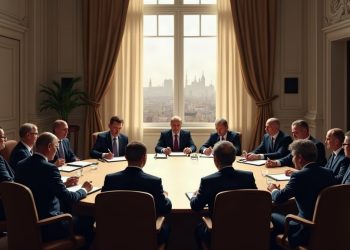
The image accompanying this article is an AI-generated illustrative depiction inspired by the actual scene of the event.