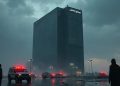






Saudi Arabia’s air defenses intercepted multiple ballistic missiles targeting Riyadh and other regions on Sunday, with falling debris damaging a building belonging to the state-owned oil giant Aramco in the capital’s financial district. No casualties or fatalities have been reported, according to Saudi officials.
The Saudi Energy Ministry confirmed that an administrative building in Riyadh sustained minor damage from shrapnel following the interception. Witnesses described shattered glass and visible damage to the facade of the Aramco Tower in the King Abdullah Financial District, a major business hub in the city.
Saudi state media reported that the Saudi-led coalition successfully intercepted and destroyed two ballistic missiles launched towards Riyadh. The missiles were reportedly aimed at populated areas, but were neutralized before reaching their intended targets. The falling debris from the interception was responsible for the damage observed at the Aramco facility.
There has been no immediate claim of responsibility for the missile attack. However, Yemen’s Iran-backed Houthi rebels have claimed responsibility for similar attacks on Saudi territory in the past, often targeting economic and energy infrastructure.
The incident comes amid ongoing tensions in the region, where cross-border attacks from Yemen have periodically targeted Saudi Arabia since the outbreak of the conflict between the Saudi-led coalition and the Houthi movement. The Houthis have previously used ballistic missiles and drones to strike at Saudi cities and critical infrastructure, including oil facilities.
Saudi Aramco, the world’s largest oil company, has been a frequent target in previous attacks, underscoring the strategic importance of its facilities to both the Saudi economy and global energy markets. The company has not issued a public statement regarding the latest incident, but Saudi authorities have emphasized that operations remain unaffected.
Security has been heightened in Riyadh and other major cities following the attack, with authorities urging vigilance and reassuring the public that all necessary measures are being taken to protect key infrastructure and civilian areas.
International observers continue to monitor the situation closely, given the potential implications for regional stability and global energy supplies. The interception and subsequent damage highlight the ongoing risks faced by Saudi Arabia despite its advanced air defense systems.
Why it matters
The attack on Riyadh, and specifically the damage to an Aramco building, signals the persistent threat posed by missile strikes in the region, even as Saudi Arabia maintains sophisticated air defense capabilities. The ability of falling debris to cause damage in the heart of the capital underscores the challenges in fully protecting urban and economic centers from aerial attacks.
Saudi Aramco’s facilities are critical not only to the kingdom’s economy but also to the stability of global oil markets. Previous attacks on Aramco infrastructure have led to fluctuations in oil prices and raised concerns about the security of energy supplies. According to Saudi officials and state media, the latest incident did not result in casualties or significant disruption, but it serves as a reminder of the vulnerabilities faced by strategic assets in ongoing regional conflicts.
The lack of an immediate claim of responsibility leaves open questions about the perpetrators, though the pattern of previous attacks attributed to Yemen’s Houthi rebels points to the broader context of the Saudi-Yemen conflict. International attention will remain focused on Saudi Arabia’s response and any potential escalation, as well as the effectiveness of air defense systems in safeguarding critical infrastructure.
The image accompanying this article is an AI-generated illustrative depiction inspired by the actual scene of the event.