



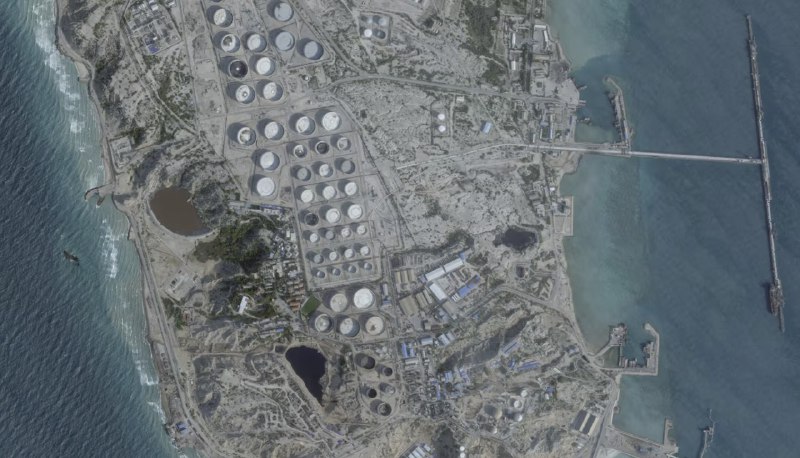
US President Donald Trump has issued a stern warning to Iran, threatening to strike its Kharg Island oil infrastructure if the Persian Gulf nation continues to obstruct oil shipping lanes in the contentious Strait of Hormuz. Demonstrating his resolve, Trump stated that a prospective strike would be ‘twenty times harder’ than previous US response.
The Strait of Hormuz, a vital passage for global oil shipments, has become a hotspot of international tension, over which the US-Iranian conflict has significantly escalated. Following Trump’s threat, Iran’s Armed Forces issued a statement, asserting that any attack on the country’s oil and energy infrastructure would trigger retaliatory strikes.
Iran’s obstruction of the Strait of Hormuz, a crucial waterway through which a fifth of the world’s oil shipments passes, has led to significant global concern. The continuous blockage threatens to disrupt a major artery of the world’s oil supply, potentially resulting in dire economic repercussions. This recent escalation is the latest development in a wider conflict that has seen relations between Iran and the US steadily deteriorate.
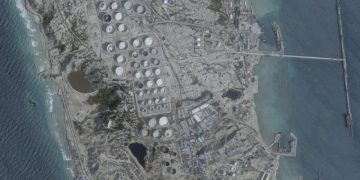
President Trump’s threat to strike Iran’s Kharg Island, which is home to the country’s largest oil terminal, signals an amplification of the US administration’s responses to Iran’s ongoing provocations. The outcome of this heightened tension remains uncertain, with potential escalations threatening stability in the oil-rich region and its implications rippling across the global economy.
The international community watches intently as the US-Iran face off continues to change the complexion of global geopolitics and economic stability. This situation raises questions about the future of the world’s most critical oil shipping lane, questions that could have profound implications for the global energy market.